



A garden at London’s Natural History Museum has collected more than 11 million environmental data records during its first year as a high-tech living laboratory. More than 50 sensors now monitor conditions across the Nature Discovery Garden, recording everything from temperature and humidity to birdsong, underwater sounds and traffic noise. The information is being gathered continuously and stored through a new data system built with Amazon Web Services technology. The project is giving researchers a detailed way to study how wildlife and urban environments interact in one of London’s busiest areas.
How are 11 million environmental records being collected in the garden
The Nature Discovery Garden is part of the Natural History Museum’s transformed 5-acre outdoor space in South Kensington. It opened to the public in July 2024, and the sensor network, which was completed in September 2025, has since turned the garden into what the museum describes as a living laboratory.According to the Natural History Museum, more than 50 sensors are now operating across the gardens. They collect real-time information about the environment, including temperature and humidity, while acoustic equipment records sounds from the pond, bird calls and background urban noise such as traffic. The museum published the 11-million-record figure in August 2026, marking the first year of data collection through the network.The Amazon Web Services account of the project described a network of 25 sensors when the system was completed in September 2025. That system was designed to collect environmental sounds as well as other measurements, with the audio network expected to gather up to 20 terabytes of data during its first year.
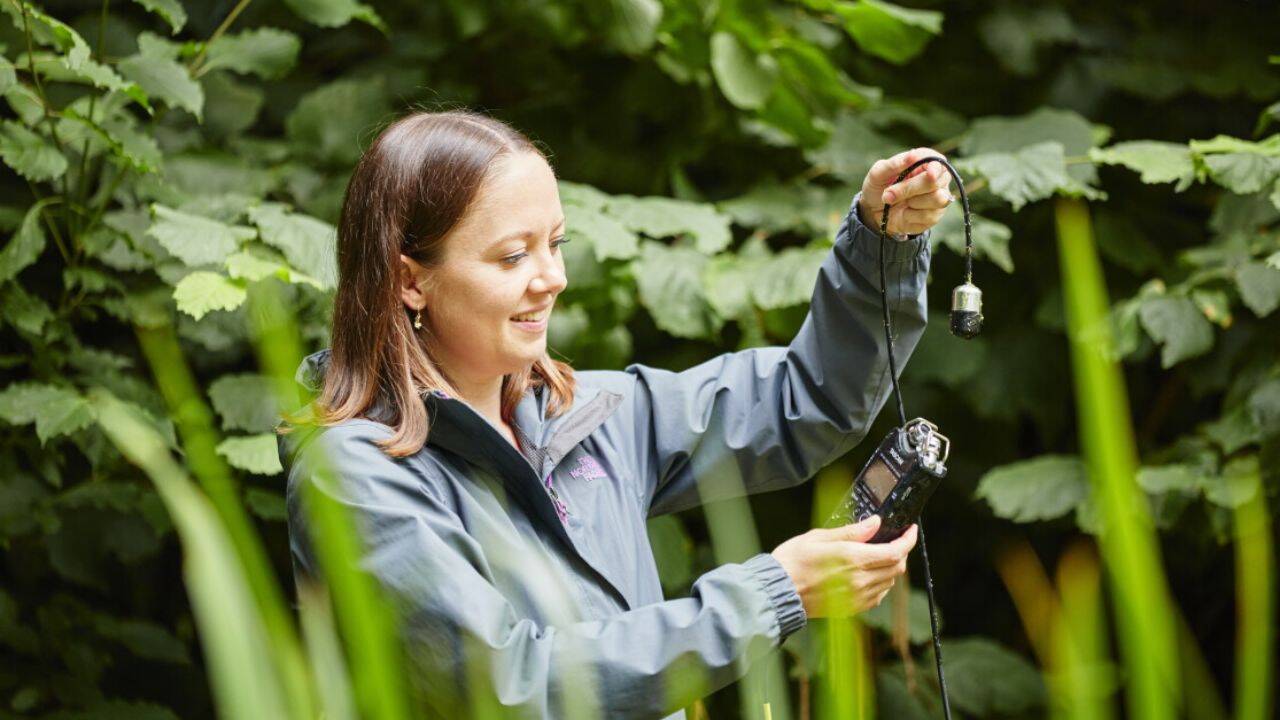
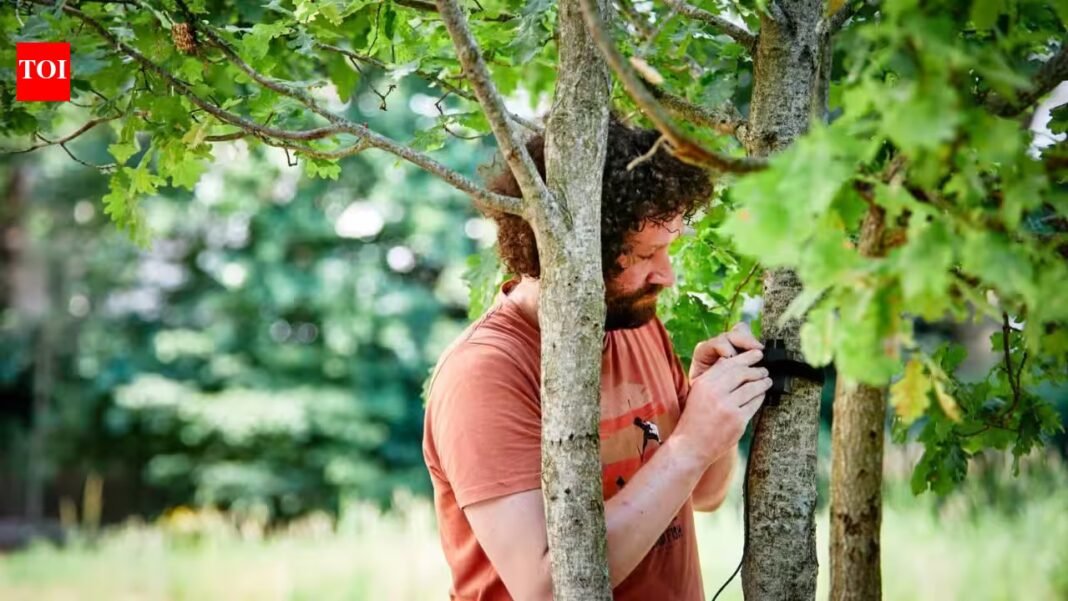
An ecologist of the Natural History Museum showing the sensor. Image Credit: Amazon/Natural Museum of History, London
What can the sensors reveal about urban nature
The measurements allow researchers to see changes that might otherwise be difficult to notice during an ordinary visit to the garden. Temperature and humidity readings can show how conditions vary between different parts of the site, while sound recordings provide another way of tracking wildlife and activity.The Natural History Museum says the information can help scientists understand how nature responds to pressures in an urban setting. The recordings include underwater sounds from the pond as well as birdsong and city noise, creating a picture that goes beyond simply counting the species present.The EDP24 report, published when the sensors were switched on in September 2025, highlighted that the researchers would use the live information to study wildlife ranging from insects and frogs to microscopic organisms.
Centralised data collection facility by Amazon
The large amount of information is fed into the Natural History Museum’s Data Ecosystem, which was developed using AWS cloud technology. Instead of keeping different research datasets separate, the system allows observations from sensors, images and other scientific sources to be collected and processed in one place.Amazon Web Services says the platform was created to give museum scientists a central way to securely store and work with research data. It can also expand as more information is collected, allowing researchers working on different urban biodiversity projects to use the same system.The museum is also adding information from community science programmes. According to Amazon, the Data Ecosystem had already received 156 audio recordings from the Nature Overheard programme and more than 57,000 visual wildlife observations from historic museum garden records dating back to 1995 by July 2024.
How the garden is showing the effects of urban heat
One of the clearest uses of the new sensor network has come from studying urban heat. During a heatwave in June, soil temperature sensors in the woodland areas of the museum gardens recorded temperatures 10°C lower than those in paved areas of the Darwin Centre Courtyard.The Natural History Museum says these measurements can help researchers examine how different urban environments respond to rising temperatures. The work is also being used to explore how features such as trees, shade, soil moisture and surfaces that allow water to pass through can influence cooling.Rather than relying only on observations made during occasional research visits, the sensors can provide measurements over time. This gives scientists a way to compare different parts of the garden and examine how planting and surrounding surfaces affect local conditions.
Importance of London’s garden for long-term wildlife research
The sensor project is based on decades of observations from the museum’s gardens. The Natural History Museum says monitoring carried out since 1995 has recorded more than 3,500 species using the garden, with the blackbird the most frequently observed species.Since the garden reopened in 2024, researchers have identified another 90 species that had not previously been recorded there. Among them are the Emperor Moth and Small Red-Eyed Damselfly.The garden is also being used to study the effects of conservation work. One current project is examining what happened after material from the pond in the former Wildlife Garden was moved into the Nature Discovery Garden, allowing researchers to investigate the wider effects of that intervention on the garden ecosystem.The monitoring project is not staying within the Nature Discovery Garden. The Natural History Museum says the sensor network is now being expanded into its Evolution Garden, where visitor numbers are higher and the planting style is different.That expansion could allow researchers to compare how visitor activity and different habitat designs affect biodiversity. For a garden surrounded by one of London’s busiest urban areas, the project provides a way to study nature at a much finer level.