




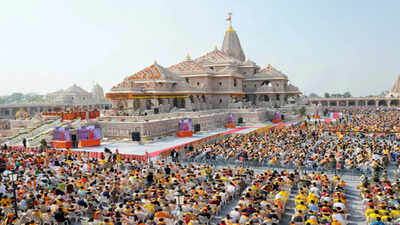
The Ram temple in Ayodhya has received the highest rating under the Food Safety and Standards Authority of India’s (FSSAI) ‘Eat Right Place of Worship’ initiative, recognising its efforts to maintain food safety and hygiene standards while preparing and distributing prasad.The Shri Ram Janmabhoomi Teerth Kshetra scored 103 out of 114 points in the assessment, earning the ‘Ati Vishisht’ rating under the BHOG (Blissful Hygienic Offering to God) programme. Five other places of worship in Ayodhya, including Hanumangarhi, Kanak Bhawan, a Jain temple and Devkali temple, also received BHOG certification.The initiative aims to ensure that food offerings served to devotees are prepared, stored and distributed safely, particularly at places of worship that see large numbers of visitors.
Ram temple receives highest rating for food safety
The certification was presented during a programme in Ayodhya attended by FSSAI chief executive officer Rajit Punhani and officials from the Uttar Pradesh Food Safety and Drug Administration (UPFSDA).Speaking at the event, Punhani highlighted the importance of maintaining food safety at religious institutions.“Prasad is not merely food; it is a symbol of faith and dignity. Ensuring that devotees receive safe and quality prasad is a collective responsibility,” he was quoted as saying by Hindustan Times.The certification will remain valid for two years. During this period, state and central authorities will conduct inspections and audits to check whether the prescribed standards are being followed. The temple trust will also carry out internal reviews every fortnight using a checklist to monitor compliance.Trust general secretary Govind Dev Giri said maintaining the purity of prasad was especially important because of its religious and cultural significance.“Cleanliness is akin to divinity,” he said, stressing the need to maintain hygiene during both the preparation and distribution of prasad. He described the certification as recognition of the temple’s efforts to uphold food safety standards.
How does the BHOG certification work?
The BHOG programme is part of FSSAI’s wider ‘Eat Right’ initiative, which promotes safe and nutritious food across different settings.According to Rekha Chauhan, UPFSDA special secretary and additional commissioner, the certification process involves auditing the kitchens, storage facilities and food-serving areas of religious institutions against prescribed food safety standards, as reported by Hindustan Times.The process has five stages. It begins with verification of a valid FSSAI licence or registration, followed by an inspection conducted by an authorised auditor. Designated supervisors also undergo food safety training under the Food Safety Training and Certification (FoSTaC) programme.The institution is then assessed against a checklist covering 47 parameters, with a maximum possible score of 114. FSSAI reviews the assessment and approves the recommendation before issuing the certificate.
What do the different FSSAI ratings mean?
The ‘Ati Vishisht’ rating is the highest category under the scheme. Religious institutions scoring between 100 and 114 points qualify for it.Those scoring between 91 and 99 receive the ‘Santoshjanak’ (satisfactory) rating. Institutions scoring between 77 and 90 are required to undergo another audit after making improvements, while those scoring below 77 must reapply.With 103 points, the Ram temple falls in the highest category.The certification programme also includes training for food handlers, helping religious institutions strengthen hygiene practices and improve the way offerings are prepared and served to devotees.FSSAI officials, including executive directors Umashankar Dhyani and Dr Amit Sharma, regional director Devesh Kumar Mahla and manager Ananya Pandey, attended the programme along with representatives of the temple trust.