


Every year, families plan two separate days at the end of Navratri. One is for Ashtami, with kanya pujan and the Sandhi Puja. The next is for Navami, with havan and the final prayers. This year the calendar has squeezed them together. Across most of India, Durga Ashtami and Maha Navami both fall on Monday, October 19, 2026. This unusual arrangement has left many households unsure when to fast and when to invite young girls for pujan.
Why Two Festival Days Fall on One Date
Hindu festivals follow tithis, or lunar days, not the 24-hour clock. A tithi can be shorter or longer than a solar day. It can begin at any hour.In 2026, the Ashtami tithi is short. It is present at sunrise on October 19, which makes that day Ashtami under the usual sunrise rule. But it ends in the late morning. Several panchangs place the end of Ashtami around 10:50 AM in New Delhi. Navami begins right after and carries on into the next day.Traditional texts give clear guidance for this situation. When Ashtami and Navami meet before evening on the same day, people perform both pujas, including Sandhi Puja, that day. Ashtami worship happens in the morning, Sandhi Puja occurs at the junction, and Navami worship follows.Exact timings shift from city to city. Regional customs differ too. In Kolkata, the Bengali panjika places Maha Navami worship on Tuesday, October 20. Families living abroad may find Ashtami listed on October 18 instead. The local panchang or the family priest is the best guide.Vijayadashami, or Dussehra, falls on Tuesday, October 20.
What Durga Ashtami Stands For
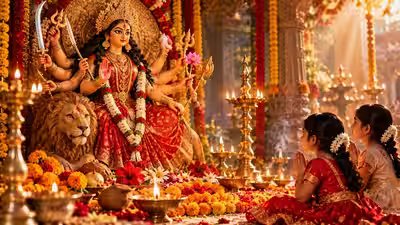
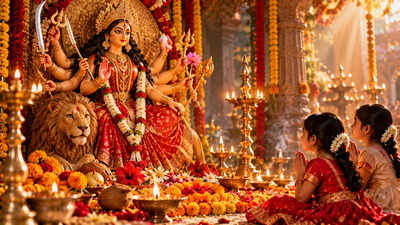
Ashtami is often described as the most powerful day of Navratri. In many regions, people worship the goddess as Mahagauri on this day, a calm, radiant form linked with purity and forgiveness.Kanya pujan is the best-known ritual. Families welcome young girls, usually nine, into the home and honour them as forms of the goddess. They wash their feet, serve them halwa, puri, and chana, and send them off with small gifts. The ritual expresses the belief that the divine feminine lives in every girl child.Then comes Sandhi Puja. It takes place during a 48-minute window, spanning the final part of Ashtami and the start of Navami. According to tradition, this is when Goddess Durga took her fierce Chamunda form to defeat the demons, Chanda and Munda. People light lamps, often 108, and offer lotus flowers.
What Maha Navami Stands For
Navami marks the last day of the goddess’s battle. In many traditions, this is when Durga finally defeated Mahishasura, the buffalo demon who could not be beaten by any god.On the ninth day, devotees worship Siddhidatri, the form believed to grant spiritual accomplishment and inner wisdom. Navami havan is a central ritual. Families offer ghee and samagri into the sacred fire, often ending their nine-day fast afterwards.In South India, Navami is linked with Ayudha Puja. People clean, decorate, and worship tools, vehicles, books, and instruments. A mechanic might honour his spanner. A student might keep their textbooks before the goddess.This symbolism is more than myth; Mahishasura often represents the inner ego and the deep-rooted habits that are hard to change. The goddess’s victory stands for the moment discipline and devotion finally overcome them.
How Families Can Plan the Day
With both observances on one date, timing matters. For those who traditionally hold it on Ashtami, Kanya pujan is best done in the morning while Ashtami is still running. Families who prefer Navami for kanya pujan can hold it later in the day.The Sandhi Puja window falls around the late morning in most cities. Checking the exact local time a day ahead helps avoid a last-minute rush.Those keeping a full nine-day fast generally break it after the Navami havan or on Dussehra morning, depending on family custom. Elderly devotees or anyone with health conditions should keep the fast light and drink enough water through the day.