


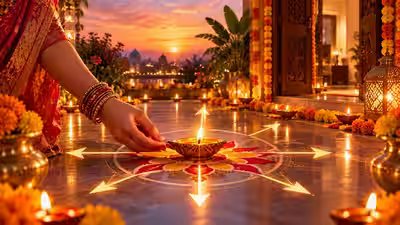
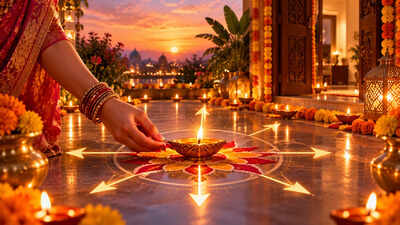
On Diwali evening, many homes have a small debate. Who lights the first diya? Where does it go? And which way should the flame face? Most families follow whatever their grandparents did. Vastu Shastra, though, has fairly clear guidance. The direction a lamp’s wick points is believed to shape the blessings it invites. With Dhanteras on November 6 and Diwali on November 8, it’s worth getting the first lamp right.
The Best Directions for the Flame
East. A diya with its wick facing east is linked to good health and long life. The east is the direction of the rising Sun, the source of vitality. Many families light their first lamp facing east in the puja room for exactly this reason.North. A wick facing north invites wealth and opportunity. The north belongs to Kubera, the treasurer of the gods, and is also linked with Goddess Lakshmi’s grace. On Lakshmi Puja night, a north-facing lamp near the locker, cash box or account books is considered especially auspicious.West. A west-facing wick is generally avoided in Vastu for regular lamps. It’s associated with sorrow and with energy moving away from the home.South. South is the direction of Yama, the god of death, so a south-facing flame is normally avoided. There’s one important exception. On the evening of Dhanteras, many families light a south-facing lamp outside the house as Yama deepdaan to protect the household from untimely death. That lamp is meant to face south.So for the first diya on Diwali, east or north is the right choice. If you’re unsure, east is the safest.
Where the First Diya Should Go
Vastu places the first lamp in the home’s most sacred spot, usually the puja room or the north-east corner. Placing it before the idol or picture of Lakshmi and Ganesha sets an auspicious tone for the evening.From there, many families light lamps outward. Next, they light a diya on each side of the main entrance to welcome Lakshmi. Then they light the tulsi plant, the kitchen, the area near the drinking water, and finally the balconies, windows, and rooftop.Traditionally, place a ghee lamp to the right of the deity and an oil lamp to the left. Ghee is linked to purity and divine blessings, while sesame or mustard oil is linked to protection and removing obstacles.
Practical Tips for Lighting
Clay diyas are preferred over plastic or metal for the main lamps. Clay comes from the earth and is believed to hold positive energy well. Brass or silver diyas are also fine for the puja room.Many households light diyas in odd numbers, such as five, seven, eleven or twenty-one. Odd numbers are considered auspicious in Hindu tradition.Keep lamps away from curtains and wooden furniture, and never leave them burning unattended in a room with small children or pets. Placing a diya on a small plate of rice or a metal stand prevents oil from spilling.Check that no lamp sits directly under a beam or inside a cluttered corner. Vastu treats clutter around a lamp as blocking the very energy it’s meant to invite.
What About Electric Lights?
Most homes now combine diyas with strings of electric lights. Vastu is more relaxed about these, but direction still matters a little. Warm white and yellow lights suit the east well. Green or blue tones fit the north. Red and orange shades suit the south-east, the direction of Agni, the fire element.Even with the brightest LED strings outside, the first lamp of Diwali should still be a real flame. That single diya, lit with intention and facing east or north, carries more meaning than any amount of decorative lighting.