



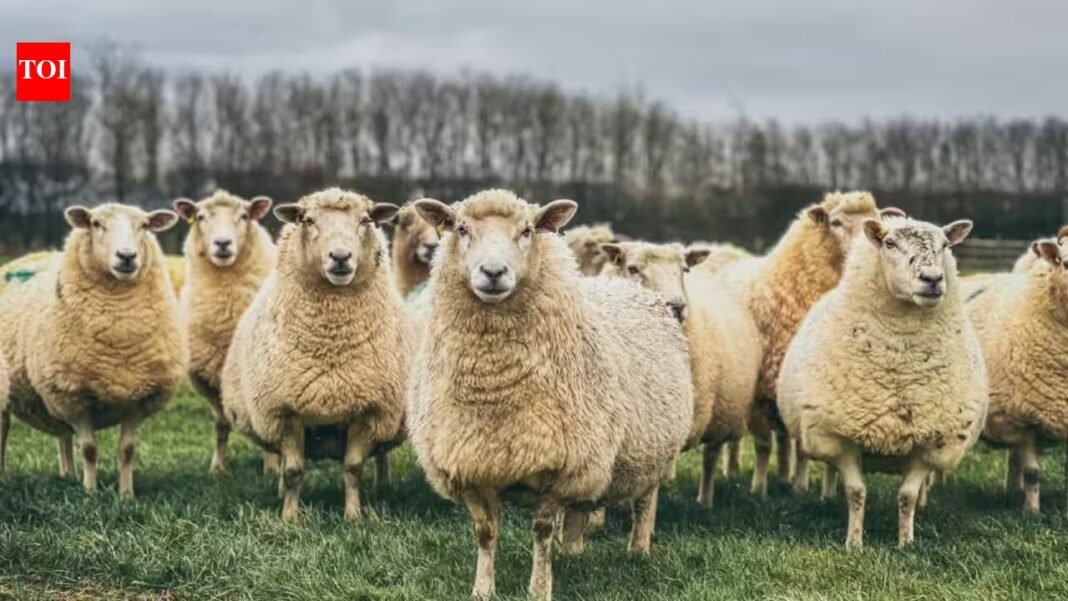
Sheep wool is normally treated as a waste product in farming, but two companies are turning it into rigid insulation panels for buildings. Vector Labs and Wool Insulation Wales developed the panels as a sustainable alternative to materials such as mineral wool and expanded polystyrene, which carry high embodied carbon costs. The wool is bound into a stiff, durable structure using a low-energy process. UKRI reports the panels could last up to 100 years when used in walls and under floors. The two firms formed a joint venture, Wull Technologies Ltd, to scale production.
How sheep wool could reduce carbon emissions in UK homes
According to UK Research and Innovation (UKRI), the UK’s ageing housing stock presents a significant challenge in reducing carbon emissions, with solid wall homes among the least energy efficient. UKRI states that external wall insulation (EWI) is one of the measures needed to address this.UKRI says that, to meet net zero targets, the country needs to install EWI in 250,000 homes annually by 2025, compared with the 11,000 homes upgraded in 2019. The article adds that traditional EWI materials, such as mineral wool and expanded polystyrene, “come with high embodied carbon costs”.
Sheep wool offers thermal and acoustic insulation benefits
UKRI describes sheep wool as an “underutilised natural fibre”. The project focuses on developing a low-energy binding process that allows the wool to form a stiff, durable structure, making it a sustainable insulation material for external walls.UKRI reports that the panels have shown strong performance in thermal insulation and acoustic absorption, making them suitable for residential and commercial applications. Neil Witten, Innovation Lead for Advanced Materials at Innovate UK, said that wool has “natural thermal, acoustic and flame retardant properties” and described it as normally a waste product. According to UKRI, the panels also align with circular economy principles, and wool’s natural biodegradability and nitrogen content make it suitable for eventual composting.
Wull Technologies aims to scale sheep wool insulation production
UKRI states that, after the Innovate UK-funded project finished in January 2025, Vector Labs and Wool Insulation Wales (WIW) formed a joint venture called Wull Technologies Ltd to scale production and commercialise the panels. In its article of 10 July 2025, UKRI said pre-seed investment had been secured and that production was set to ramp up to 250 square metres per week over the next six months.According to UKRI, Vector Labs leads the research, development and manufacturing of the panels, while WIW contributes sector expertise and drives commercial adoption. Liam Britnell, Co-Founder and Chief Technology Officer at Vector Homes, said: “The Innovate UK funding is really the enabler for all this development.” He told UKRI the funding gave access to the Graphene Engineering Innovation Centre, where early-stage exploratory research and development took place, and that de-risking early R&D is vital because it is “too high risk for private investors”.
Sheep wool panels could find new uses in sustainable packaging
UKRI reports that the partnership is engaging with local design businesses to ensure early deployments in sustainable building projects. The next step for Wull Technologies Ltd is to refine its market focus and scale production to meet demand. The company plans to raise seed investment in 2026 to expand operations and move to a larger manufacturing facility.UKRI says the technology is also attracting attention in adjacent sectors such as packaging, where wool-based panels could offer eco-friendly alternatives to synthetic materials. The article states that promoting sustainable materials enhances supply chain resilience and brings economic benefits to rural communities. UKRI concludes that, with sustainable construction solutions in high demand, rigid sheep wool panels could play a key role in decarbonising the UK’s housing stock.