



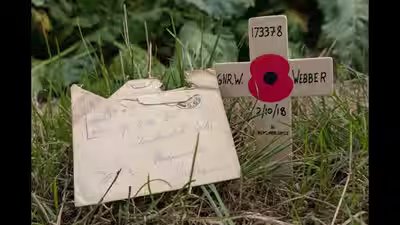
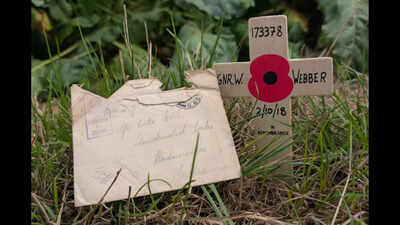
Over a century ago, a young soldier marched off to war, leaving behind the woman he loved. From the trenches, he kept up a steady stream of mail, pouring his homesickness, fears, and daydreams of coming back into page after page. All he wanted was to walk through his front door again and pick up life with his wife where they had left off.He never got the chance.Willie Webber was only 25 when he died in World War I, just weeks before the guns finally fell silent. His wife, Gladys, never saw him return; all she had left were the stacks of letters he had mailed home from the front lines.Now, more than a hundred years later, those fragile pages have pulled the couple’s story back out of obscurity—and inspired a local community to ensure their devotion isn’t lost to history.Over a hundred letters from the frontAccording to the BBC, Willie served as a gunner in the Royal Garrison Artillery’s 297th Siege Battery, enlisting in December 1917 and serving until October 1918. Throughout those months away, he sent more than 100 letters back to Gladys, whom he had married at St Edward’s Church in Wales.These weren’t polished speeches meant for posterity. They were raw, everyday notes from a twenty-something husband aching for home while surrounded by mud and artillery fire. In one letter, he signed off simply: “My darling girl, you are everything to me.” In another, he tucked pressed flowers inside the envelope alongside a note from “your own true hubby & loving sweetheart.”What hits hardest reading them today is how vividly Willie pictured life after the war. He constantly daydreamed about coming home, seeing Gladys every morning, and putting the chaos behind them. In one excerpt shared by the Royal Artillery Association, he wrote:“I often like to picture to myself what it would be like to come home…to see you every day but….this continued waiting is heart-breaking.”Cut short just before peaceWillie’s war ended tragically in France in 1918. Per the BBC, he wasn’t killed in a major offensive, but in a sudden accident when a gun backfired. He was 25 years old.The Armistice that officially ended World War I was signed on November 11, 1918 – only weeks after Willie died. Gladys was left behind with nothing but a box of letters and the weight of a future they never got to build. Because the couple had no children or direct descendants, their story slowly faded away as decades passed.A mechanic rescues the lettersMore than a century later, the bundle of wartime correspondence popped up in an online auction. Andy Garner, a mechanic from Norwich, England, who collects and self-publishes old wartime letters, bought the lot for $466.Reading through the ink-stained pages, Garner was floored by how palpable Willie’s affection for Gladys still felt after a hundred years. Speaking to the BBC, he noted how their bond anchored both of them through the worst circumstances. “No matter what he’s going through, their love shines through. It’s giving them both the hope to survive,” Garner said. To him, these weren’t just historical artifacts; they were an intimate window into two ordinary lives derailed by global conflict.A community steps in to remember themThe story took one more heartwarming turn after the sale went through. Keith Budgen, who had sold the letters in 2025, decided he didn’t feel right pocketing the money and offered to refund Garner. Instead of taking the cash back, the two men agreed to put it toward a permanent tribute to Willie and Gladys.By 2026, local residents rallied around the idea, raising over $2,000 to install a memorial bench at St Edward’s Church – the very spot where the couple had exchanged wedding vows.The Royal British Legion backed the effort as well. Ian Ferguson, who helped organize the project, pointed out that Willie’s name had never been inscribed on a war memorial in either his hometown or Knighton, making the bench a long-overdue recognition of his service.Reverend Rachael Storer of St Edward’s Church summed up why the project resonated with so many people: “Ultimately, this is a story about love.”Willie never wrote those letters expecting strangers to read them a hundred years down the road. He was just a young husband trying to stay close to his wife across an ocean and a war zone. Though he never made that trip home, the words he left behind have kept his love for Gladys alive far longer than he ever could have imagined.