



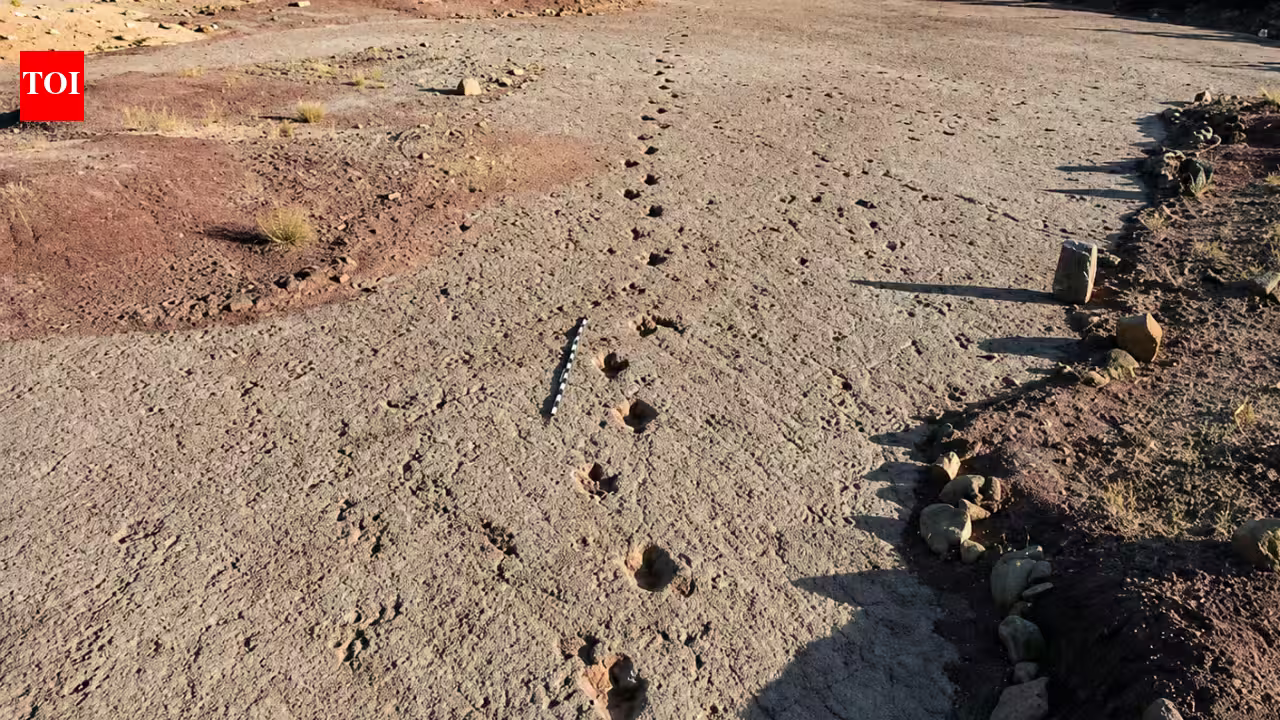
Millions of years before roads connected modern cities, dinosaurs were already following well-worn routes across ancient landscapes. A remarkable fossil site in central Bolivia has preserved this prehistoric movement in extraordinary detail. Scientists have documented more than 16,000 dinosaur footprints at the Carreras Pampa tracksite in Torotoro National Park, making it the world’s largest known concentration of dinosaur tracks from a single sedimentary layer. Dating back around 66 million years to the final chapter of the Cretaceous Period, the site offers a rare glimpse into how dinosaurs moved, hunted and interacted shortly before the mass extinction that brought the Age of Dinosaurs to an end.
Where is the 66-million-year-old dinosaur highway ?
The fossil tracksite is located at Carreras Pampa inside Torotoro National Park in central Bolivia. The park has long been recognised for its rich collection of dinosaur fossils, but Carreras Pampa stands out because it preserves an enormous ancient walking surface rather than skeletal remains.The exposed track-bearing rock covers approximately 7,485 square metres and has been divided into nine separate study sectors. Researchers believe the area was once a muddy shoreline bordering shallow lakes or coastal wetlands, where soft sediments captured dinosaur footprints before hardening into stone over millions of years.
Why are scientists calling it a dinosaur highway?
Although “dinosaur highway” is not an official geological term, researchers use it to describe the extraordinary concentration of trackways crossing the same ancient landscape.Many of the footprints travel in similar directions, suggesting that dinosaurs repeatedly used the same natural corridor while moving along the shoreline. Much like modern animals follow migration routes or established trails, these prehistoric creatures appear to have travelled across the area over an extended period, leaving behind thousands of overlapping footprints.
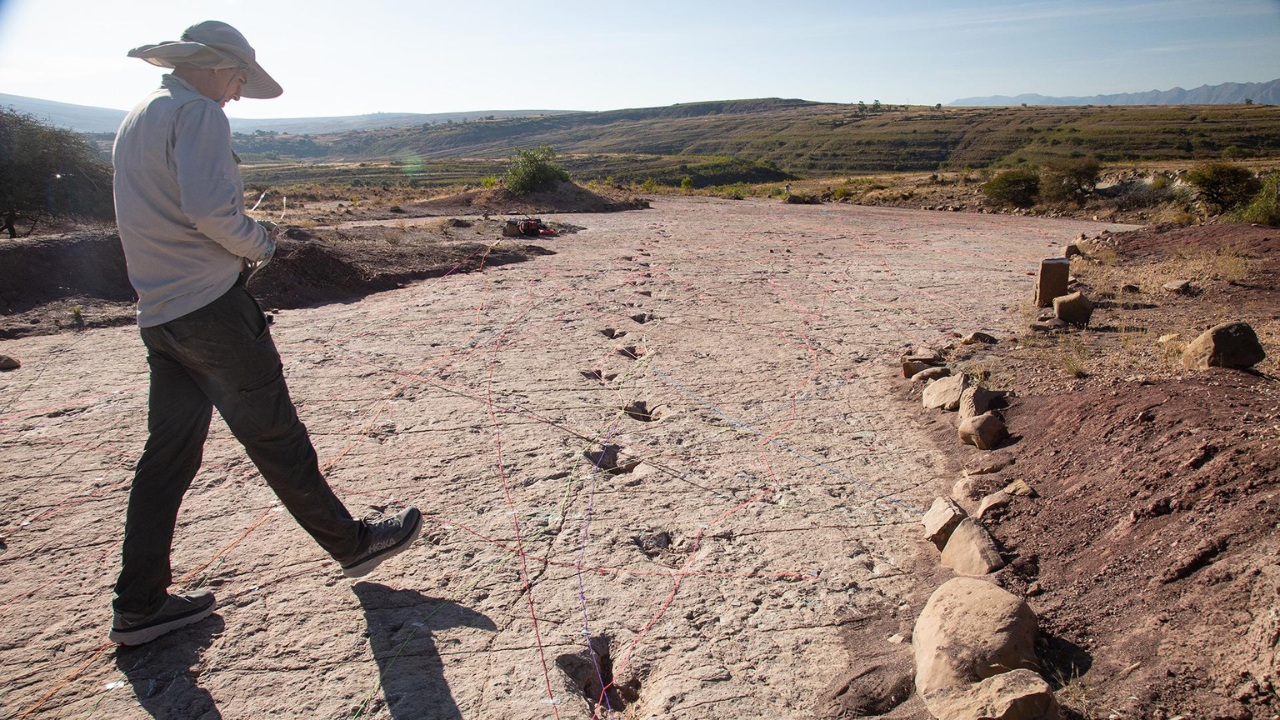
More than 16,000 footprints reveal an ancient world
The international research team documented an astonishing collection of trace fossils, including:
- More than 16,600 theropod footprints
- 1,321 continuous trackways
- 289 isolated footprints
- Around 280 swimming trackways
- More than 1,300 swimming claw marks
- Numerous tail drag impressions
- Fossilised bird footprints preserved alongside the dinosaur tracks
Together, these discoveries make Carreras Pampa the largest known dinosaur footprint site ever documented from a single sedimentary surface.
Who left these footprints?
Most of the tracks were made by theropods, a group of mostly meat-eating dinosaurs that walked on two legs and three toes. Famous members of this group include Tyrannosaurus rex, Velociraptor and Allosaurus, although scientists cannot identify the exact species responsible for the Bolivian footprints.Researchers identified 11 different footprint types, indicating that several kinds of theropods, along with birds and possibly other dinosaurs, moved through the ancient environment. The footprints also vary greatly in size, suggesting both juvenile and adult animals used the same route.
Evidence of walking, swimming and changing direction
Unlike dinosaur bones, footprints preserve behaviour rather than anatomy, making Carreras Pampa especially valuable.Scientists found evidence that dinosaurs were not simply walking across dry land. Some trackways indicate that animals were swimming through shallow water, leaving claw marks as they paddled. Other traces show sudden turns, pauses and tail drag marks, providing rare clues about how dinosaurs behaved in their natural environment.These trace fossils allow researchers to reconstruct movements that would otherwise remain impossible to observe from skeletal remains alone.
Why is the site around 66 million years old?
The tracksite dates to the Late Cretaceous Maastrichtian Stage, approximately 66 million years ago, only a short time before the asteroid impact that caused the extinction of non-avian dinosaurs.Some viral posts claim the footprints are between 66 and 101 million years old, but the detailed geological analysis published by researchers places the main footprint-bearing surface much closer to the end of the Cretaceous Period.This timing makes the discovery particularly significant because it captures dinosaur activity during the final moments of their dominance on Earth.
Why are footprints as important as dinosaur bones?
Footprints provide information that bones cannot.From the fossil tracks, scientists can estimate walking speed, direction of travel, group movement, behaviour near water and even how dinosaurs interacted with changing landscapes. The preserved swimming traces also demonstrate that some theropods crossed shallow bodies of water rather than avoiding them.Together, these details create a dynamic picture of prehistoric life instead of simply revealing what dinosaurs looked like.
Why is Carreras Pampa considered one of the world’s most important dinosaur sites?
Carreras Pampa is remarkable not only because of the sheer number of footprints but also because of the exceptional preservation of dinosaur behaviour.The site preserves the world’s largest known concentration of dinosaur footprints, extensive theropod trackways, rare swimming traces and detailed evidence of movement across an ancient shoreline. Researchers believe it will continue to provide new insights into dinosaur ecology, locomotion and behaviour for decades to come.As scientists continue studying the fossil-rich landscape, the ancient highway offers one of the clearest windows into the lives of dinosaurs during the closing chapter of their 165-million-year reign on Earth.