


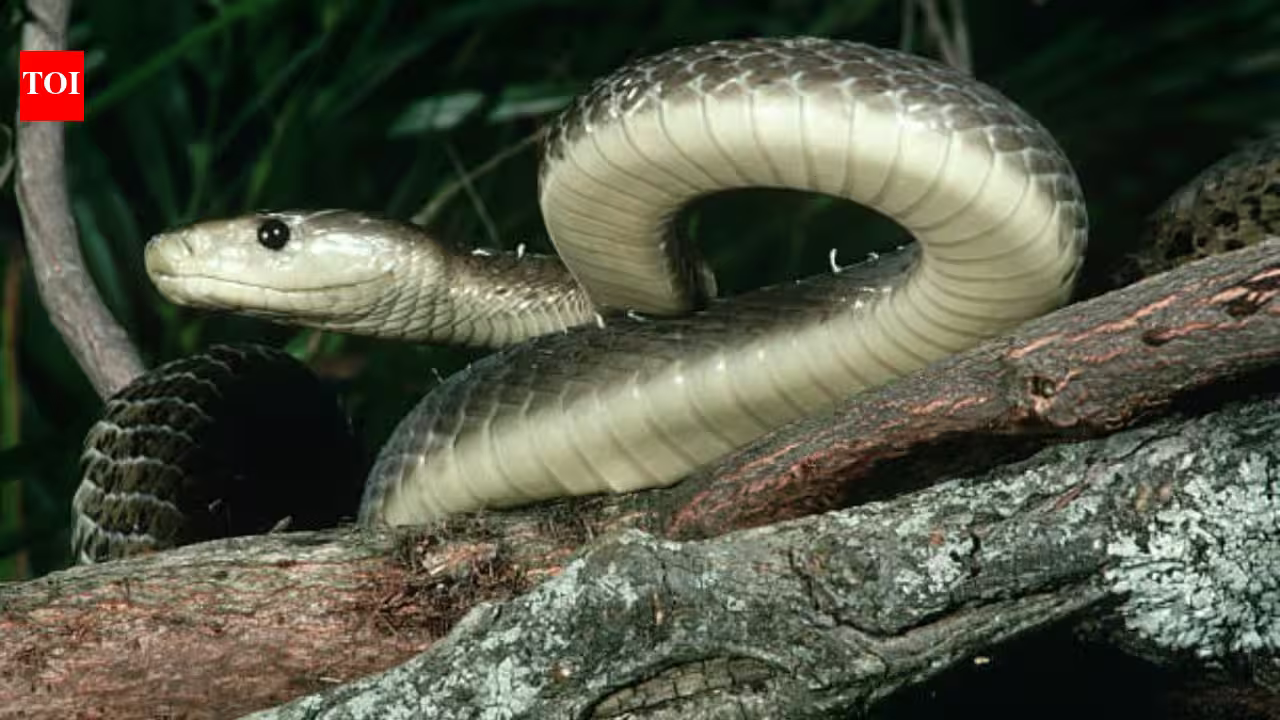
They are fast, lethally venomous and highly aggressive. But most important of all, they have been blamed for more human deaths than you could count. Being mentioned here are the Black Mambas, the fastest and deadliest snakes on Earth. They have a slithering speed of up to 12.5 miles per hour, but that is not the only arsenal these slithering giants hold. It is also their hunting style, striking and capturing the prey, all done with remarkable efficiency and yes, silence.
An introduction to Black Mambas
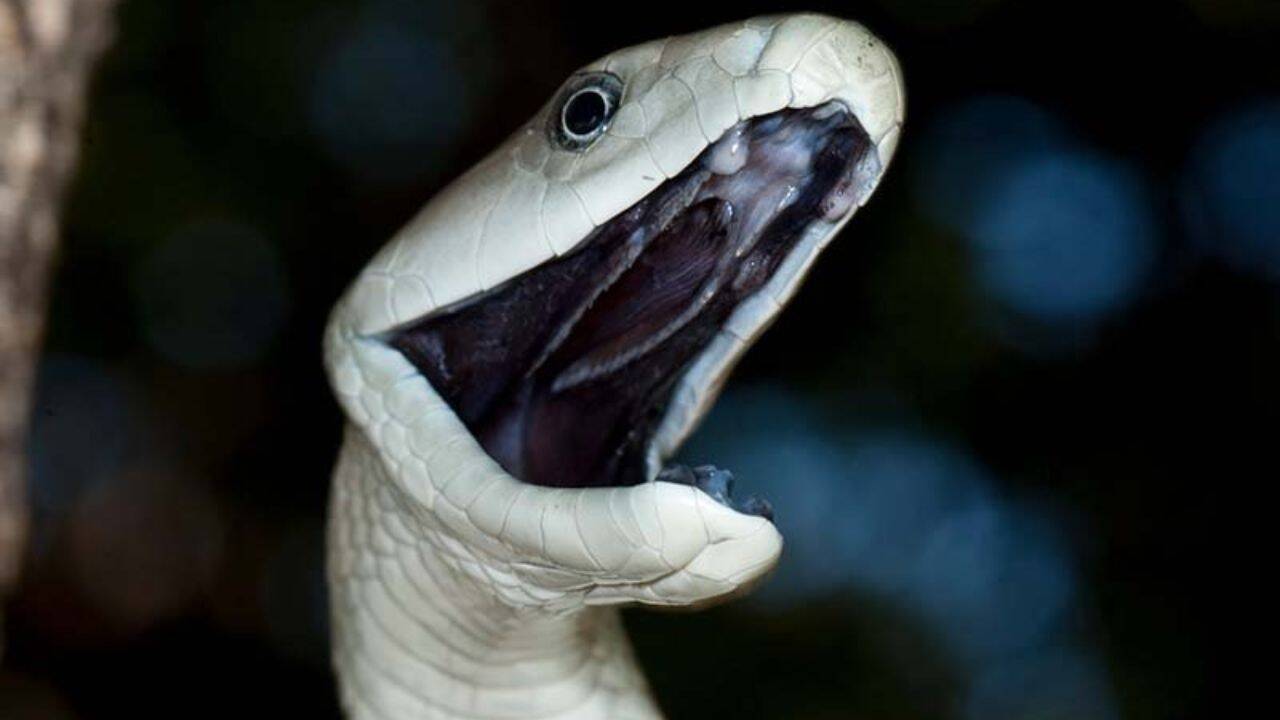
They get their name from the blue-black colour on the inside of their mouth, which they display when threatened.
Black mambas reside in the savannas and rocky hills of southern and eastern Africa. They are the continent’s longest venomous snake, reaching up to 14 feet in length, with an average of 8.2 feet. While their scales range from olive to grey in colour, they get their name from the blue-black colour on the inside of their mouth, which they display when threatened.There is no visible difference between a male and female mamba. In terms of breeding, it happens in spring and early summer. Males are known to travel long distances to find females and engage in wrestling matches with rival males over mating rights. The female lays between 10 and 25 eggs and never returns to the hatchlings which hatch in about 80 to 90 days and are about 51cm long when born. They are independent as soon as they are born and neither the female nor the male defends their young. Within 12 months, the young can grow to 2m in length but must avoid predation by carnivores such as the mongoose.
Myths about Black mambas
Due to their deadly nature, black mambas have been associated with numerous myths across African culture. There are many unfounded stories about the species. Some people believe a huge black mamba “moves like the wind”, roaming South Africa’s Mariepskop mountain. Others say a whirlwind is caused by the snake, and it is rumoured it can balance on the tip of its tail. One myth describes the black mamba coiling its body before rolling and launching an attack.
The attack of a Black mamba
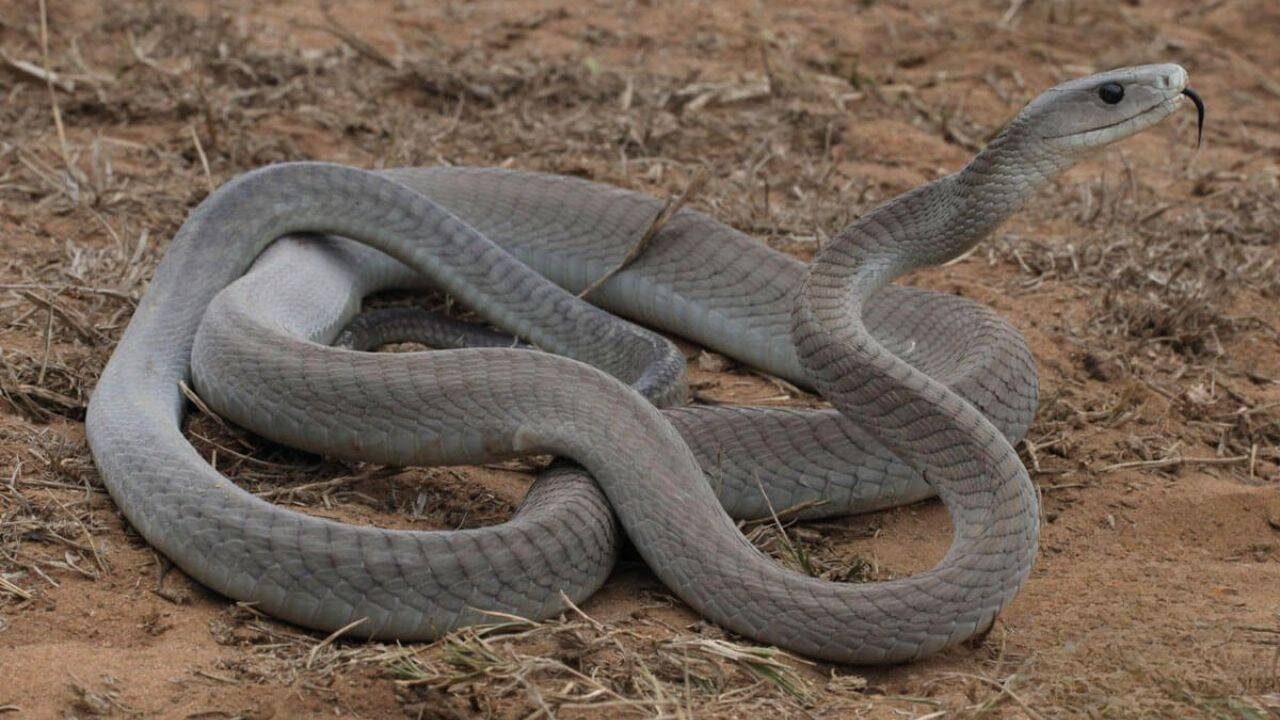
If an attacker persists, the mamba will strike not once, but repeatedly, injecting large amounts of potent neuro and cardiotoxin with each strike.
These snakes which are considered to be one of the most lethal on the planet are typically shy and will almost always seek to escape when confronted. It is not a social or territorial animal and while it may stay within a certain area, it may not defend it.However, when cornered, they rise to the occasion. These snakes will raise their heads, sometimes with a third of their body off the ground, spread their cobra-like neck-fap, open their black mouths and hiss. If an attacker persists, the mamba will strike not once, but repeatedly, injecting large amounts of potent neuro and cardiotoxin with each strike.In terms of hunting, black mambas travel quickly across rough ground or along low tree branches when hunting. They are able to hold their heads up to 1m above the ground when striking and can hold them 50cm above the ground even when moving.With extremely sharp eyesight, they can spot and strike their prey including rodents, bats, birds, and lizards like lightning, leaving their powerful venom to finish off the kill. The venom is injected through two hollow fangs at the front of its mouth which lie flat until the snake bites something, at which point small, movable mouth bones erect them. The venom causes rapid paralysis. Enzymes in the saliva start to digest prey (softening the meal) before it is swallowed whole.
Venom and antivenin
A bite from this fearsome serpent was almost always fatal, usually within about 20 minutes, before the advent of an antivenin. Unfortunately, antivenin is still not widely available in the rural parts of the mamba’s range, and mamba-related deaths remain frequent.The venom of a black mamba is highly toxic. Two drops of venom are enough to kill a person and a mamba can have up to 20 drops in its fangs. On average, one bite from a black mamba can deliver between 100 and 120 mg of venom, but 400mg has been recorded (10 to 15mg is enough to kill a human). The venom contains both neurotoxins and cardio toxins. The former affects the nervous system, while the latter attacks the heart.The initial symptoms of a bite include slight swelling where bitten and, or pain or a light burning sensation, the loss of control of the tongue and jaw, slurred speech, tunnel and blurred vision, drowsiness, paralysis of all muscle groups and mental confusion. A human can collapse within 45 minutes of a Black Mamba bite. Without treatment, it can take 7 to 15 hours for a Black Mamba bite to kill you. The sooner a person is treated after the bite, the better his chances of survival.Untreated, its bite has a fatality rate of 100 per cent, making it a killer among killers on a continent where it is thought that nearly 20,000 people die of snake bites each year, and the residents of Swaziland in southern Africa have suffered losses for generations.While a black mamba is one of the four mamba species found in the region, it firmly holds its place at the top as one of the deadliest and most dangerous snakes in the world. It might be best to remember that if you think you can run fast, a black mamba can run faster!