



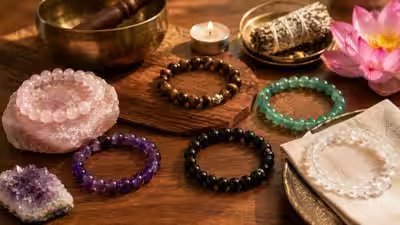
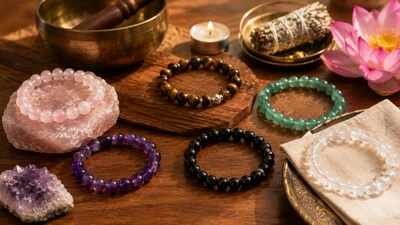
Crystal bracelets have become a part of everyday life. Some wear them for fashion, others wear them as an astrological remedy, while many wear them for healing, protection or attracting abundance.But here’s something most people don’t realise.A crystal bracelet doesn’t work simply because you’ve bought a genuine crystal. How you wear it is equally important. In fact, small mistakes can reduce its effectiveness and, in some cases, even work against the very purpose for which you started wearing it.Here are five common mistakes which people commit, and do not get desired result from crystals.Wearing a Crystal Bracelet Without Energizing ItThis is perhaps the biggest mistake.Many people assume that buying a natural crystal is enough. It isn’t.In our tradition, every spiritual object undergoes Pran Pratishtha before it is used. The same principle applies to crystals. Pran Pratishtha is the process of energizing and dedicating the crystal for desired purpose.Without energization, a crystal is simply a natural stone. It may be beautiful and valuable, but it has not yet been prepared to function as a spiritual or astrological aid.If you truly want to experience the intended benefits of a crystal, begin with Pran Pratishtha.Wearing Crystals That Conflict With Each OtherToday, social media has made stacking crystal bracelets a trend.Unfortunately, crystals are not fashion accessories alone.Every crystal carries a different energetic nature. Some promote grounding, some stimulate action, while others enhance calmness or spiritual growth. Wearing crystals with conflicting properties without proper guidance may reduce their intended effect.The objective should never be to wear more crystals. It should be to wear the right crystal, or the right combination, for your need.Not Recharging Your Crystal Every Purnima (Full Moon)Just as we regularly clean our homes and recharge ourselves, crystals too deserve periodic care.One of the oldest traditions is to recharge crystals on every Purnima (Full Moon). It is believed that the lunar energy symbolically refreshes the crystal before the next lunar cycle.This simple monthly ritual also reminds you to reconnect with your intention. After all, remedies work best when they are practised with awareness rather than habit.Wearing Crystal Bracelets on Elastic StringsTake a close look at most crystal bracelets available in the market today. Nearly all of them are strung using TPU or silicone elastic because it is inexpensive and easy to manufacture.Convenience, however, isn’t always tradition.Shastras recommend wearing spiritually significant objects either in natural thread—red, yellow or a combination of both or in metals such as Gold, Silver, Panch Dhatu or Asht Dhatu.From a Vedic astrological perspective, synthetic materials are associated with the qualities of Rahu artificiality, illusion and imitation. Wearing a crystal bracelet on TPU or silicone elastic is therefore traditionally considered unfavourable. Many practitioners believe it not only reduces the intended benefits of the crystal but may also strengthen Rahu’s negative influence, creating misunderstandings, confusion and disturbances in personal relationships.If a crystal is meant to harmonise your energy, the material holding it together should also support that intention.Wearing Duplicate or Artificial CrystalsThis is becoming increasingly common.The market today is flooded with dyed stones, glass, resin and chemically treated materials that are sold as natural crystals. To an untrained eye, they often look identical.But appearance alone doesn’t determine authenticity.In Vedic astrology, natural crystals are closely associated with Shani (Saturn) and Shukra (Venus) because both planets signify natural minerals, authenticity, beauty, refinement and material value. Wearing duplicate or artificial crystals is traditionally believed to disturb the positive influence of these planets rather than strengthen it.If you are wearing a crystal as an astrological remedy, authenticity isn’t optional—it is essential.Always buy your crystals from a trusted and knowledgeable source who can verify their genuineness.