



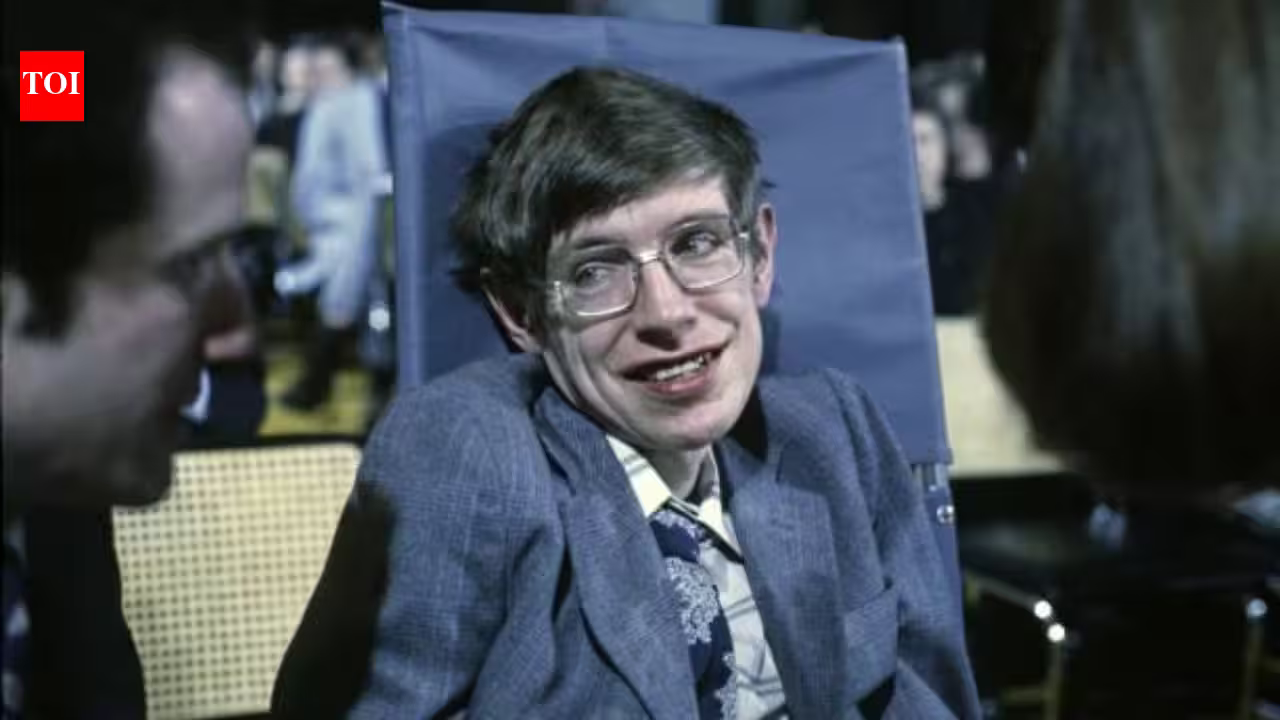
Life rarely goes exactly the way anyone plans it. Careers shift direction unexpectedly, and personal challenges arrive without any warning at all. Stephen Hawking faced a version of that shock more extreme than almost anyone. Diagnosed with motor neurone disease at 21, with doctors initially giving him only a few years left, he later summed up his own outlook in one plain sentence. “My expectations were reduced to zero when I was 21,” he said. “Everything since then has been a bonus.” He went on to live for more than five decades after that diagnosis, becoming one of the most celebrated scientists of his generation along the way.
Quote of the day by Stephen Hawking
“My expectations were reduced to zero when I was 21. Everything since then has been a bonus”
What is the meaning behind the quote by Stephen Hawking
Hawking is describing a genuine, dramatic shift in how he saw his own life. After his diagnosis, most of the ambitions he had previously imagined suddenly looked impossible. Once his expectations effectively collapsed to nothing, he began treating every subsequent achievement, every experience, every additional year of life as something unexpected rather than something owed to him. This is not really an argument against having ambition at all. It is about replacing entitlement with genuine gratitude, and once someone stops taking their own life for granted, even ordinary moments tend to become considerably more meaningful.
Where this quote actually comes from
Hawking said this in an interview with Deborah Solomon, published in The New York Times Magazine on 12 December 2004, in a piece titled “The Science of Second-Guessing.” Solomon had asked him directly, “Are you always this cheerful? Seriously, how do you keep your spirits up?” His answer was the line now quoted everywhere, a genuinely spontaneous response to a genuinely direct question, rather than a rehearsed line prepared for a book or a speech.
Why perspective tends to shape happiness more than circumstances do
Plenty of people assume happiness depends mainly on hitting certain milestones, a promotion, a bigger house, some form of public recognition. Genuine satisfaction actually tends to depend far more on perspective than on circumstance alone. Hawking’s own life demonstrated that real meaning is still possible even while facing genuinely extraordinary challenges. Changing how someone actually views their life tends to change how they experience it, often more than changing the circumstances themselves ever could.
Why adversity can genuinely reveal a new sense of purpose
Difficult experiences tend to force people to rethink what actually matters to them. Plenty discover strengths they never realised they had. Others develop deeper empathy or a stronger appreciation for relationships they had previously taken for granted. Hawking’s diagnosis reshaped his entire outlook, but it never actually ended his scientific curiosity. If anything, it sharpened his focus on the work he genuinely loved doing.
Why gratitude tends to grow specifically after real hardship
People who have faced genuinely significant challenges often develop a much deeper appreciation for the ordinary things, good health, friendship, learning, simply having time at all. Hawking’s quote is really a reminder that gratitude becomes considerably easier once someone actually recognises that none of it was ever guaranteed in the first place.
Why real limitations never actually defined his potential
Hawking lost most of his physical mobility as his illness progressed. His intellectual curiosity, by contrast, stayed genuinely limitless throughout. He kept conducting groundbreaking research, writing bestselling books and delivering lectures, all using assistive technology built specifically to let him keep working. His life shows that circumstances can genuinely impose real limits without ever actually determining what someone is capable of contributing to the world.
Why resilience tends to build up one day at a time
Resilience rarely arrives all at once in a single moment. It usually builds up through small decisions repeated consistently, continuing to learn, continuing to hope, continuing to actually contribute something. Hawking’s achievements were never really the result of ignoring adversity outright. They came from refusing to let that adversity become the final chapter of his own story.
Why this idea reaches well beyond science entirely
Although Hawking was speaking specifically about his own medical diagnosis, the underlying lesson applies to plenty of other situations. Someone rebuilding their life after a serious illness. A student recovering from a genuine failure. An entrepreneur starting again after a business setback that looked final at the time. Life does not always unfold according to plan, and it can still hold extraordinary meaning regardless.
A note on Stephen Hawking’s legacy
Stephen Hawking, who lived from 1942 to 2018, was one of the world’s most celebrated theoretical physicists and cosmologists. Despite living with motor neurone disease for more than five decades, he made major contributions to the understanding of black holes, quantum gravity and the origins of the universe itself. His bestselling book A Brief History of Time introduced genuinely complex scientific ideas to millions of ordinary readers, and his determination became a widely recognised symbol of resilience and intellectual curiosity.
Other memorable quotes by Stephen Hawking
- “However difficult life may seem, there is always something you can do and succeed at.”
- “Remember to look up at the stars and not down at your feet.”
- “
Intelligence is the ability to adapt to change.” - “Work gives you meaning and purpose, and life is empty without it.”
Why the world still remembers it
Hawking’s quote is a reminder that life’s greatest victories are not always measured through fame, wealth or professional success alone. Sometimes they are simply measured by refusing to stop living fully despite genuinely overwhelming adversity. His life demonstrated that even when circumstances seem to narrow someone’s future dramatically, resilience, curiosity and real gratitude can still open up possibilities considerably larger than anyone watching from the outside would have guessed.