



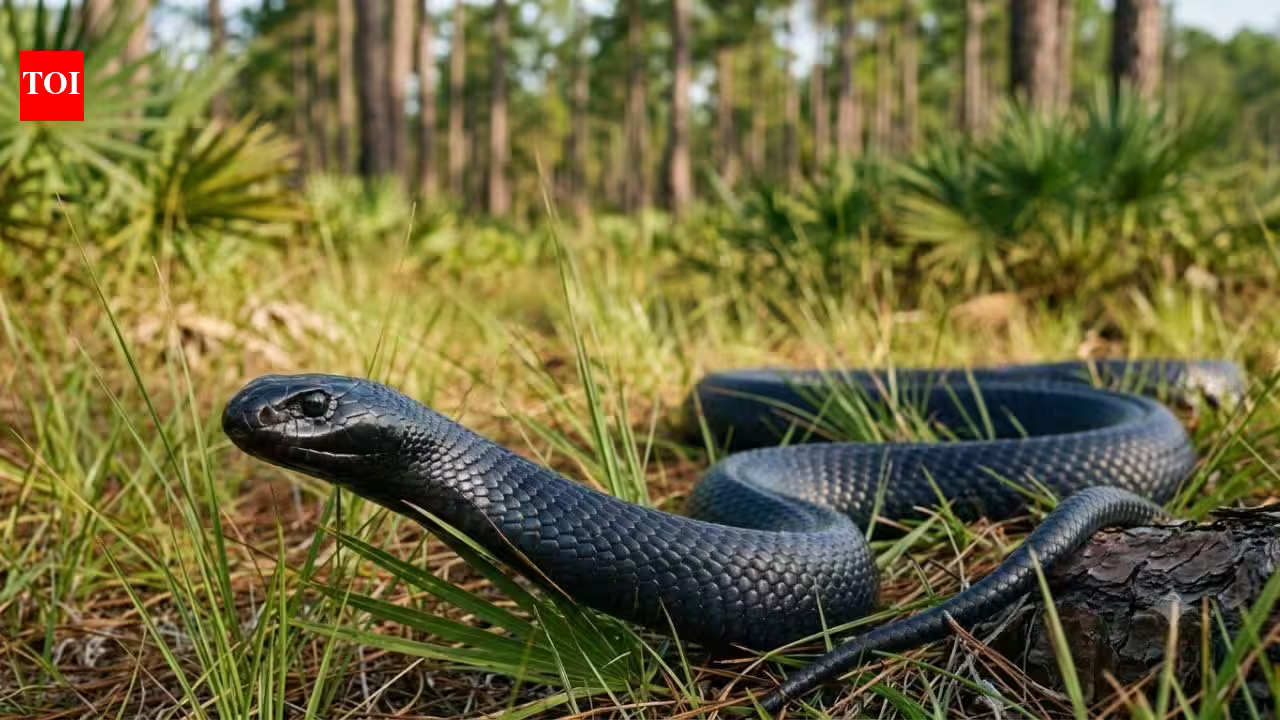
Conservation work rarely produces instant results, particularly when a species has disappeared from large parts of its historical range. Recovery often depends on years of habitat restoration, careful breeding, field monitoring and repeated releases before lasting changes become visible in the wild. That gradual process is unfolding once again in the southeastern United States, where eastern indigo snakes are being returned to landscapes they once occupied naturally.As reported by Central Florida Zoo, in 2026 during the spring season, there was another release of snakes bred in captivity in protected areas in Florida and Alabama. Although the numbers may seem insignificant, it is a small part of a bigger picture that involves creating sustainable populations of one of the most unique reptiles in North America.
Florida and Alabama welcomed 42 eastern indigo snakes recently in Spring 2026
During late April and early May, wildlife teams released 42 juvenile eastern indigo snakes into carefully selected conservation sites. Half of the snakes were introduced at the Apalachicola Bluffs and Ravines Preserve in Florida’s Panhandle, while the remaining animals were released in Alabama’s Conecuh National Forest.The releases were coordinated through partnerships involving the Central Florida Zoo & Botanical Gardens’ Orianne Center for Indigo Conservation alongside conservation organisations and wildlife agencies working across the region.This year’s Florida release also marked an important milestone. It represented the 10th consecutive annual release at the Apalachicola preserve, reflecting nearly a decade of continuous restoration work at the site.
How habitat loss pushed the eastern indigo snake into decline
The eastern indigo snake historically occupied much of the southeastern United States, including Florida, southern Georgia, Alabama and parts of eastern Mississippi.Over time, habitat loss and fragmentation caused substantial declines across northern parts of its range. Longleaf pine forests, sandhills and associated habitats gradually disappeared or became divided into isolated patches, making it increasingly difficult for populations to survive.At the Apalachicola Bluffs and Ravines Preserve, the species had not been recorded since the early 1980s before reintroduction efforts began several years ago.Rather than relying on natural recolonisation, conservationists chose to rebuild local populations through carefully managed releases supported by long-term habitat management.
How conservationists prepare eastern indigo snakes for release
The programme begins long before the animals reach release sites. Eastern indigo snakes are bred and hatched through the Orianne Center for Indigo Conservation before spending their first year receiving specialised care and monitoring. After that, many are transferred to partner organisations where they continue growing before eventually being released into restored habitat.This extended preparation is intended to improve their chances of surviving after entering the wild. By releasing healthy juvenile snakes that have reached a suitable size, conservation teams hope to strengthen the prospects for long-term population establishment.
The vital role of the eastern indigo snake in the wild
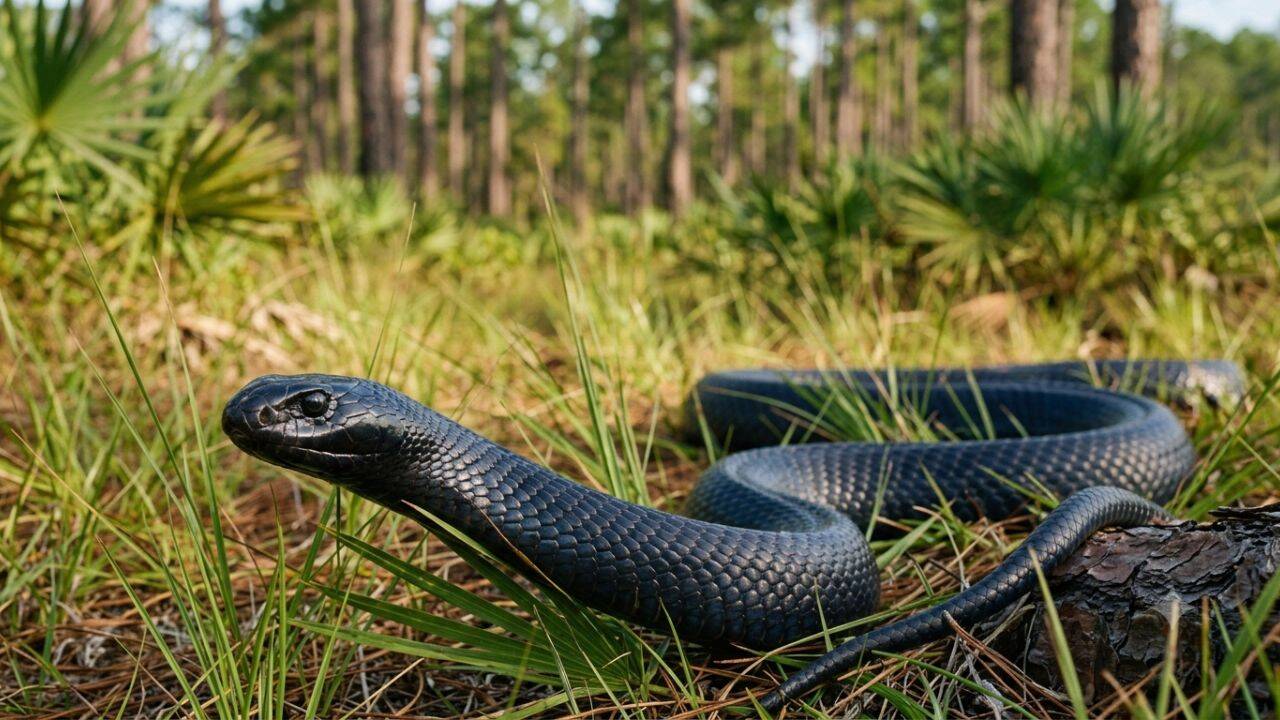
Despite being commonly misconceived because of their large size, eastern indigo snakes are non-venomous and are crucial to southeast ecosystems. Being apex predators, they have a varied diet and eat a great number of animals such as rodents, amphibians, and other snakes, even those which are venomous. This diverse diet ensures the balance of ecology in longleaf pine and sandhill areas. These snakes grow up to 8 feet long, thus becoming the longest snake native to North America.During the cold season, especially in the northern regions of their habitat, eastern indigo snakes use burrows created by gopher tortoises. They protect them from cold while proving that there are significant ecological connections between various species.
Evidence the eastern indigo snake is breeding in the wild
The recent findings reveals that some of the snakes that have already been released into the wild have been found to have lived for many years in the wild and include one female snake that was released in 2019. Even more important is the fact that there were wild-born hatchlings along with the adult snakes found in the wild. The presence of young snakes that have not been born in captivity indicates that natural reproduction is occurring among the released snakes. A large adult male measuring around six feet in length has also been recorded, providing further evidence that some released individuals are thriving after reintroduction.