



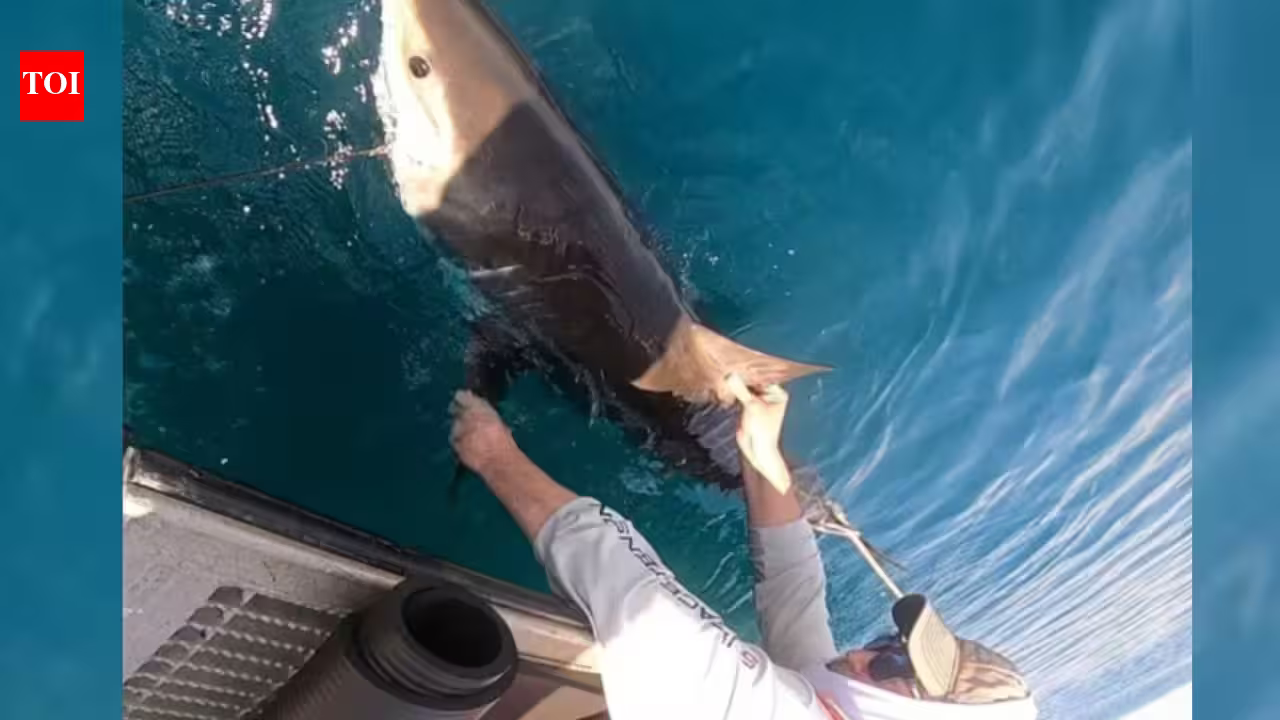
Scientists in the US are testing an unusual way to collect ocean data that could eventually help improve hurricane forecasts, by using sharks as mobile ocean sensors.Researchers from the University of Delaware are attaching small electronic tags to sharks swimming off the US East Coast. The tags record information such as water temperature, salinity and depth as the animals move through the ocean.The aim is to use sharks to collect measurements from parts of the Atlantic that can be difficult and expensive to monitor regularly. Scientists hope these observations will add to existing ocean data and help improve understanding of how hurricanes develop and strengthen.The research is led by Aaron Carlisle, a marine scientist at the University of Delaware.
CTD tags on Sharks
The tags used in the research are called CTD tags. These small electronic devices measure electrical conductivity, which is closely linked to the amount of salt in seawater, along with temperature and depth.As sharks swim and dive, the tags record these measurements. When a tagged shark comes close enough to the surface, the device can communicate with satellites and send the information to an orbiting network of satellite receivers.“Animal-borne sensors have been used successfully by oceanographers for years, particularly on elephant seals in polar regions where scientific observations are scarce,” Carlisle said, as quoted by Reuters.According to him, Sharks offer another option because they are found widely across the ocean and are easier to access than some protected marine mammals. Until now, shark tagging has mainly been used to track where the animals travel and the habitats they use.The University of Delaware team is selecting shark species that can collect data useful for hurricane research and that surface often enough for their tags to transmit information. Earlier analyses identified shortfin mako sharks, blue sharks, smooth hammerheads and juvenile great white sharks as strong candidates for the work in the North Atlantic.
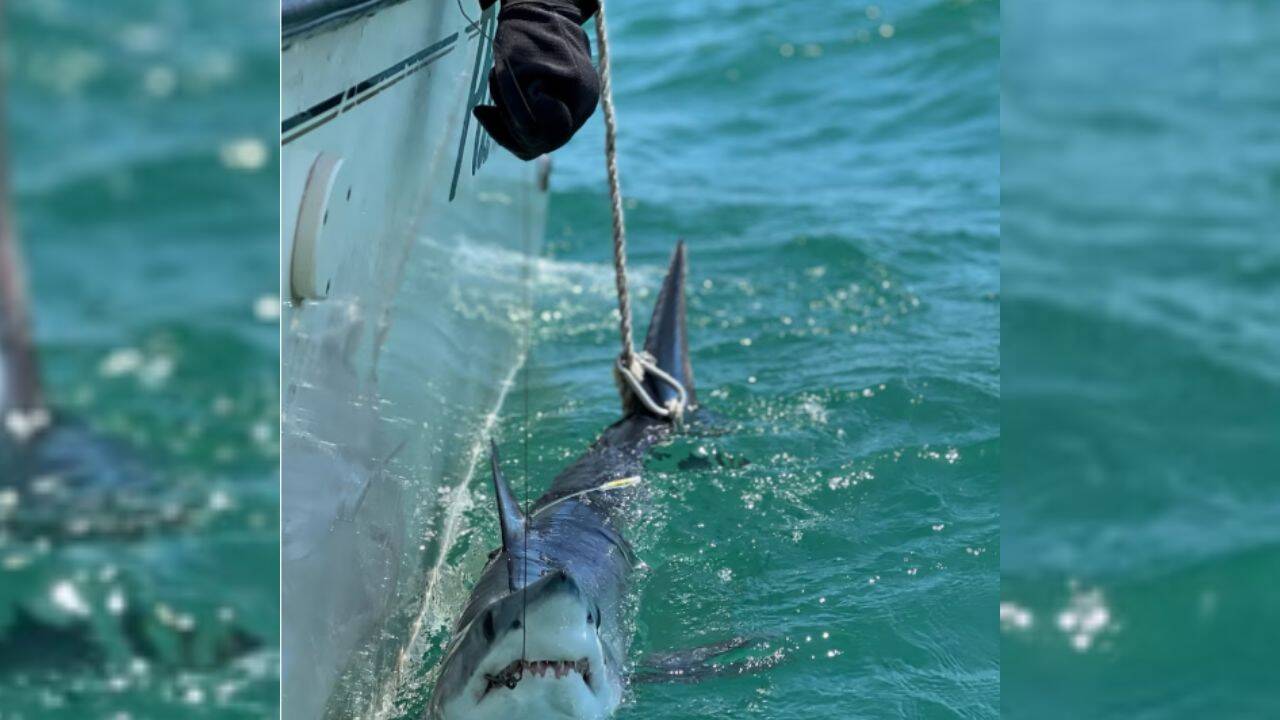
A mako shark caught by researchers off the coast of Long Island, New York (Reuters photo)
How sharks are tagged
The tagging work begins in early May, when highly migratory shark species move closer to the coast from their winter habitats farther out in the Atlantic, according to Caroline Wiernicki, a University of Delaware doctoral candidate in marine science.Researchers travel about 30 to 40 miles, or 50 to 65 km, offshore on a research vessel. They then put out baited lines and usually wait for two to three hours for a shark to take the bait.Once a shark is caught, the tagging process is carried out quickly. “The tags are attached to the dorsal fin. Then every time the shark fins (swims) at the surface, the tag can communicate and transmit data to the orbiting network of satellite receivers,” Carlisle said. According to him, the process works “like a pit crew” during an auto race and usually takes less than five minutes.The researchers carry out the work under institutional animal care oversight to reduce the impact on the sharks. The tags are attached using materials designed to corrode and eventually fall off.Each shark also receives a health check before it is released. Carlisle said this is important because a stressed or harmed shark may not behave naturally, which could affect the quality of the data collected.
Ocean temperature and hurricanes
The research is based on the link between the heat stored in the upper ocean and hurricane strength. Warm water in the mixed layer provides heat that can feed a hurricane as it moves over the ocean.“We are really most interested in the heat content of the top layer of the ocean, which is known as the mixed layer,” Carlisle said.“This is the part of the water column that really drives hurricane intensity- warmer mixed layer equals stronger hurricane, as it holds the heat that feeds hurricanes,” he added.The University of Delaware said its shark tagging work is also helping researchers gather temperature and salinity measurements from parts of the Atlantic that are difficult and costly to monitor consistently.The data could help scientists study the Mid-Atlantic’s seasonal ‘cold pool’, a layer of colder water near the bottom of the ocean. The cold pool can influence how quickly hurricanes intensify.