



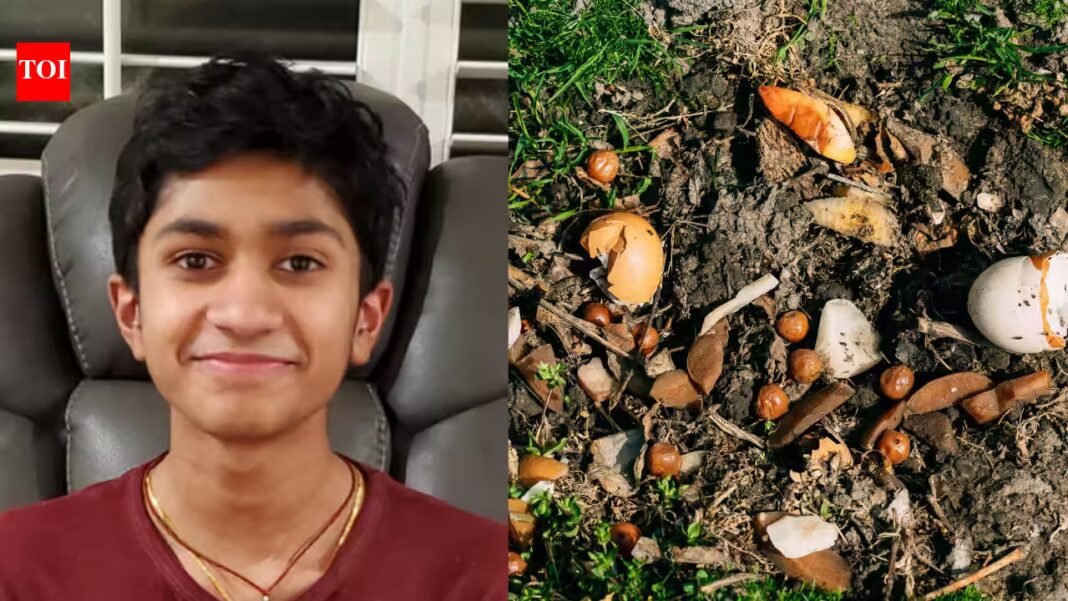
Organic gardening is described as the natural, wholesome choice, yet an eighth grader from Ripon, California, has shown that animal-based fertiliser can carry a hidden microbial problem. Virinchi R. Madireddy tested cow, chicken, fish and bat manure for bacteria that survive an antibiotic, and cow manure turned out to hold the richest variety of them. His project earned him a place among thirty finalists in the 2026 Thermo Fisher Scientific Junior Innovators Challenge, a national middle school research competition. Here is what he did, what he found, and why it matters for gardeners, farmers and anyone who eats fresh produce.
Why antibiotic resistance in organic fertiliser is a growing public health concern
Antibiotic resistance is one of the most serious threats to human health, and Virinchi learned that most antibiotics are not actually prescribed to people. They are given to livestock, both to prevent disease and to help animals grow faster. More antibiotic use can encourage resistant bacteria to emerge, and those bacteria end up in animal manure.That matters because manure is widely sold and spread as fertiliser. Virinchi noted that resistant bacteria can travel through soil, reach plants and enter the food chain. His question was simple, do commercial animal-based fertilisers actually contain antibiotic-resistant bacteria?
How Virinchi Madireddy tested cow, chicken, fish and bat manure against garden soil
Virinchi compared four animal-based products, cow manure, chicken manure, fish manure and bat guano, with ordinary garden soil. He mixed each sample into a solution and spread it on agar plates, which are dishes of jelly-like growth medium, laced with the antibiotic ampicillin.The antibiotic acts as a filter. Bacteria that are not resistant are killed, so only resistant bacteria can grow. He left the plates at room temperature for two weeks, then extracted genetic material from the colonies that appeared and sent it to a company for sequencing, which identifies the bacteria present.
His project earned him a place among thirty finalists in the 2026 Thermo Fisher Scientific Junior Innovators Challenge (Image: Canva)
Results: Cow manure fertiliser contained the richest mix of antibiotic-resistant bacteria
Resistant bacteria turned up in regular garden soil, cow manure and chicken manure. Neither bat guano nor fish manure produced any resistant bacteria in his tests. Cow manure stood out for the highest richness of antibiotic-resistant bacteria, meaning the greatest variety of resistant types, and some of those bacteria could cause disease.His experiment used a single antibiotic, so the results show a pattern worth investigating further rather than a verdict on any particular product.
What the findings mean for gardeners, farmers and food safety
Virinchi described the spread of resistant bacteria through soil as a significant public health concern, and his results give that worry some evidence. Fertilisers made from livestock waste may be a route by which resistant bacteria reach farmland, gardens and crops. Fish manure and bat guano did not show the same problem in his experiment, which suggests that the source of a fertiliser could matter.Larger studies using more antibiotics, more brands and more crops would be needed to confirm this. Even so, a middle school project has pointed at a question that deserves wider attention.
About the young scientist behind the antibiotic resistance fertiliser research
Virinchi attends California Connections Academy at Ripon and is a Scribe in his Boy Scout troop, where he keeps the troop’s records. He enjoys public speaking and writes poems and short stories, some of which have been published. He hopes to become a microbiologist, drawn to the microscopic organisms living in soil.The thirty finalists receive a five hundred dollar cash award and will compete for more than one hundred thousand dollars in prizes during finals week in the nation’s capital from October 23 to 28.