


NEW DELHI: In May 2019, before the pandemic had pressed the pause button on the world, Sagar Shah, already an International Master (IM) and one of the most influential voices in today’s chess fraternity, wrote a line in his ChessBase column: “Just like Humpy (Koneru) and Harika (Dronavalli) have made the world take note of Indian women’s chess over the years, we have a feeling that within a few years Sahithi (Varshini Moogi) and Savitha (Shri Baskar) will also be right up there with the best in women’s chess!”
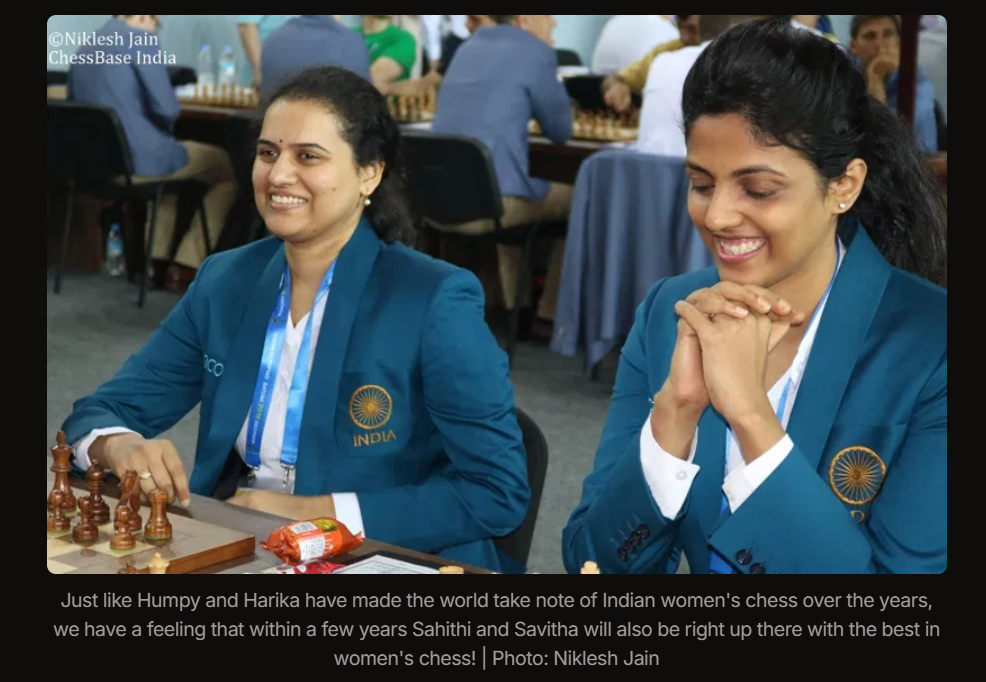
Sagar Shah wrote it back in 2019.
More than seven years have passed, and the same line reads less like a prediction and more like a question of legacy, much like asking whether Lamine Yamal could become the next Lionel Messi for Barcelona or whether Carlos Alcaraz could carry the torch of Spanish tennis after Rafael Nadal.Savitha added a team bronze to her growing list of accolades while also becoming the only Indian to win an individual gold medal at the eventBoth girls are now 19. At the Chess Olympiad in Samarkand last month, Savitha added a team bronze to her growing list of accolades while also becoming the only Indian to win an individual gold medal at the event.Sahithi Varshini, on the other hand, has had a less decorated career so far. The Vizag-born prodigy recently became India’s latest Woman Grandmaster (WGM), a milestone by any measure. But is this the best she can do?“Whatever she has achieved so far, including this one (the WGM title), is not up to her potential. This is just a mere beginning,” Lokeswara Moogi Rao, her father and only coach to date, told TimesofIndia.com in an exclusive interaction.
The title and the three norms behind it
Just last month, Sahithi’s third and final WGM norm came at the IM VII Round Robin in Serbia. The 2007-born player finished second with 6/9, recorded a performance rating of 2408, and gained 23 rating points. That completed the requirements.The first two norms came in Hungary. The first was achieved at the Golden Horse IM Round Robin in September 2025, while the second came at the Kanizsa Open in August 2026, where she defeated GM Yeshaayahu Tzidkiya and recorded a performance rating of 2429.
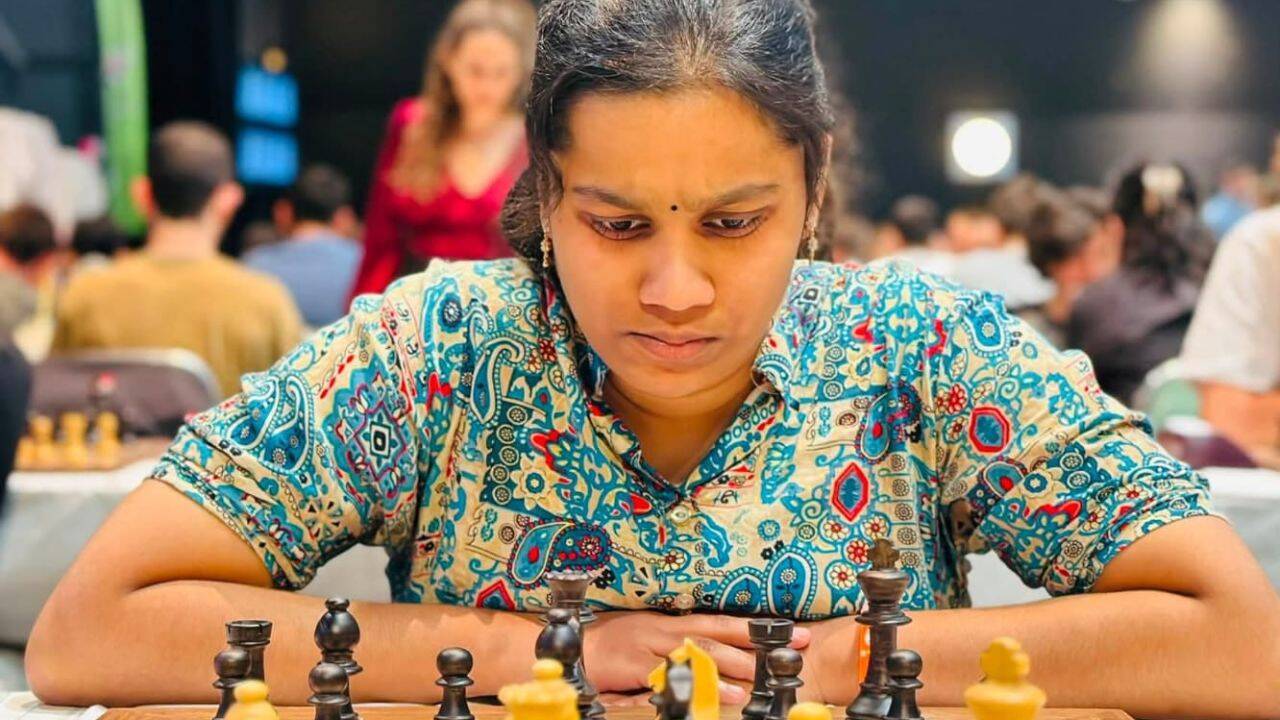
Sahithi Varshini (Special Arrangements)
On paper, it may look like a clean progression. But the story behind it is much messier.To give a glimpse of how challenging it has been, when Sahithi was six, she caught dengue. She was on a ventilator for a week. She survived, and her family has always seen her recovery as a second life.
What’s in the name?
Long before chess became a part of his life, Lokeswara Moogi Rao, also known as Lokesh in the circuit, had discovered his passion in literature. During his college days, he spent hours immersed in English novels and occasionally tried his hand at writing. Years later, that love for literature would find its way into the name of his second daughter.“Sahithi is similar to Sahitya, which means literature,” Lokesh explained. But the name had another influence, one rooted in music.Lokesh comes from a family with a rich artistic background. His father’s side of the family was involved in theatre, and music was also part of their household. Lokesh himself was a keen singer, winning several prizes at the state level. Among the ragas he particularly admired was Amruthavarshini, whose name he wanted to draw upon for his daughter.
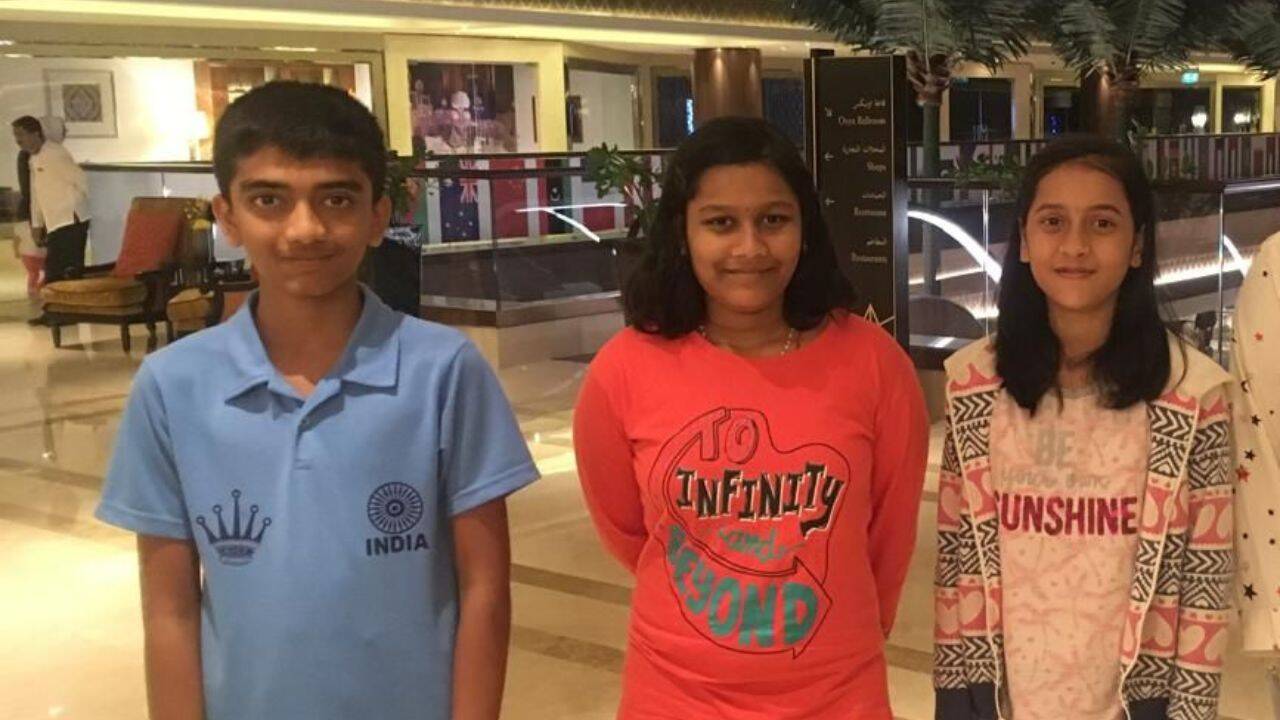
Sahithi Varshini with Gukesh and Divya Deshmukh (Special Arrangements)
His wife, however, felt that literature deserved a place in the name, too. And so, the two influences came together — Sahithi, inspired by literature, and Varshini, drawn from music.“But eventually, she didn’t belong to either of the two and chose the 64 squares,” Lokesh said with a smile. “She made a name for herself in a different domain.”Lokesh was born in a remote village on the edge of Yarada Hills, close enough to the sea that you could see it from the top. But there was no electricity. His father’s side of the family had earned a living selling fish. Walking to the next colony for food took half an hour.He still became a school topper and then a state-ranked student in the engineering entrance. But the family could not afford it. Lokesh’s father had retired, and there was no financial backup. He left the course, took a small job after completing a diploma course, and finished an engineering degree by correspondence. Years later, he joined HPCL as an officer.
How chess made entry
Lokesh was in his early 30s when he started taking chess seriously. He ran a literature club, a small group that exchanged idioms, short stories, and poems by email, trying to sharpen their English in Vizag.One member, Dinesh, a young medical student who lived opposite him, brought a huge chess trophy to the club one day after becoming the Andhra University chess champion. Having learnt that Lokesh had played chess as a child, Dinesh turned up at his house at ten one night with a chessboard.Lokesh’s wife Jaya Sri, however, was left unimpressed, asking the two of them to play the game on the balcony.Lokesh was close to winning the first game and then collapsed. The next day Dinesh won two more. The day after, he won two again, and told Lokesh he had found his weakness. “I took it as a challenge,” Lokesh recalled. “I wanted to win one game against him. That is how it started.”He bought a book from a local shop and began reading in the refinery’s control room, where officers sit around digital boards operating the plant. He would sketch positions on paper, then rub them out and redraw. A senior colleague, VS Prasad, caught him doing it and asked if he played chess. Lokesh begged him not to tell the bosses. Prasad took him home instead, to a shelf of 40 or 50 chess books.
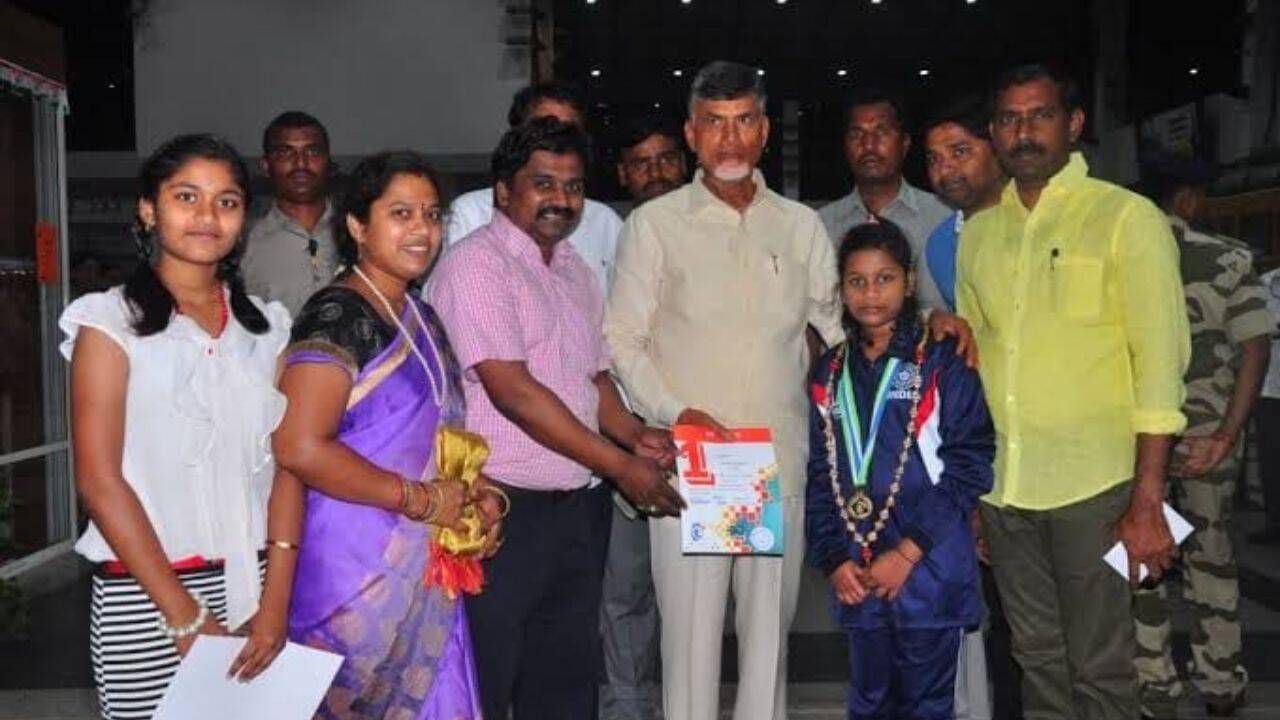
Sahithi Varshini felicitated by Chandrababu Naidu, former chief minister of Andhra Pradesh (Special Arrangements)
One was Max Euwe’s The Road to Chess Mastery. For a man in love with literature, it certainly felt like a heaven. “It was like a Sherlock Holmes novel kind of a thing,” he told this website.Soon, beating Dinesh became a routine. “I won some five to ten games straight away,” he shared.Within three months, he made the HPCL team, and within six months of that he was at the national selections for the Petroleum Sports Promotion Board (PSPB), finishing second. He played for the board for roughly seven years, often captaining HPCL.At tournaments, he shared the hall with grandmasters such as Pentala Harikrishna, Shyam Sundar and Koneru Humpy, among others.He was never the strongest player in those rooms. Nevertheless, what he had was an appetite for classical chess. He would take an opening idea from a book, set up the position, and put it to the GMs. They told him he would one day be one of the finest coaches in the country.“So that was the foundation,” he said, giving us a touch of the philosophy behind Sahithi’s approach today.
A dream that wasn’t a title
The formal coach within Lokesh became active when her daughters started playing. Despite Sahithi showing early promise, he never set himself a target of IM or GM. What he wanted was a particular kind of game.“I always had a very big dream to make her someone like Fischer and Kasparov, not a GM and all,” he noted. “I never thought of making IM, GM and then celebrate it. Those moments are important, definitely, in life to cherish and move forward. But my dream was to make her someone like a legend.”That ambition shows in how she plays. She goes for sacrifices and attacking positions, and her games grabbed early attention.
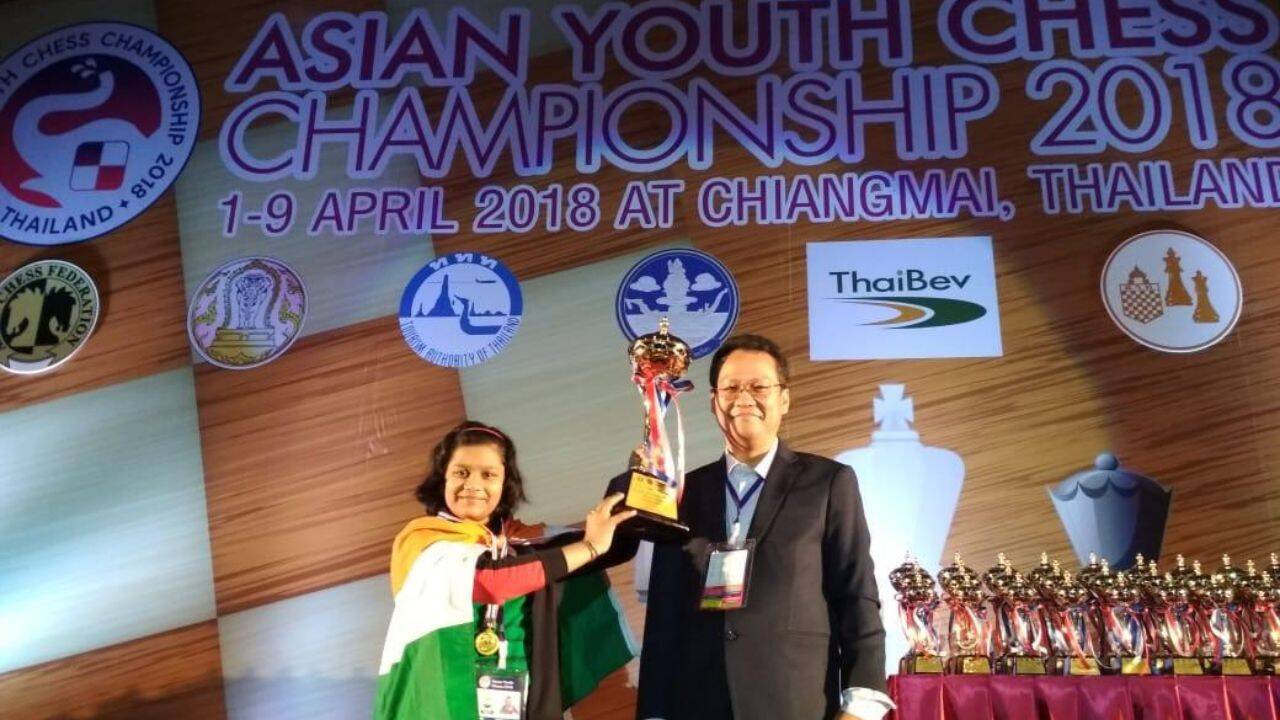
A younger version of Sahithi Varshini (Special Arrangements)
At 14, she was rated over 2200. Her attacking play drew praise from Scottish Grandmaster, world-famous chess trainer, and author Jacob Aagaard. She also beat women’s world champion Mariya Muzychuk.“She never fears the opponent. She just plays her style,” her coach said.Soon, she had also won a stack of age-group medals, among them Asian and Commonwealth golds.
Three years the game took back
Then came COVID. Sahithi was at her peak, rated highly and seeded at the top of her age groups, and the tournaments stopped. She missed almost three years of competitive chess.“You are playing so well, and suddenly, you don’t have the option of playing continuously,” Lokesh said. “That was really annoying.”Leave from work was a problem even before the pandemic. She qualified for a world championship but could not travel. After the lockdowns, Lokesh took long leave and moved the family abroad, reasoning that a rented apartment would cost less than repeated flights. It was a gamble, and he knew it.It also exposed a different problem. Online chess meant every game she played in open tournaments was published, and opponents could prepare against her at the click of a button. A player who loved to surprise people was suddenly easy to study. She tried switching openings from one day to the next, which backfired against stronger opposition.Playing 2300-rated players, he explained, you cannot get away with half-prepared systems. “It did backfire for almost a year,” he said.But she came out of it understanding more openings than before. And in 2022 she played at the Chess Olympiad in Chennai, a member of India’s C women’s team and among the youngest in the squad. “Playing for India is always a special thing,” Lokesh told this website.
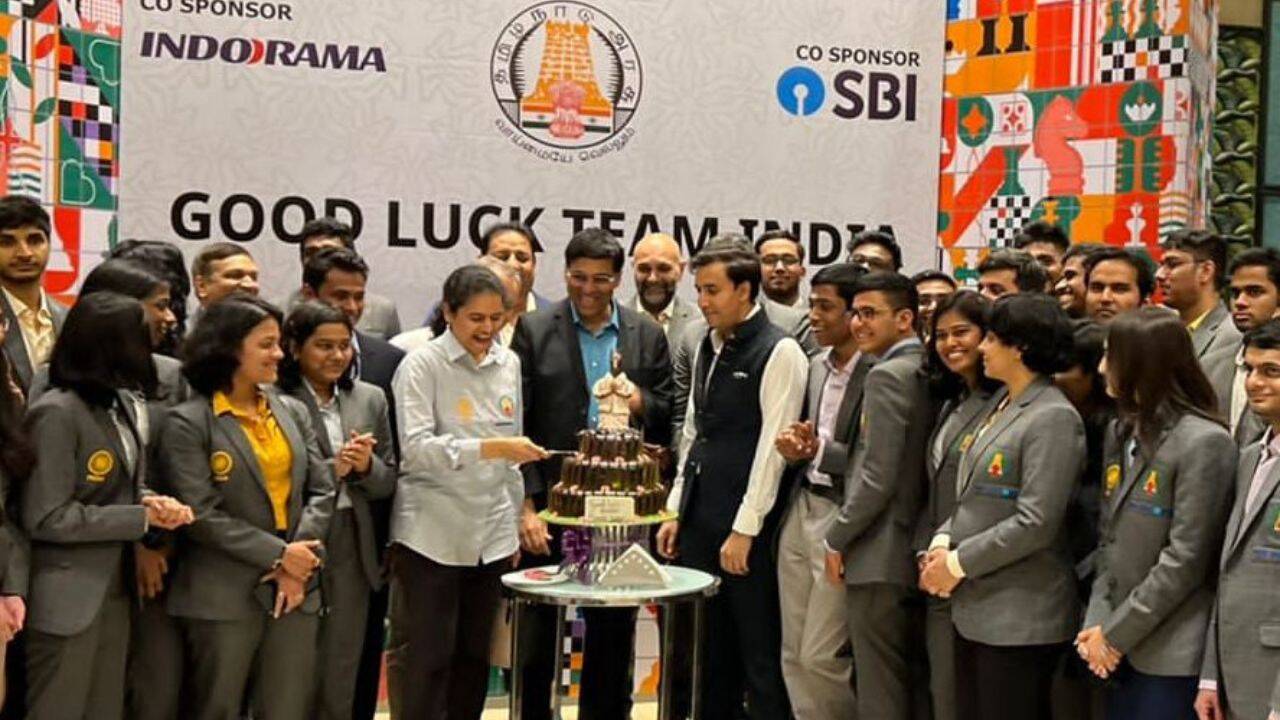
The Indian teams ahead of Olympiad 2022 in Chennai (Special Arrangements)
After the Olympiad, the targets slipped away. She was close to 2300 but not there, and the company could not keep granting leave.
It cost Lokesh his job
The trips abroad were expensive. HPCL contributed around Rs 10 lakh to Sahithi’s career, and the Andhra Pradesh government gave a similar amount, but it was not enough.“I had to sell an apartment,” Lokesh revealed. His wife’s gold was pledged. He was running out of options when he reached the most difficult decision almost three years back. “There was only one way. I had to quit my job,” he recalled.He resigned and set up a chess academy, which he admits was harder than it sounded. A start in Hyderabad did not work for about ten months, partly because he was away at tournaments with Sahithi.Then, he had a bypass operation, the heart surgery that forced him to stop for months and reduced both his income and his strength.Around the same time, relatives pressed him to make Sahithi finish class 10. She took nine months away from chess to do it.“It sets the morale down,” he said of the surgery. “Financially, it also consumes.”Jaya Sri was a rock throughout. “I appreciate my wife more than me to be more braver than myself,” he said. For a woman who was not earning and had no connection to chess, living with selling property, shifting country, and watching her husband leave his job, he considers it a far harder act of faith than his own.
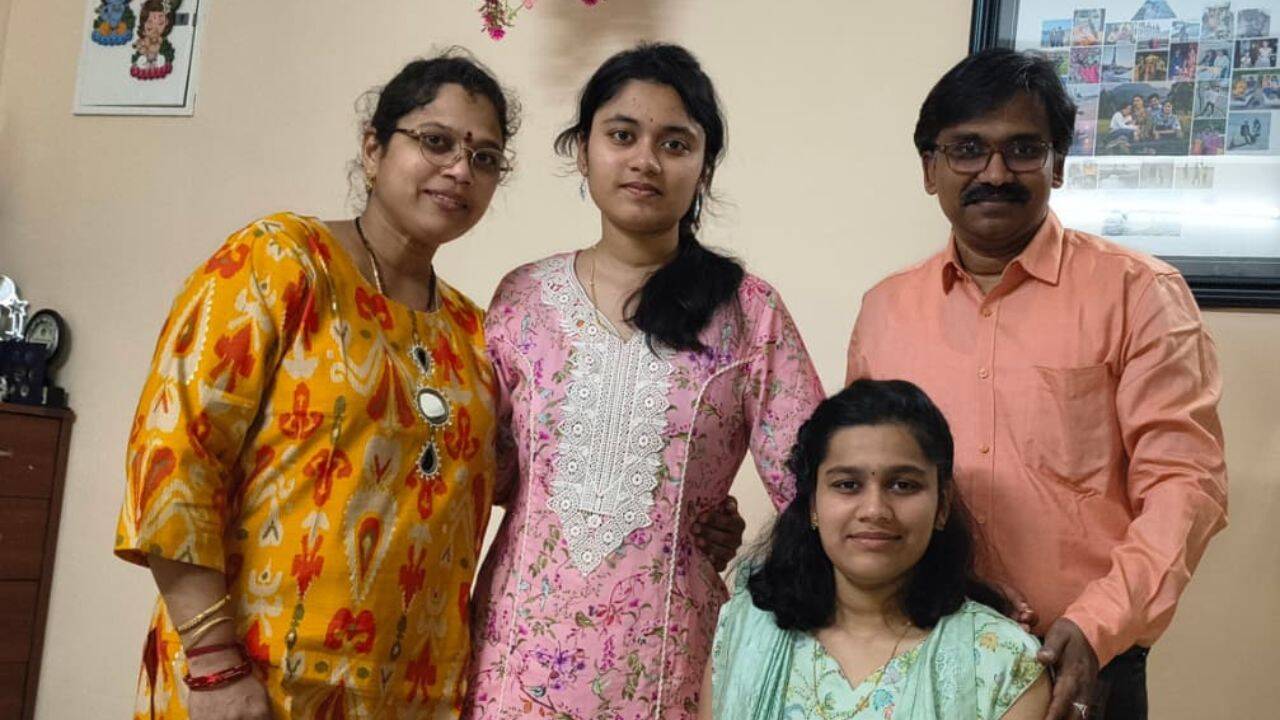
Sahithi Varshini’s family (Special Arrangements)
His elder daughter Falguni, now a FIDE arbiter, helped too, paying her own fees and rent by teaching classes.The decision to open the chess academy turned out better than he feared. Back in Visakhapatnam, the academy grew.His student Aarav Sinha has collected four IM norms, and others gained hundreds of rating points within months on the European circuit. More than fifteen players now train with him, and he is writing a book on the 2200 level.“After surgery, I have had bigger achievements compared to pre-surgery,” he remarked.
What comes next
Sahithi was his first student. She remains the one he measures the rest against. But she is not, by his father’s account, in the best place mentally.“She is a little demotivated, to be frank,” Lokesh added. The three lost years still weigh on her. Her advice, however, is the same every time.“How you start is not as important as how you end,” he tells her. “Whatever you missed in those years, no regrets for that. Just look at what opportunities you have.”The plan is to build strength rather than chase a rating. “If you are 2500, you should be able to play like a 2500,” he explained. “It should not merely happen with your rating. You should deserve it.”
There are no big names in this journey. No godfathers. You don’t require big names to make your stamp.
Lokeswara Moogi Rao, Sahithi’s father
The harder obstacle is access. Official events such as the Asian Championships, Commonwealth events and World Juniors come with hotel costs that the family cannot easily meet. Lokesh believes that if Sahithi is given those platforms, results and sponsors will follow. If not, he will keep creating his own opportunities.“I’m optimistic that way, rather than regretting not having big sponsors,” he acknowledged.“There are no big names in this journey. No godfathers. You don’t require big names to make your stamp. It is your willpower, your passion for the game, your determination, and how you sustain in the difficult phases that take you forward.”Perhaps Sagar Shah had got it right all those years ago. Like rice that takes time to cook to perfection over a gentle flame, Sahithi Varshini, too, may need time to come into her own. And when she does, it may well be to carry forward the legacy of those who came before her in chess, sooner rather than later.