


Over the past decade, Indonesia has lost an estimated 12.5 million hectares of forest. The decline has put the country under significant environmental pressure and contributed to increased coastal erosion, reduced biodiversity and heightened vulnerability to climate-related disasters. Observing the growing environmental challenges in the country, 14-year-old Harley Fatahillah Yodhaloka Sunoto began exploring ways to contribute solutions at the community level. According to a report by Action for Nature, he is the winner of the 2026 Eco-Hero title for founding a campaign centred on mangrove restoration and environmental education.
Mangrove Warrior
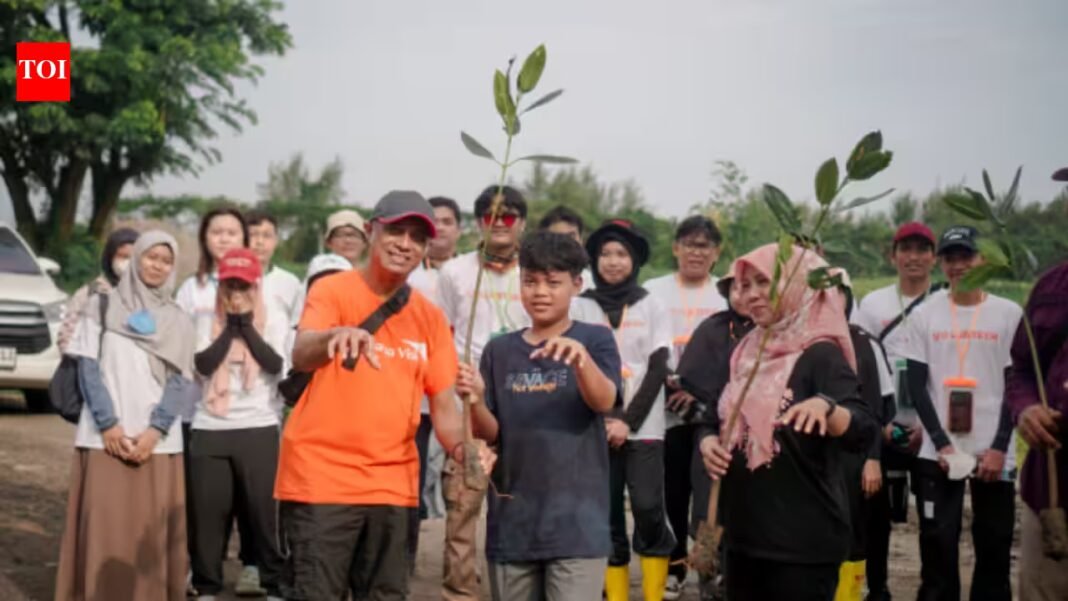
Mangrove Warrior, was launched roughly one year ago with the goal of restoring coastal ecosystems while increasing climate awareness among the youth. Harley recognised that the degrading coastlines of Surabaya left low-income fishing families defenceless against extreme weather and severe tidal flooding.The initiative began with him learning directly from coastal farmers in Wonorejo, a community where livelihoods have long depended on healthy mangrove ecosystems. Together, they developed a mangrove nursery system designed to cultivate seedlings before planting them in vulnerable shoreline areas, while also engaging the school community at SMP Negeri 1 Surabaya to support youth participation and environmental education.Through this collaboration, Mangrove Warrior has cultivated, planted, monitored, and replanted more than 31,000 mangrove seedlings across several coastal areas, including Wonorejo, Gunung Anyar, and Keputih. To maximise shoreline protection and carbon absorption, he scientifically matches specific species, including Rhizophora mucronata, Bruguiera Gymnorhiza, Avicennia marina, Sonneratia caseolaris and Ceriops Zippeliana, to their ideal muddy substrates. Backed by his school network at SMP Negeri 1 Surabaya, he is scaling nursery capacity to achieve a cumulative target of 65,000 mangroves by the end of 2026.
Restoring mangroves in coastal terrain
Mangrove restoration requires significant physical effort and persistence. The planting sites are located approximately 13 kilometres from Harley’s home, and reaching them often includes navigating thick coastal mud, sharp mangrove roots and water levels that are chest-high. During planting activities, volunteers frequently encounter difficult terrain while working in dense coastal forest environments. Harley himself has experienced scratches and minor injuries while moving through the mangrove roots and mud.Moreover, Harley champions ecological restoration by linking conservation directly to local livelihoods. Recognising that coastal conservation directly affects the livelihoods of small-scale fishermen and vulnerable coastal communities, he leverages mangroves to filter pollutants, restock marine life and safeguard clean water.He also partners with local mothers to turn ecological protection into financial independence. Guided by Kalpataru Award-winning activist Ibu Lulut Sri Yuliani, they process sustainable, value-added products, including mangrove syrup, mangrove soy sauce, natural shampoo and conditioner made from mangrove extracts, mangrove charcoal briquettes used as alternative fuel, hair and face vitamins derived from mangrove resources, and batik created using natural mangrove dyes. This cyclical economic model proves to communities that protecting standing forests yields far greater long-term value than destroying them.Supported by the environmental group Tunas Hijau Indonesia and international organisations like Wahana Visi Indonesia for post-planting monitoring, he often delves into nature-based engineering. He designed the Eco Geniuz Pillow, made from beach-cleanup plastic waste, featuring barcodes that link users to digital climate education. Driven by a passion for robotics, he even designed an award-winning prototype companion robot for children with autism and plans to develop robotic systems to automate future mangrove monitoring. His advocacy has mobilised over 300 field volunteers, educated more than 500 students, and reached nationwide audiences through national television, national newspapers, radio, and the official podcast of the Indonesian Ministry of Environment and Forestry.“When forests disappear, we lose one of nature’s greatest defences. Real environmental restoration is never easy; it requires patience, courage, and the willingness to stand in deep water and thick mud while pushing forward. Large global problems can feel overwhelming, but starting in your own backyard shows how local action, multiplied by many people, can create global impact. This is a life mission. As long as I am able to plant, I will keep planting. I want to protect Surabaya, Indonesia, and our planet for future generations and for all living things for the rest of my life,” he said to Action for Nature.In the future, he plans to plant one million mangroves across the country, establishing a Mangrove Warrior store dedicated to sustainable mangrove-based products along with developing a Mangrove Conservation School where the youth can learn about ecosystem restoration, climate science and sustainable entrepreneurship. “As long as I am still able to plant, I will continue planting. I hope Indonesia and the world remain safe for future generations. Through mangrove restoration, we can help restore Indonesia’s role as one of the lungs of the Earth.”