



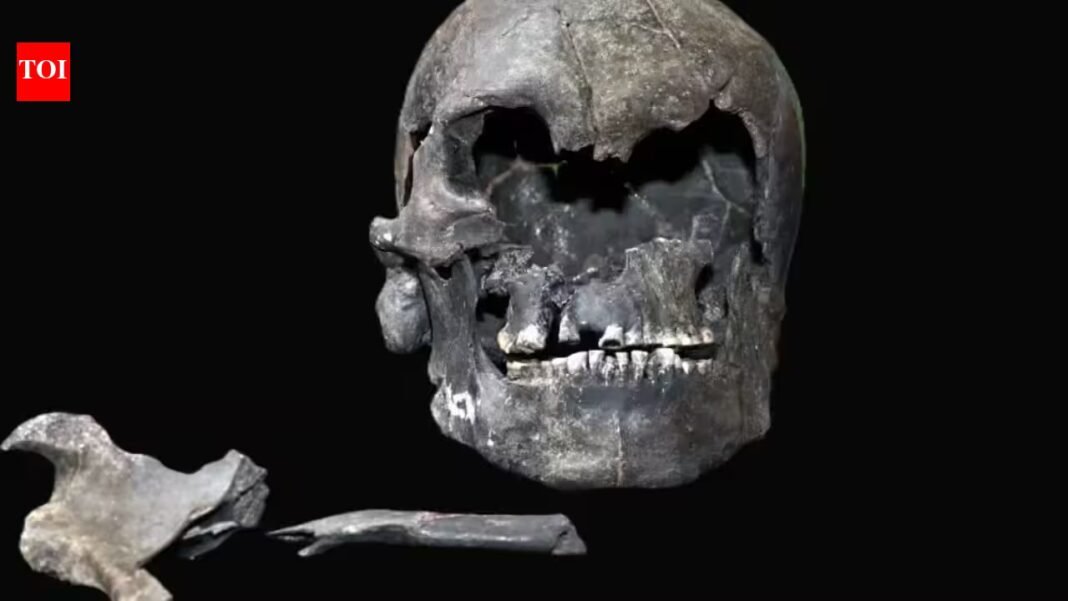
A human skeleton discovered during archaeological excavations near Mexico City has been dated to approximately 13,000 years ago, making it one of the oldest known human remains from the Basin of Mexico. Named Yotzin, the individual was found in 2021 at the site of the Felipe Ángeles International Airport, where researchers were also uncovering fossils of mammoths and other Ice Age animals. New dating results have helped establish the skeleton’s age, offering scientists an opportunity to investigate the lives and origins of some of the earliest inhabitants of the Americas.
13,000-year-old Yotzin skeleton is one of the oldest in Mexico
According to Mexico’s National Institute of Anthropology and History (INAH), two independent scientific analyses placed Yotzin’s age within a range extending from approximately 13,087 to 11,700 years before present. The findings place the individual towards the end of the Pleistocene and the beginning of the Holocene, a period when human populations were establishing themselves across different parts of the Americas.HeritageDaily reported that the remains are among the 23 oldest human specimens identified in the Basin of Mexico. The dating also makes Yotzin an important addition to the small collection of prehistoric human remains recovered from central Mexico.According to El Colegio Nacional, Yotzin is currently considered the oldest known preceramic human specimen discovered in the Basin of Mexico. The discovery is particularly significant because relatively few human remains from this period have been recovered in the region, making every well-documented specimen valuable for understanding early settlement.
What makes the discovery alongside mammoth fossils significant
Yotzin was discovered in 2021 by archaeologist Israel Peña Pascual during archaeological work at the north-western section of the airport site in the State of Mexico. The remains were recovered from a geological layer known as Stratigraphic Unit IV, which consists of silty sediments associated with an ancient marsh environment.The same layer contained fossils of Late Pleistocene animals, including mammoths and prehistoric camels. According to INAH, the animal bones and Yotzin’s remains shared a similar black or dark-brown colour, resulting from the conditions in which they had been buried.Peña initially thought the bones belonged to a prehistoric camel because of their size. However, as the excavation expanded, the team realised that they had uncovered human remains. Yotzin was the only human skeleton recovered from the investigated area, which measured approximately 25 by 30 metres.The excavation was carried out under controlled archaeological conditions. No burial offerings or associated artefacts were found at the site.The wider archaeological project at the airport also uncovered a substantial collection of Ice Age animal remains. During his presentation at El Colegio Nacional, archaeologist Rubén Manzanilla López explained that excavations had recovered remains belonging to approximately 700 mammoths, 200 camels and 70 horses, alongside smaller animal species that are still being studied.
Yotzin’s physical features offer clues about his life
One of the first things that attracted the attention of researchers was the skeleton’s unusual physical structure. According to INAH, physical anthropologist Arturo Talavera González noticed its particularly thick and robust bones. The individual stood approximately 1.75 metres tall and had a substantial bone structure. Talavera interpreted these characteristics as evidence of a physically demanding hunter-gatherer lifestyle, involving extensive walking and potentially dangerous encounters while hunting.Researchers also established that Yotzin was male and probably between 25 and 30 years old when he died. El Colegio Nacional reported that the skeleton was recovered with around 80% of its bones, although several parts of the spine and pelvic region were damaged or missing.The skull presented another unusual feature. Unlike the more rounded skull shapes found in other ancient human remains from the Basin of Mexico, Yotzin had an elongated skull.The teeth provided additional information about his daily life. Examination revealed considerable wear across the teeth, but no cavities. According to the researchers, this pattern may be connected to the tough foods consumed by prehistoric hunter-gatherers, including roots, tubers and other fibrous plant material.INAH also explained that people living before the introduction of pottery sometimes used their teeth as additional tools. They could help soften animal hides, process plant fibres and perform other everyday tasks, which may have contributed to the extensive dental wear observed in Yotzin.
Two scientific dating methods establish the skeleton’s age
According to INAH, the first analysis was conducted at ISOTOPIQ AGING INC in Belgium using endogenous collagen extracted from a third molar. The calibrated results placed the skeleton between 13,087 and 12,987 years before present.A second analysis was carried out at the University of Georgia’s Center for Applied Isotope Studies in the United States. This examination used bioapatite and produced an estimated age range of 12,050 to 11,700 years before present.Although the two methods produced different ranges, both placed Yotzin in the same broad prehistoric period. Their combined findings established an age range extending from 13,087 to 11,700 years before present.
Genetic research could reveal where Yotzin’s ancestors came from
INAH reported that genomic analysis of the skeleton is being conducted at the University of Burgos in Spain, with results expected during the first quarter of 2027. Scientists hope the investigation will help identify his genetic lineage.Once the scientific investigations are completed, Yotzin will become part of the Collection of Preceramics from the Basin of Mexico at the National Museum of Anthropology. The collection currently contains 22 specimens.