



A lizard’s ability to shed its tail to escape danger dates back at least 99 million years, according to a fossil discovered in amber from Myanmar. The specimen preserves a detached tail from the Cretaceous Period, providing the first direct fossil evidence of voluntary tail shedding in a fossil vertebrate.According to the research published in Palaeontologia Electronica titled ‘Direct fossil evidence of caudal autotomy in a Cretaceous lizard’, the fossil offers the earliest direct evidence of voluntary tail shedding in a vertebrate. Modern lizards use this defence to escape predators, leaving the detached tail behind. Researchers examined the fossil using X-ray micro-computed tomography to study the preserved soft tissues and the point where the tail separated.
99-million-year-old amber preserves evidence of lizard tail shedding
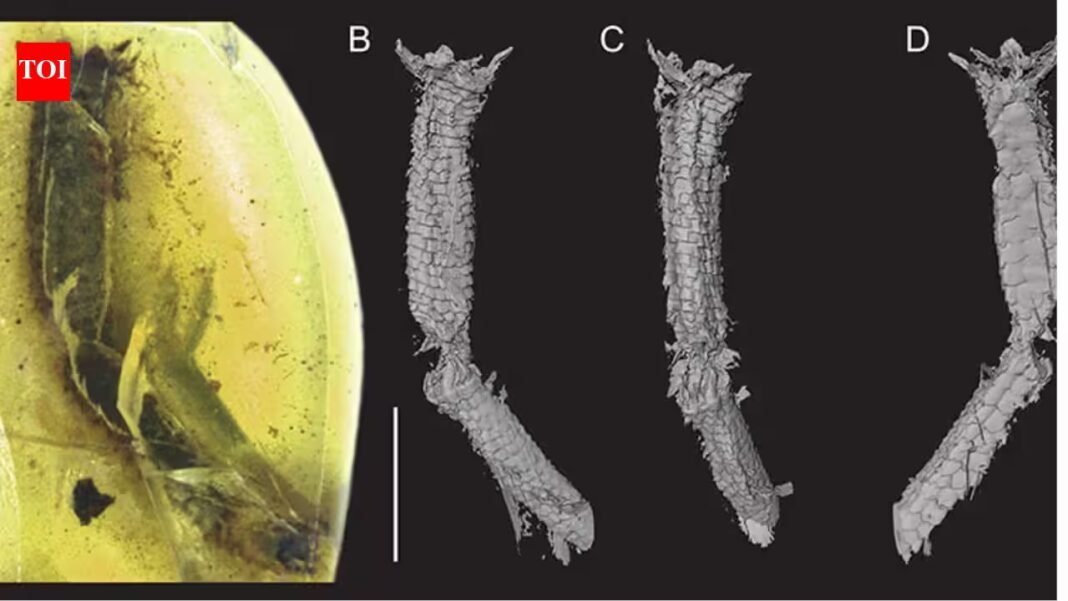
The fossil contains a detached lizard tail preserved in an 18-millimetre-wide piece of amber from the Hukawng Valley in northern Myanmar. The amber deposit dates to approximately 98.8 million years ago, placing the specimen in the mid-Cretaceous Period. Researchers used X-ray micro-computed tomography, or micro-CT, to examine the tail’s structure because the amber’s opacity made detailed examination using ordinary light difficult. The scans revealed a wedge-shaped muscle ring around the point where the tail had separated. This structure matches the arrangement found in tails voluntarily shed by modern lizards.
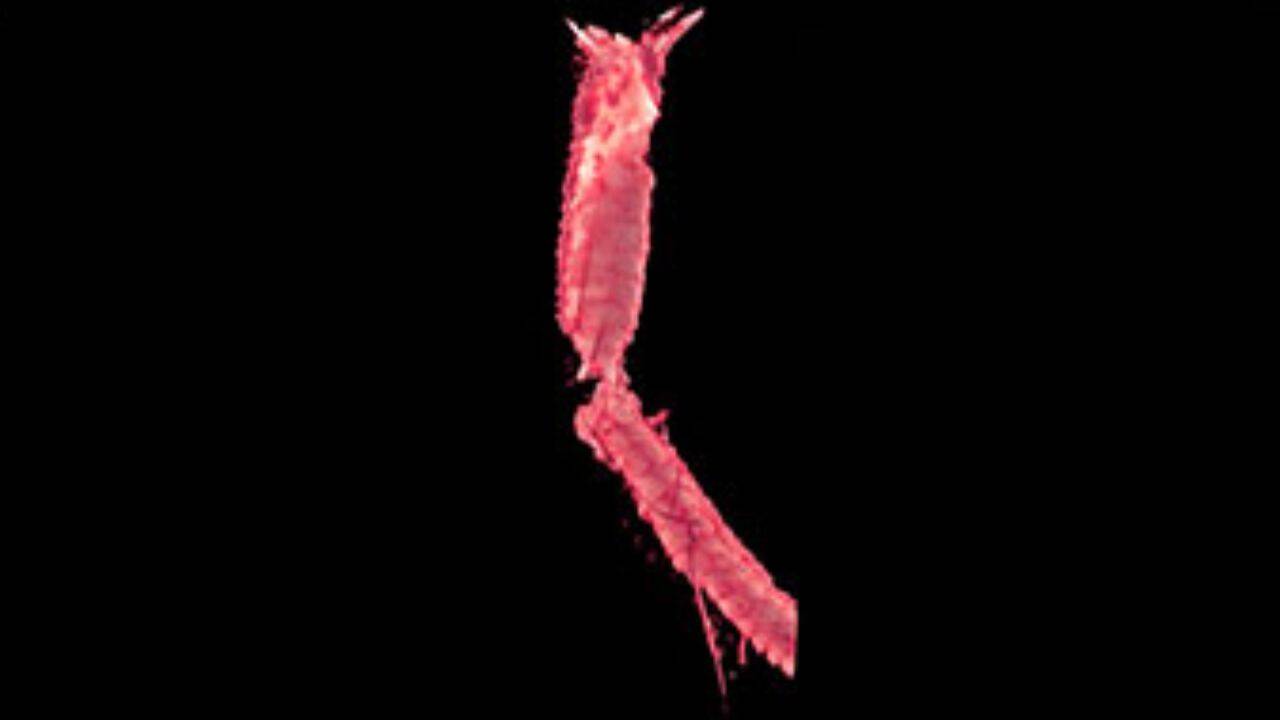
PC: Palaeontologia Electronica
Muscle structure reveals how the ancient lizard shed its tail
The researchers examined the shape of the break to determine whether the tail had been shed deliberately or damaged accidentally. The separation surface was smooth and nearly perpendicular to the tail’s length. It showed no splintering, twisting damage, compression marks, or directional tearing of the scales that would indicate traumatic breakage.Around the break, the team identified a ring-like arrangement of muscle partitions consistent with the structures involved in controlled tail shedding in living lizards. These features supported the conclusion that the tail had detached through a defensive response rather than an accident or damage after death.
The two possible explanations for the fossil’s preservation
The researchers found that the tail lay along a surface formed by an earlier flow of resin. Its underside was firmly attached to that surface, and the skin and other soft tissues had flattened against it. The arrangement suggested by researchers in Palaeontologia Electronica states that the tail entered the resin while it was freshly detached and still flexible.The researchers proposed two possible explanations for how it became trapped. A lizard may have become stuck in the resin and escaped by shedding its tail, leaving it behind. Alternatively, the tail may have been shed during a predator attack before a predator dropped it onto exposed resin.
Ancient lizard fossil links tail shedding to possible regeneration
Tail shedding is widespread among modern lizards and helps them escape predators by leaving a moving tail behind as a distraction. The detached tail can continue moving after separation, diverting a predator’s attention while the lizard escapes. Although earlier fossils had features that researchers interpreted as possible signs of tail shedding, skeletal structures alone could not confirm that the behaviour had actually occurred.This specimen provides stronger evidence because it preserves the soft-tissue structure associated with controlled separation. The researchers also noted that tail shedding in living lizards is often linked to the ability to regrow the tail. Its presence in the mid-Cretaceous indicates that the biological processes associated with tail regeneration may also date back at least 99 million years.