



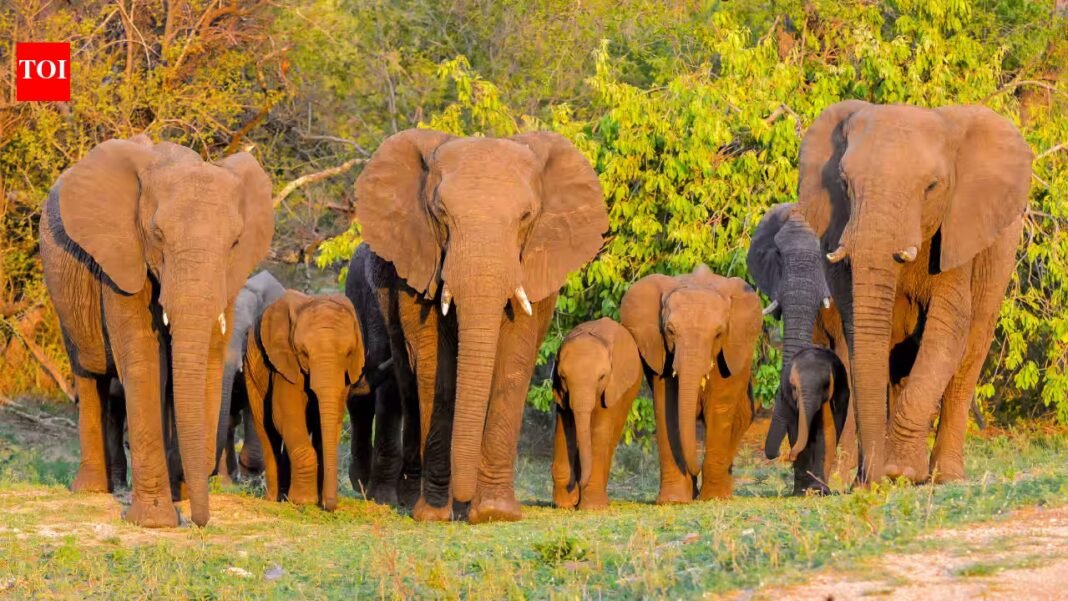
Elephants are known for their strong family bonds and complex social relationships, but declining populations may be putting these connections at risk. A 12-year study in Sri Lanka has found that the gradual loss of individual elephants can eventually trigger a sudden breakdown in their social networks, leaving surviving animals in smaller and more isolated communities.The research, led by scientists at the University of California San Diego (UC San Diego) and published in the journal Science on November 12, 2026, examined more than 440 wild female Asian elephants at Udawalawe National Park in Sri Lanka. The findings, reported by UC San Diego in a November 12 research announcement by Mario Aguilera, suggest that the population appears to have crossed a social tipping point after years of demographic changes, making its once closely connected communities increasingly fragmented.
Population losses preceded social changes
The researchers analysed the social relationships of 443 female Asian elephants over 12 years, examining how their associations and community structures changed as individual animals disappeared from the population. Their findings showed that gradual demographic turnover eventually preceded a sudden change in the elephants’ social networks. The population experienced a combination of likely deaths, permanent departures from the area and fewer new individuals joining the community.As these losses accumulated, the elephants shifted from larger, densely connected social communities to smaller groups with fewer connections between them. The research was led by postdoctoral researcher Anastasia Madsen, working with Associate Professor Shermin de Silva and other researchers. Madsen explained that the population was losing individuals at increasing rates without enough new elephants arriving to replace them.The researchers also found that the changes went beyond simply having fewer elephants. The surviving animals were altering their relationships with one another, further weakening the overall structure of their social networks.
Why social connections matter to elephants
Asian elephants are highly social animals that depend on relationships with other members of their communities for several aspects of their lives. According to the UC San Diego research announcement, these connections help elephants find food, obtain information and raise their young. Established relationships also allow individuals to benefit from the knowledge and experience of other elephants. When population numbers decline, the loss of individual animals can therefore affect much more than the size of a herd. It can also remove important social connections that help communities function.Shermin de Silva, an associate professor at UC San Diego, explained that maintaining strong social networks requires animals to share space and build relationships throughout their lives. For communities to remain resilient, lost relationships must be replaced over time. The researchers warned that fewer opportunities to establish new connections could leave surviving elephants increasingly isolated.
Human activities may worsen the problem
The study’s findings come against a wider backdrop of threats facing Asian elephants. Poaching and conflicts with humans have already contributed to elephant deaths in many populations. The researchers also identified potential pressures affecting the Udawalawe National Park population, including disruptions to habitat connectivity and reduced food availability as ecological conditions change across the park and its surroundings.Udawalawe National Park covers approximately 119 square miles, and changes in the surrounding landscape can affect how elephants move between areas and maintain contact with other groups. However, the study does not attribute every disappearance to a single cause. Its findings focus on how accumulated population losses and demographic turnover were associated with changes in social organisation.
Researchers warn of a difficult-to-reverse tipping point
One of the most important findings is that social fragmentation may not be easily reversed once a population crosses a critical threshold. Madsen warned that gradual changes can build up over time before producing a sudden shift in an animal community’s structure. Once that tipping point is crossed, returning to the previous social organisation can become much harder. The researchers said the findings highlight why conservation efforts should consider not only how many animals remain in a population but also how they interact with one another.The study, titled Increased demographic turnover and isolation precede social fragmentation in Asian elephants, provides evidence that monitoring social relationships could help identify problems in wildlife populations before their consequences become more difficult to address. It also highlights the importance of protecting habitats and maintaining conditions that allow elephants to move, form relationships and sustain their communities.