



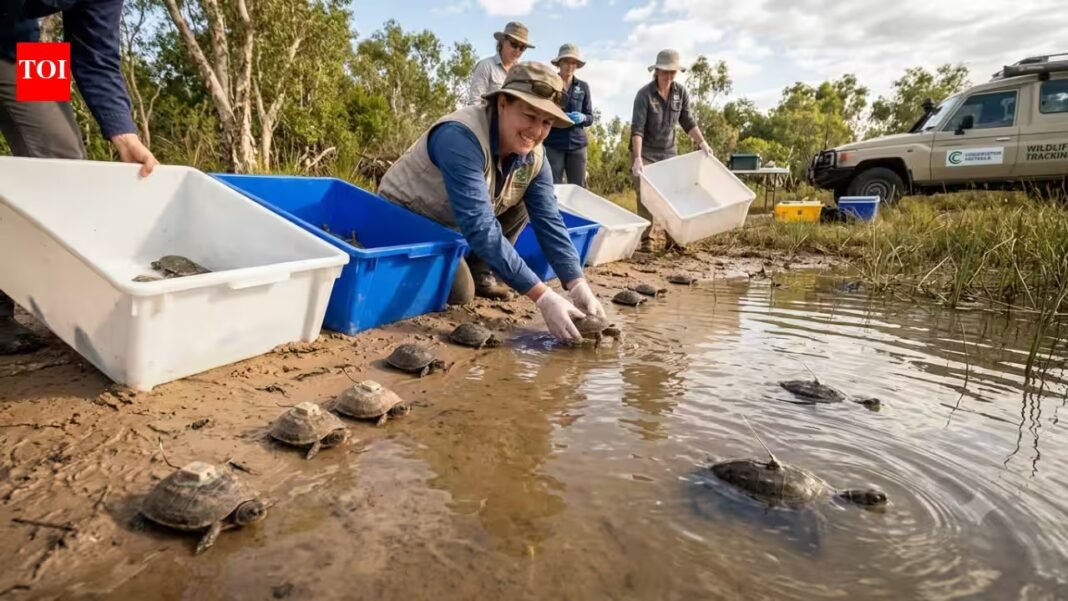
On the Barrington River in New South Wales, 21 Manning River turtles have been moved from a conservation breeding facility into the wild, where the endangered species is still under pressure from predators and changes to its habitat. The turtles were raised by Aussie Ark at its Conservation Ark facility in Somersby before being prepared for life beyond captivity. As reported by Aussie Ark, eight of those released are sub-adults from the 2020 breeding season, while the other 13 were hatched in 2024 and 2025. The older turtles are now carrying small VHF transmitters, giving conservationists a way to follow their movements and survival after release. It is the first time the tracking technology has been used on this species.
Scientists follow endangered Manning River turtles in their natural habitat
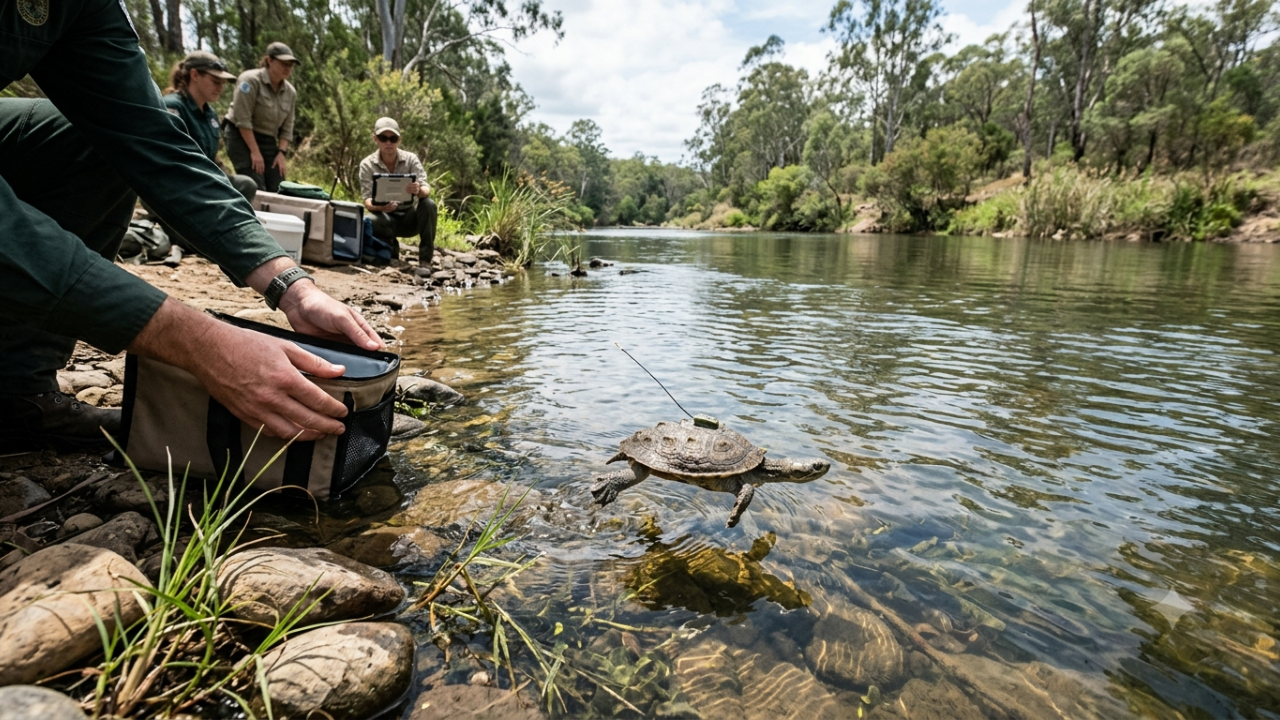
The release brought together Aussie Ark, Western Sydney University and Australia’s Department of Climate Change, Energy, the Environment and Water. The team selected sections of the Barrington River according to factors such as water depth and the availability of food. The eight sub-adults were fitted with VHF transmitters before being released. The devices are expected to provide information for up to two years, allowing researchers to locate the turtles and build a clearer picture of what happens to captive-bred animals once they return to their natural environment.Western Sydney University professor Ricky Spencer is leading the telemetry work with PhD student Pham van Thong. The tracking should help establish where the turtles travel, how they use their surroundings and how their survival compares with that of turtles released at different stages of development.
Captive breeding prepares endangered turtles for the wild
Aussie Ark has been breeding Manning River turtles as part of a wider conservation programme covering three endangered freshwater turtle species. The organisation has recorded three successful breeding seasons for the Manning River turtle.The captive-breeding process is designed to give young turtles time to grow before facing the dangers found in the river system. Eggs are incubated under controlled conditions and hatchlings are raised until they are considered large enough to have a better chance of avoiding predators.For this particular release, the turtles were gradually prepared for the change. Human contact was reduced and the animals were encouraged to forage independently, rather than relying on conditions associated with captivity.The age difference within the group is also useful for the monitoring programme. Eight turtles are sub-adults, while 13 are younger animals. Tracking the older group may provide information that can later be compared with the progress of smaller turtles.
Foxes remain a major threat
Manning River turtles face several pressures in their native range. Habitat conditions can be affected by poor water quality, siltation and erosion, while changing environmental conditions add further pressure.Feral foxes present a particularly direct problem. They can locate turtle nests, dig into them and eat the eggs. Young turtles can also be killed before they reach the river, meaning that a nesting season does not necessarily translate into a new generation surviving to adulthood.That is where the captive-breeding programme fits into the wider conservation effort. By incubating eggs and raising young turtles beyond the most vulnerable early stage, the programme aims to put more animals into the river at a size where they have a greater chance of surviving. The 21 turtles released on the Barrington River therefore represent a mixture of animals at different stages of growth, rather than a single batch of hatchlings.
The second wild release in Aussie Ark’s history
For Aussie Ark, the Barrington River release is only the second wild turtle release carried out during its 16-year history. The organisation has been working with endangered Australian wildlife through captive breeding and rewilding programmes, with the Manning River turtle among the species involved. Tim Faulkner, Aussie Ark’s managing director, said, “Freshwater turtles are among the most endangered species on earth.”“Manning River Turtles are suffering a death by a thousand cuts. Water quality, siltation, erosion, climate change, and, more than anything, the feral fox. Without interventions – like Aussie Ark’s breeding and rewilding program – species like this just disappear quietly.”The release also involved supporters, sponsors, donors and members of the local community. Andrew Steed from the federal environment department attended the event and described the release as an early stage in what he hoped would become a longer programme supporting the wild population.