



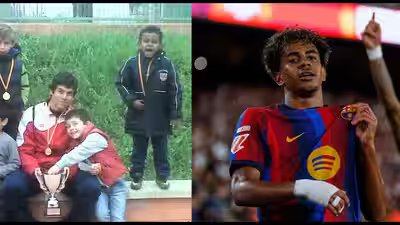
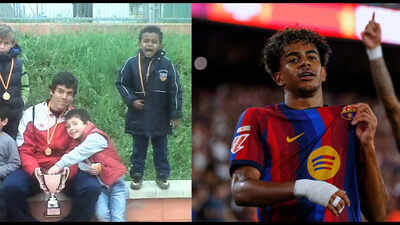
Long before Lamine Yamal became one of football’s most recognisable young stars, his journey depended on the people who recognised something extraordinary in a little boy who simply refused to leave the pitch. At La Torreta, where his childhood unfolded around a football, a handful of coaches witnessed the beginnings of a remarkable talent, while one of them occasionally drove him to training when his father could not, sharing Barcelona conversations with a boy destined to make history.
The boy who wanted nothing except the ball
Inocente Diez, the youth coordinator at CF La Torreta, remembers an autumn afternoon when Mounir and Sheila brought their four-year-old son, Lamine Yamal, to the club, hoping to sign him up for football. Before the world knew his name, before Barcelona became the stage for his extraordinary rise, Diez had a simple task: put the little boy on the pitch and discover what happened when the game began.What followed offered an early glimpse into the mind of a child whose relationship with the ball seemed to leave little room for anything else. Diez recalled how some children cried, others played with the rubber pellets or the grass, and most found themselves distracted by something around them, whereas Yamal wanted the ball, took it from teammates and pursued goals with an intensity unusual for his age.“We put him on the pitch to see what he could do. Some kids cry, some start to play with the rubber pellets or the grass, most get distracted by something. All he wanted was the ball and he would even take it from his team-mates. He was obsessed with the ball and all he wanted to do was score goals. When training was over, he didn’t want to leave the pitch. We constantly had to tell him off because he never wanted to leave.”Diez understood that the distinction extended beyond enthusiasm, because the boy’s movements, positioning and understanding of football seemed remarkably developed for someone still learning how to navigate childhood. From the very first day, he considered Yamal “exceptional”, describing a player whose instincts made him stand apart from the other children, even before anyone could imagine the scale of his eventual achievements.“He was different to the others: the way he moved, the way he positioned himself, the way he understood the game, despite being so young. He is one of those people who’s been born under a lucky star: one in a million. It’s crazy,” said Diez.
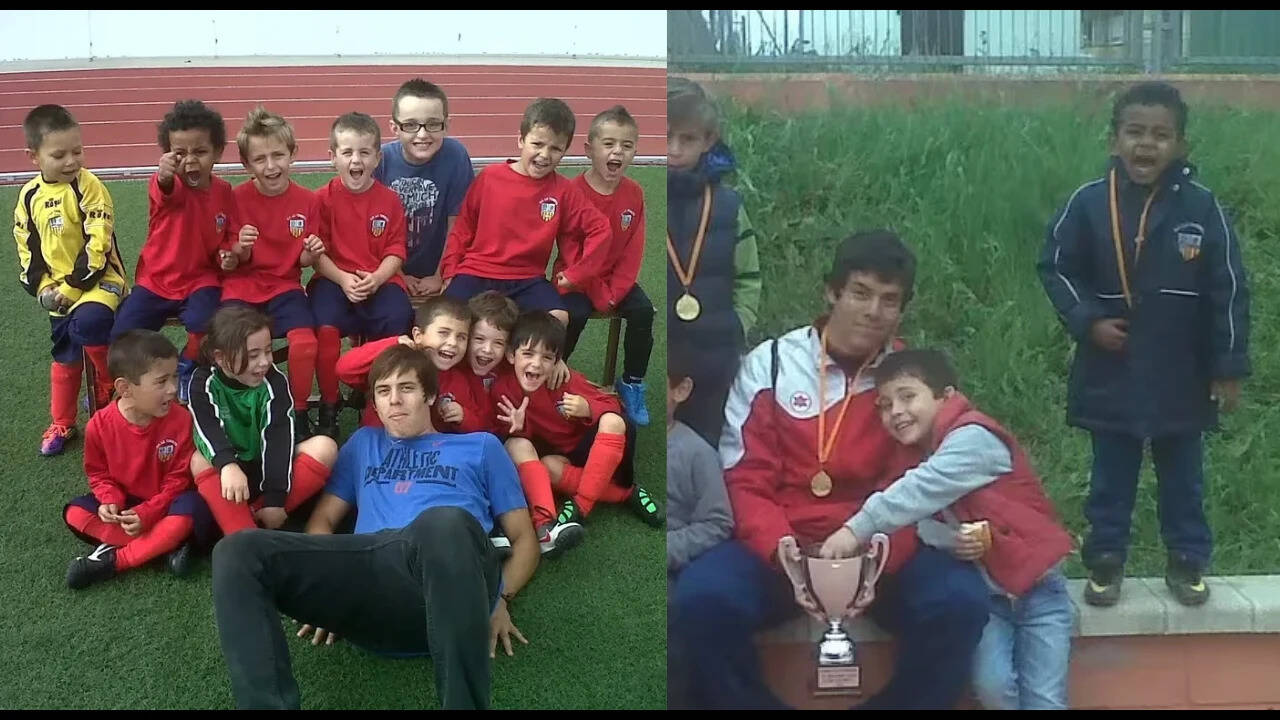
At four years old, Yamal was already impossible to ignore, leaving coach Inocente Diez amazed by his natural instincts and obsession with the ball.
The journeys that mattered beyond the training ground
Those early years at La Torreta also depended on practical kindness, the sort that rarely enters a footballer’s public biography but can quietly determine whether a child makes it onto the pitch. When Yamal’s father could not take him to training, Diez would collect him by car, helping the young player continue his footballing routine while his parents dealt with their work commitments.The distance between them in age was considerable, with approximately fifty years separating the experienced youth coordinator from the aspiring footballer in his passenger seat. Yet their conversations found common ground through the game itself, as they discussed football players and Barcelona’s results during drives that connected a small-town childhood with the club whose colours would eventually define Yamal’s professional career.There was something quietly fitting about those journeys, because Barcelona already occupied a place in the boy’s footballing imagination while the people around him worked to keep his development moving forward. Diez’s daughter also worked alongside Yamal’s mother at a fast-food restaurant, another connection between their families that placed the child’s ambitions within the everyday rhythms of work, responsibility and community.Yamal grew up in a humble family, and his progress required the combined efforts of parents, coaches and people willing to help when circumstances made the ordinary arrangements difficult. Before the extraordinary goals and record-breaking appearances, there were these unremarkable acts of support, repeated often enough to become part of the foundation beneath his rise.
Leo Giordanella and the battle to teach a prodigy to pass
Another important figure in Yamal’s earliest football education was Leo Giordanella, an Argentinian coach whose own journey to the touchline began far from the professional football spotlight. Born in Cipolletti, Patagonia, in 1992, Giordanella arrived in Barcelona with his family during the early 2000s, initially playing handball, the principal sport in Granollers, before moving into basketball and eventually football.His friends encouraged him to pursue the game after recognising his ability, and at fifteen or sixteen he joined CF La Torreta, where he subsequently received the opportunity to coach a youth team alongside his girlfriend. The coaches were still minors themselves, which meant Giordanella sometimes depended on his father or the parents of players for transport, before his girlfriend obtained her driving licence and the three of them began travelling to matches together with young Lamine.“We were minors ourselves, so my father or one of the players’ parents would drive us to training,” said Giordanella, who later worked as a lorry driver and remained a devoted football supporter.Giordanella first encountered Yamal through informal football in a park, where the boy’s father occasionally arrived with friends and brought his young son along. He remembered a small child with long, curly hair chasing a ball that seemed almost too large for him, an image that captured the simplicity of Yamal’s earliest footballing days.“My friends and I used to go play football in the park. By chance, Lamine’s father went with his friends to the same place and he sometimes brought Lamine. He was cute because he was this little kid with long curly hair running after the ball all day. The ball was bigger than him,” Giordanella told FIFA.Even at that age, Yamal appeared to possess technical instincts that did not require the usual patient introduction to the fundamentals. Giordanella remembered a youngster who could stop the ball, turn, perform step-overs and, by five or six, already score delicate chips over goalkeepers, making matches feel like performances in which he repeatedly became the central attraction.“He would stop the ball, turn, perform step-overs and at five or six years old, he was already scoring chips over goalkeepers. He stood out above the rest. Every match was a show.”For Giordanella, however, coaching the gifted youngster involved a persistent challenge, because Yamal’s instinct was to keep the ball and solve situations himself rather than immediately involve his teammates. He benched him two or three times, only to watch him return and change the course of matches, a decision that later amused people who struggled to understand why a coach would leave such a talent out.Giordanella explained that the purpose was to encourage teamwork, reduce individualism and introduce the principles of tiki-taka, ensuring the youngster understood that football could demand collaboration as much as individual brilliance.
From La Torreta to Barcelona, and towards a meeting with Messi
Diez recognised the same tendency, tracing Yamal’s individualism to hours spent playing alone with his father’s dogs in the park or dribbling around dining-room chairs at home. Gradually, the child began to understand when passing could help his team, and Diez remembered how astonishing the results became once goals and assists started arriving together.“He was a bit individualistic because he was used to playing on his own with his father’s dogs in the park or dribbling around the dining-room chairs, but in the end, he understood that he had to pass. When he started to provide assists, it was completely insane. By the end of the game, he’d have scored several goals and provided several assists. Sometimes, he’d dribble past the goalkeeper and then pass the ball back for a team-mate to score.”In 2014, at seven years old, Yamal joined Barcelona’s youth academy after trying out with Espanyol and choosing the Catalan club instead. The decision began a journey that would eventually take him from La Torreta’s pitches to European football’s grandest stages, where he became a European champion at seventeen years and one day old and established himself as a leading figure for both Barcelona and Spain.By the time he turned nineteen, Yamal had already made history at both the European Championship and the FIFA World Cup, becoming a European champion at seventeen years and one day old before reaching the 2026 World Cup final with Spain. His achievements had established him among the defining young talents of international football, while the final against Argentina carried an especially personal connection through Lionel Messi, Yamal’s idol, whose own history with the youngster stretched back to a remarkable photograph taken in 2007.The image showed Messi, then nineteen, bathing a three-month-old Yamal, creating one of football’s most striking coincidences between two generations of extraordinary talent. Reflecting on the photograph ahead of the final at New York New Jersey Stadium, Messi remarked, “That photo is crazy,” before offering a wider appreciation of the young Spaniard’s achievements and future.

20-year-old soccer star Lionel Messi helps to bathe Lamine Yamal, who was merely six months old at the time, during a photo session in Sept. 2007 in the dressing room of the Camp Nou stadium in Barcelona, Spain. (AP Photo/Joan Monfort)
“Lamine is a phenomenal player. I follow him closely because he plays for a club I love and I always wish him the best. He’s one of the best players in the world and he’s only 19. He has his whole career ahead of him and he has a great opportunity to make history,” Messi said on the eve of the final.The connection between Argentina and Yamal’s story reaches further back than that famous photograph, because his first trainer, Leo Giordanella, was himself an Argentinian who helped shape the young Spaniard’s earliest footballing years. With Yamal having now reached the FIFA World Cup™ final against Argentina, the occasion brought Giordanella’s loyalties into sharp focus, placing his affection for a former pupil alongside his enduring love for his homeland and Lionel Messi. “I have mixed feelings,” he admitted. “I’m Argentinian through and through and I love Messi, but I also have great affection for Lamine.“Spain gave me a life, but I can’t forget where I was born and raised. I sent Lamine a message saying I love him very much but I love my country too and if he scores against Argentina, I’ll kill him,” he said jokingly.