





By Adhil ShettyEvery festive season, Indian households spend with a sense of optimism. Dussehra, Dhanteras and Diwali bring celebrations, family gatherings and, for many, the biggest purchases of the year. Spending more at this time is not a problem in itself, but small decisions can add up quickly when offers are everywhere and easy EMIs make almost anything feel affordable. The money choices that matter most are made at three moments, before the first purchase, at the checkout and when the bill arrives.
Before the sales begin
Festive sales are designed to make every purchase feel like a bargain, and the fear of missing out can lead to buying far more than planned. Set a spending limit before the sales begin and list what is genuinely needed. A budget does not take the joy out of the season, but it ensures that the spending is decided by you rather than by the sale.The festive bonus deserves the same thought. It can feel like extra money to spend freely, but it is simply your hard-earned income paid at a different time. Put aside a portion for the festivities, while redirecting the rest towards clearing expensive dues, topping up an emergency fund or investing for a long-term goal. This way, the bonus adds to the celebrations and strengthens your finances beyond them.
At the checkout
Once the shopping begins, the way a purchase is paid for matters as much as the price. No-cost EMIs spread the cost of big purchases over several months, but they are still a loan, and buyers who pay upfront often receive a discount that EMI buyers do not. For example, a television priced at Rs 19,500 with an upfront discount may cost Rs 22,000 on a no-cost EMI. With a smartphone and a laptop bought the same way, the extra cost could reach around Rs 7,500. Compare the total amount payable, not just the monthly instalment, for a clearer picture of the overall cost.
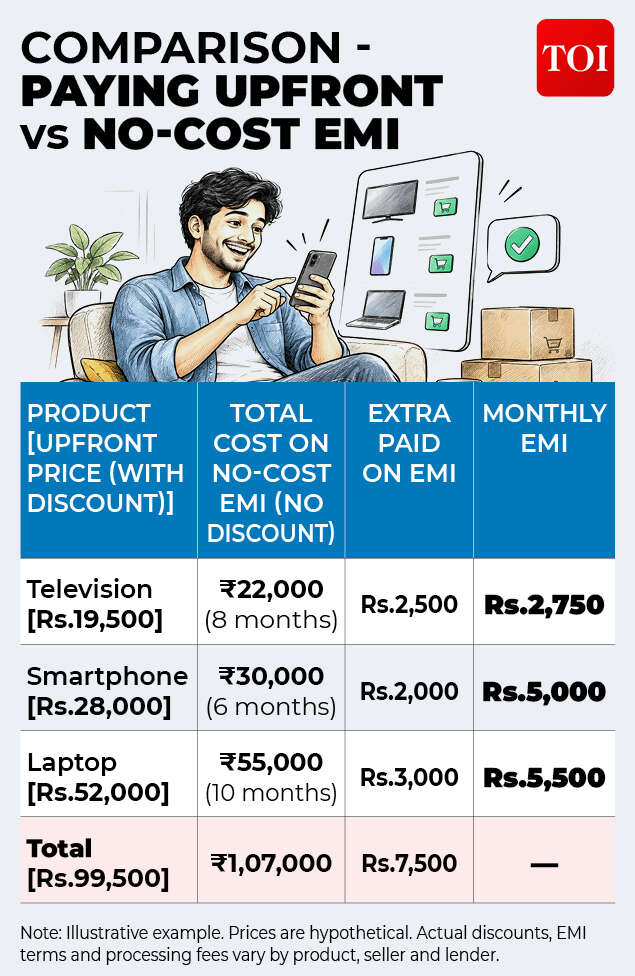
Comparison – Paying upfront vs no-cost EMI
The risk grows when one instalment becomes several. A single EMI rarely appears worrying on its own, but a few running together can strain a monthly budget. Suppose a Rs 15,000 purchase is made on a 3-month pay-later plan, a Rs 45,000 television on a 6-month EMI, and a Rs 20,000 shopping bill is charged to your credit card. That adds up to Rs 80,000 owed, with around Rs 2,500 due in the first month. List every existing repayment before taking on another purchase on EMI, to see how much of your monthly income is already committed.
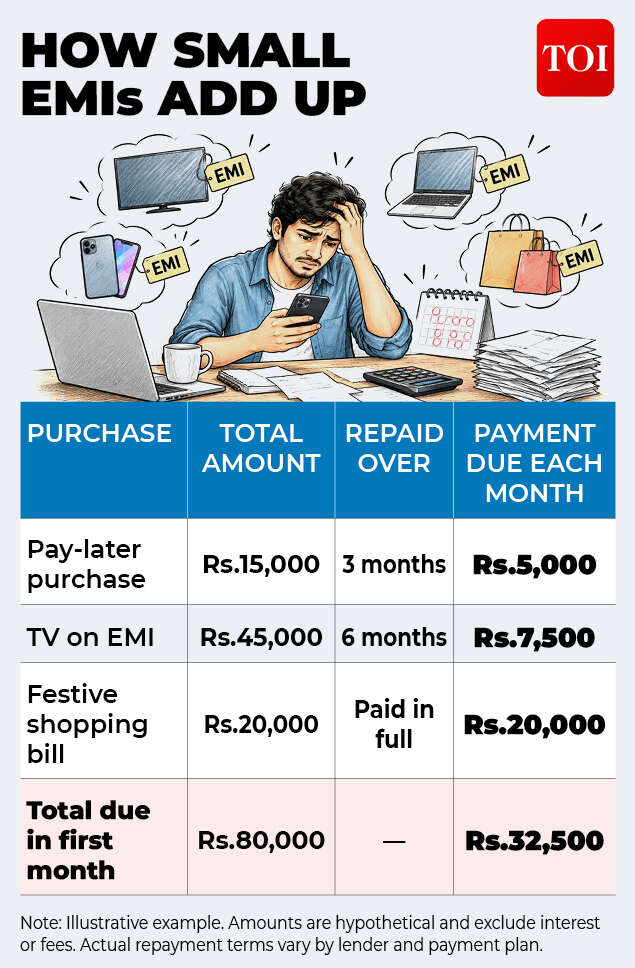
How Small EMIs add up
The same care applies to gold, which is synonymous with Dhanteras and Diwali. In the excitement of the occasion, don’t overlook the basics. Buy only from a trusted jeweller, check for the hallmark that confirms purity and insist on a proper bill. Making charges on jewellery are usually not recovered on resale, so buyers treating gold as an investment should factor in that cost.Festive deals also attract fraudsters, who know that shoppers are looking for bargains. Fake sale links, calls claiming to be from a bank, and messages about prizes all aim to create a false sense of urgency. Avoid clicking on unknown or unverified links, and check offers only on the official website or app. Never share an OTP, PIN or card details with anyone, however genuine the request may sound.
When the bill arrives
The real test comes a few weeks later. Clearing only the minimum amount due keeps a card account in good standing, but interest continues to build on the unpaid balance. If only Rs 2,500 is paid on a festive card bill of Rs 50,000, the remaining Rs 47,500 is carried forward. With credit card interest at around 3.5% a month, or more than 40% a year, that works out to roughly Rs 1,650 in a month and over Rs 20,000 if the balance stays unpaid for a year. Pay the bill in full by the due date, as this is the surest safeguard against mounting interest.A high credit limit may seem to offer more room to spend, but using most of it makes repayments harder to manage. Spending Rs 1.2 lakh against a Rs 1.5 lakh limit uses 80% of the available limit, well above the recommended 30% to 40%. High usage and delayed repayments can, in turn, weaken your credit score and make future borrowing costlier. Even a 1% higher interest rate on an Rs 8 lakh, five-year car loan can add roughly Rs 24,000 to the total repayment.Payment dates deserve equal attention during the festive rush. Amid festive preparations, entertaining guests and shopping, a credit card bill or an EMI can easily be missed, and the late fee or adverse mark on your credit history can linger long after Diwali. Switch on automatic payments and due-date reminders, which take only a few minutes to set up and can prevent trouble later.Planning for the next yearFestivals come around at the same time every year, yet festive expenses are often managed at the last minute, sometimes on credit. Start a festival fund right after this season. Saving Rs 2,000 a month builds Rs 24,000 in a year and Rs 5,000 a month grows to Rs 60,000, so that next year’s celebrations are paid for with savings instead of credit.Most festive money mistakes come from choices made in the moment, often under the pull of an offer. A clear budget, a careful look at existing repayments and a little planning ahead go a long way in keeping the season joyful and the months ahead free of financial stress. Here’s to a happy and prosperous festive season for you and your family!(The author is CEO of Bankbazaar.com)