



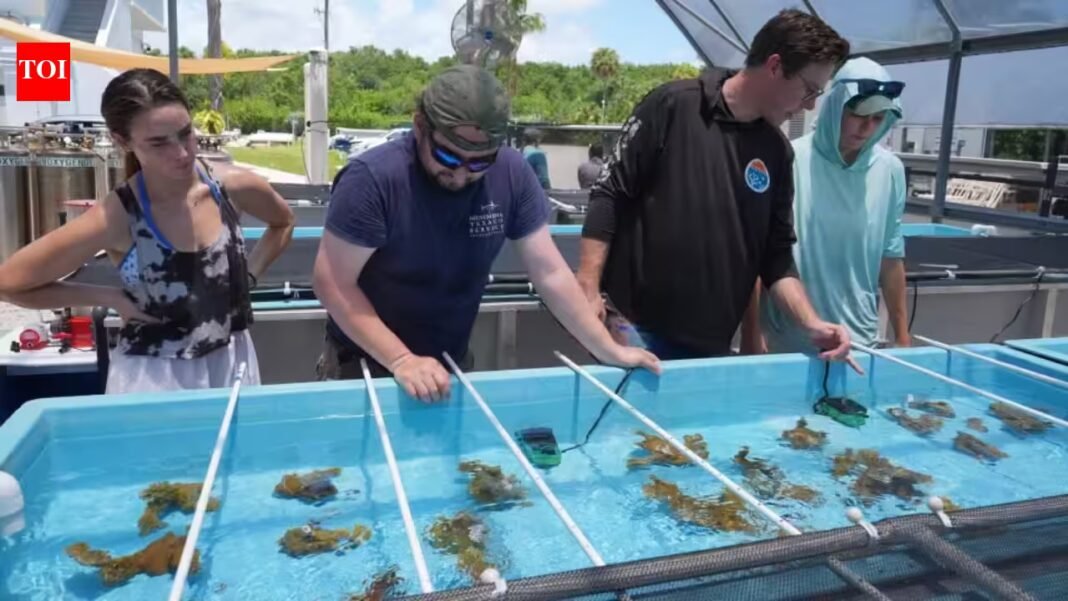
Scientists in Florida took an unusual approach to protecting one of the region’s most threatened coral species, moving it out of the ocean and into a land-based hatchery. On July 22, 2026, researchers from the University of Miami transported 30 genetically diverse elkhorn coral fragments from offshore nurseries to a controlled facility, hoping to shield them from another potentially devastating marine heatwave. The move followed severe bleaching events in 2023 and 2024 that decimated the species’ population, leaving surviving colonies too small and isolated to reproduce naturally across parts of South Florida. With the remaining genetic diversity at risk, researchers sought to preserve these fragments and improve the chances of restoring the species in the future.
Why are Florida scientists moving endangered corals ashore?
The decision to bring the corals onto land was driven by concerns that rising ocean temperatures could trigger another mass bleaching event during the summer of 2026.Researchers collected 30 genetically diverse elkhorn coral fragments from offshore nurseries along the Florida coast on July 22. Divers carefully wrapped the pieces in wet bubble wrap, placed them in coolers for transportation and then transferred them into sanitised, temperature-controlled saltwater tanks at a hatchery.Diego Lirman, an associate professor of marine biology at the University of Miami, said the surviving corals were already showing signs of heat stress as ocean temperatures increased.The researchers feared that 2026 could bring another severe bleaching event, potentially worse than the one experienced in 2023. Moving the fragments to land-based facilities provides a temporary refuge where their surroundings can be controlled while ocean conditions remain dangerous.
How marine heatwaves are threatening elkhorn coral
Elkhorn coral, scientifically known as Acropora palmata, is a major reef-building species found throughout Florida, the Bahamas and the wider Caribbean. Its large, branching structures provide shelter and habitat for numerous marine organisms.However, prolonged exposure to unusually warm water can cause coral bleaching. Corals have a relationship with microscopic algae living inside their tissues, which provide much of their food through photosynthesis and give them their colour.When water temperatures become excessively high, corals become stressed and expel these algae, turning white. Although bleached corals are not necessarily dead, prolonged bleaching can leave them without sufficient energy, making them vulnerable to disease and eventually causing mortality.Florida’s elkhorn coral population has suffered repeated damage from marine heatwaves. The 2023 event was particularly destructive, while another, less severe heatwave in 2024 further affected surviving colonies.According to Lirman, the repeated episodes have left populations across parts of South Florida functionally extinct, meaning the remaining colonies are too small and too far apart to reproduce naturally.
Scientists are trying to preserve the coral’s genetic diversity
Beyond protecting individual coral fragments from immediate heat stress, researchers are also concerned about preserving the species’ genetic diversity.The 30 fragments selected for transportation represent different genetic backgrounds. Maintaining this diversity is important because some coral varieties may possess characteristics that make them more resistant to high temperatures, diseases or ocean acidification.The University of Miami also exchanges coral fragments with other research facilities and conservation partners to ensure that genetic material is preserved across multiple locations.Lirman explained that different genetic varieties could hold traits that help future generations withstand environmental pressures. Losing these remaining genetic lineages could mean losing valuable biological information that might be essential for the species’ recovery.The land-based hatchery therefore serves not only as a temporary refuge but also as an important part of the wider effort to maintain a genetically diverse population.
Why saving elkhorn coral matters beyond marine life
Elkhorn coral plays an important role in maintaining the health of Caribbean reef ecosystems. Its branching formations create complex underwater habitats that provide food, shelter and breeding grounds for fish and other marine organisms.Healthy coral reefs also benefit coastal communities by supporting fisheries, attracting tourists and reducing the impact of waves and storm surges. Their structures help protect shorelines from erosion and provide natural barriers against powerful storms.According to NOAA Fisheries, elkhorn coral populations have declined dramatically over several decades, with disease, ocean warming, pollution and habitat degradation contributing to their decline.The species is listed as threatened under the US Endangered Species Act. Its continued loss could therefore affect not only marine biodiversity but also communities and industries that depend on healthy coral reef ecosystems.