



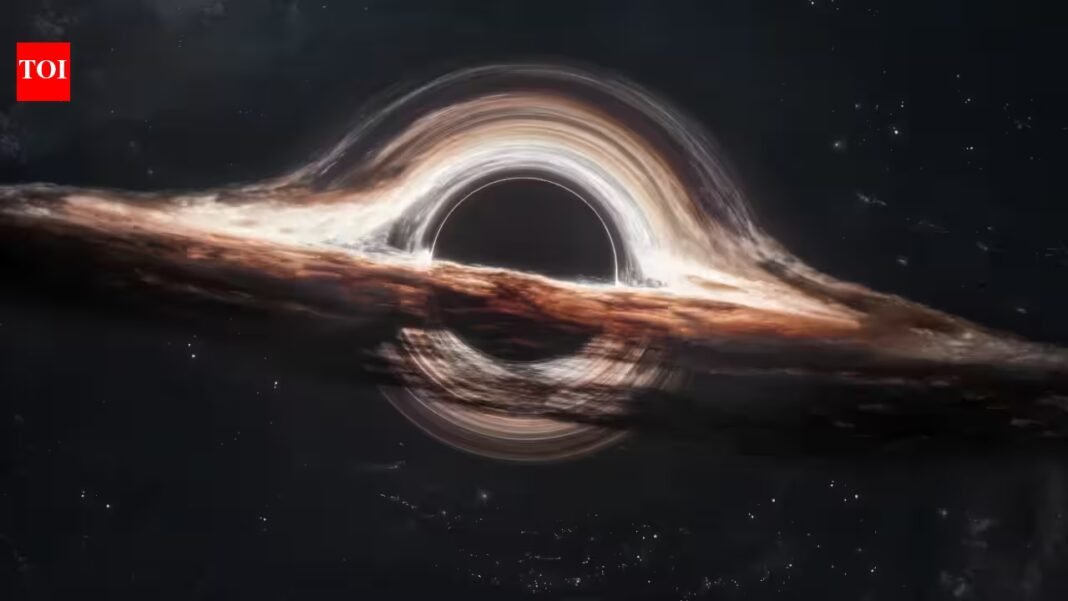
Black holes are mysteriously the most fascinating and dreadful part of the universe. Scientists have been trying to know how they work. Not until very recently did scientists even know what they looked like. It was only on April 10, 2019, that the first image of a black hole’s shadow was captured by the Event Horizon Telescope. Before that, they just assumed based on mathematical calculations. The closest representation came not from a lab but from the movie Interstellar, where they created the imagery of a black hole on screen using VFX and CGI. It’s another fascinating aspect of science: how you can know what something might look like based on mathematical calculations.There have been many theories, many assumptions and ideas surrounding black holes. Each day, we find something new, which leads us into a greater depth of mystery. For decades, scientists only knew that black holes could merge. With their great gravitational force, which even prevents light from escaping, two black holes can attract each other and become one. But the new study says something else. A new theoretical study suggests that this extraordinary possibility is extremely rare even theoretically, although it is possible under extreme conditions.The research, published in Physical Review D under the title “When Black Holes Admit Pair-of-pants Topologies”, examines the physical laws that keep a black hole intact and whether certain circumstances could allow it to break apart.
Why do scientists believe black holes cannot split?
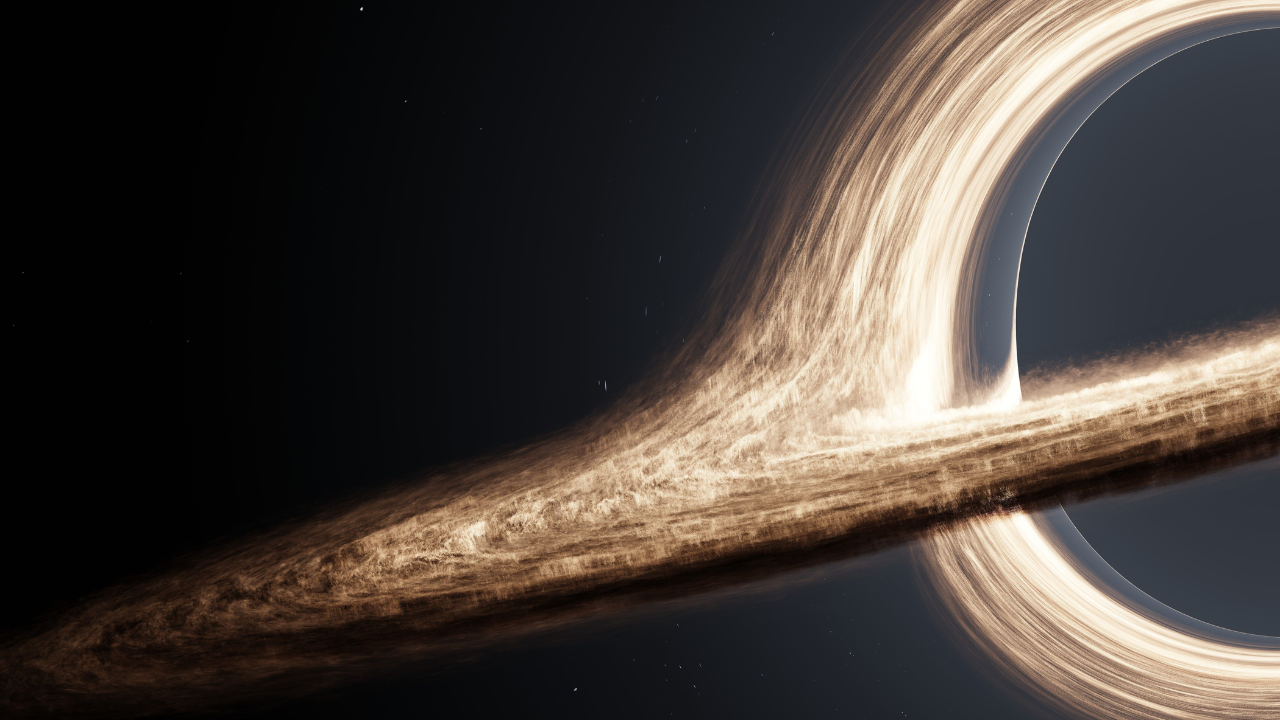
Can a black hole split into two (Image: Canva)
To understand the unusual possibility, we first have to understand how these massive holes are formed. A black hole is a region of space where gravity becomes so powerful that nothing, not even light, can escape once it crosses a boundary known as the event horizon. According to Einstein’s theory of general relativity, the event horizon marks the point beyond which our usual understanding of space and time changes dramatically.However, gravity is not the only reason scientists have long considered black hole splitting impossible. Another important concept is entropy, which is closely related to the second law of thermodynamics. In simple terms, entropy is a measure of how many possible microscopic arrangements a physical system can have. Black holes also possess entropy, which is related to the surface area of their event horizons.According to the area theorem proposed by physicist Stephen Hawking, the total surface area of black hole event horizons cannot decrease in a classical physical process, assuming certain conditions hold. When two black holes merge, their combined event horizon can form a larger one, satisfying this principle. However, if one black hole were to split into two smaller ones, the total area of the resulting event horizons would generally be smaller than that of the original black hole. This would go against the area theorem, making such a process theoretically unfavourable.This is why scientists have traditionally considered black holes capable of merging but not splitting. However, the new research explores whether an extremely rapidly rotating black hole could present an exception to this long-standing understanding.
How could a rapidly spinning black hole split into two?
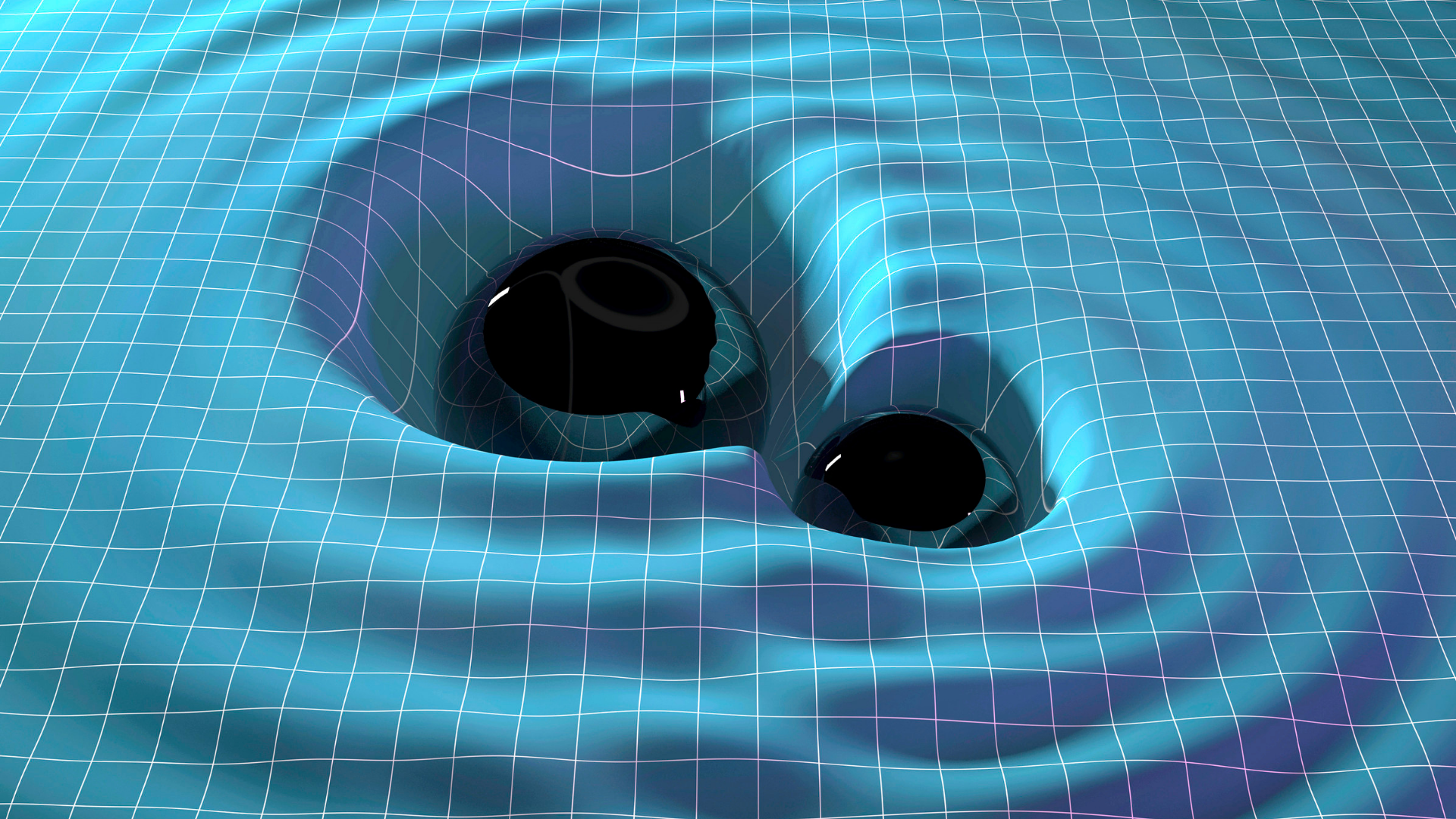
Representative Image of two black holes bending space and time as per Einstein (Image- Canva)
This is where the new research gets particularly interesting. The researchers suggest that a black hole spinning close to its maximum possible speed could behave differently from what scientists have traditionally expected. Rotation plays an important role in determining the physical properties of a black hole, including its mass, angular momentum and event horizon.The study examines whether this extreme rotation could allow a black hole to overcome the restrictions that ordinarily prevent it from splitting. According to the researchers’ calculations, under very specific conditions, a rapidly spinning black hole could theoretically divide into two smaller black holes without violating the underlying physical principles considered in the study.The researchers describe this unusual possibility through something called a pair-of-pants topology. Imagine the shape of a pair of trousers: a single upper section branching into two separate legs. In a similar way, the event horizon of the original black hole would branch into two separate horizons, each belonging to a smaller black hole.However, this does not mean that every rapidly spinning black hole is capable of splitting. The conditions are extremely restrictive, and the resulting black holes would also need to move far enough apart to avoid merging again. The possibility remains theoretical, and no such event has ever been observed.While the possibility remains far from being observed, at least for now, the study does challenge the long-held assumptions about black holes and reminds us that even the most extreme objects in the universe may still hold surprises.