




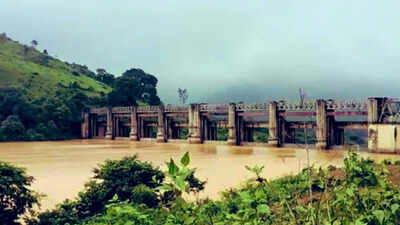
NEW DELHI: Hydropower generation fell nearly 12% below the projected requirement in the first six months of FY27 due to the El Nino-induced rain deficit, putting greater pressure on coal-fired generation and leading to shortages, especially during non-solar hours, in several parts of the country.The month also saw peak power demand reach 269 GW, second only to the record 270.8 GW in May this year. There were several days during the month when peak demand crossed 250 GW – the previous peak recorded in May 2024, before demand records tumbled in May this year.The deficit was more pronounced in Sept, when demand was unusually high due to strong industrial requirements, besides cooling and irrigation needs amid a deficient monsoon. Power ministry data showed that India faced a shortage of nearly 560 million units (MU) of electricity during the month due to lower hydropower generation and the lack of battery storage to store solar energy produced during the day for use in the evening when demand surges. For perspective, electricity shortage in Aug was around 98 MU.While hydropower remained in deficit, coal-fired generation provided the baseload during the first half of the 2026-27 financial year. Though available in limited capacity, nuclear power also helped meet the load by generating more electricity than projected, while gas-based plants also came to the rescue in Sept. Power generation from renewables – solar and wind – increased 25% during the month, but their share in overall generation dropped to about 17% from 19.5% in Aug. Data showed that the overall shortage during the first six months of the financial year remained low at around 0.2% of electricity demand.Charith Konda, lead energy specialist at Institute for Energy Economics and Financial Analysis, said the power shortage observed so far this fiscal was largely due to lower hydropower output following a 13% rainfall deficit during the monsoon. “Usually this is the period when hydropower supports the supply. We had good rains last year and hence good hydropower generation. But it’s like one piece in the overall system; if you pull it out, all deficiencies come out,” Konda said.“When hydropower generation falls, there is more stress on coal power and there are shortages,” he added.Hydropower plays a crucial role in meeting evening peak demand when solar output drops. The rainfall deficit, however, changed that equation.While coal was burnt faster due to high demand, intense rains in coal-producing states caused logistical problems in transporting supplies, leading to fuel shortages at many plants.Konda also observed that distribution was a problem in several states, requiring macro-level thinking to strengthen the distribution network. “It is because of poor infrastructure that there is instability in the distribution grid and power cuts,” he said.Disha Aggarwal, fellow at Council on Energy, Environment and Water, also said discoms faced real constraints, from stressed finances to subsidy pressures, requiring smarter planning. “Yet our power system still runs on older assumptions about weather and demand. India needs a heat-resilient, flexible grid, and three shifts can get us there. First, strengthen supply during non-solar hours through storage, complementary wind and flexible coal. Second, help consumers shift demand to periods of abundant supply by scaling smart metering and time-of-day tariffs. And third, discoms must plan locally for heat risk by using AI to combine feeder, transformer and meter data with local weather forecasts, so they can spot demand hotspots before networks see outages and transformers fail,” Aggarwal said.Amit Manohar, secretary general of Indian Solar Manufacturers Association, said faster rollout of solar-plus-storage projects and stronger networks was required to ensure reliable power at all hours. “Solar now meets a large share of daytime electricity requirement, helping the grid manage peak demand without shortages. The challenge comes after sunset. Pairing solar with storage will help close this gap,” Manohar said.Rohit Bajaj, joint managing director of Indian Energy Exchange, said the power ministry was closely monitoring the coal situation at power plants and had taken steps to ensure fuel availability. “Demand and supply dynamics remained volatile during the month, particularly in the last week, as cyclone activity and widespread rainfall moderated demand across several regions,” Bajaj said.