



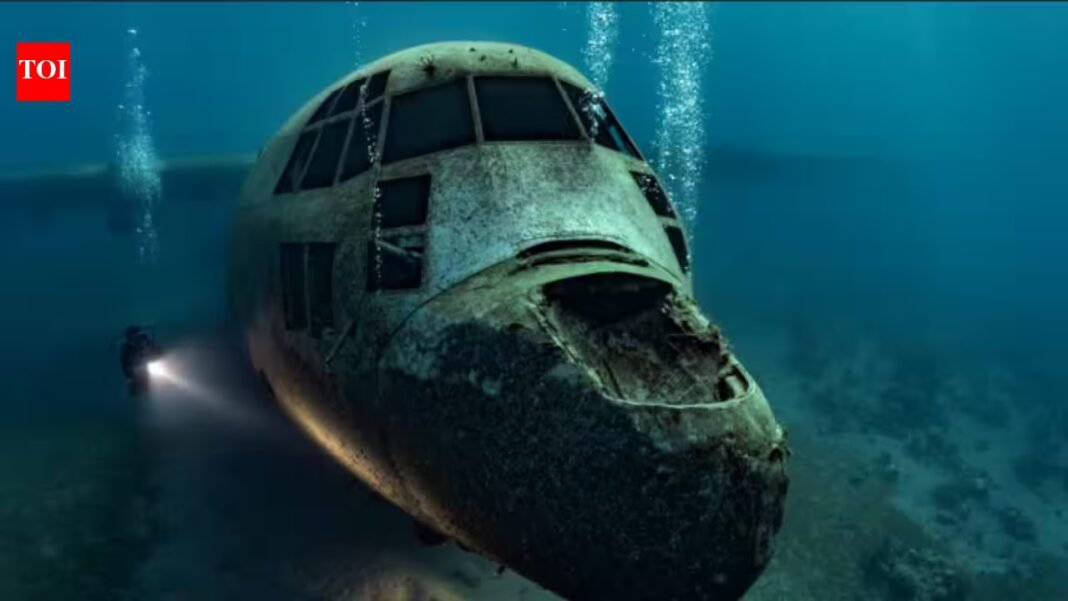
A retired military aircraft has found an unusual second life beneath the Red Sea after Jordan deliberately sank it off Aqaba in 2017 to create an artificial reef. The Lockheed C-130 Hercules, a roughly 30-metre-long military transport aircraft, was placed underwater on November 16, 2017, about 300 metres from the Aqaba shoreline. It now rests on the seabed at roughly 16–17 metres and has become an unusual attraction for divers while providing a new structure for marine life, according to a report by Aqaba Dive Academy. Instead of being dismantled after its military service, the aircraft was repurposed as part of efforts to create an artificial habitat in Aqaba’s coastal waters. The project was carried out by the Aqaba Special Economic Zone Authority in cooperation with Jordan’s Royal Jordanian Navy and Aqaba Port Corporation.Before the plane was sunk, officials removed fuel, oil, paint and other hazardous materials from the aircraft. It was then towed from the Royal Jordanian Air Force’s headquarters in Amman towards Aqaba for its new role beneath the water.
From military aircraft to artificial reef
The C-130 Hercules is a four-engine turboprop military transport aircraft that has been used by armed forces around the world for transporting personnel, equipment and supplies. In Aqaba, however, the aircraft was no longer intended to fly.Officials selected an underwater site where the aircraft could rest on a sandy seabed and provide a hard surface in an area where new habitat could develop. Its location was also close to other underwater attractions, including the wreck of an M42 Duster tank, creating a larger area for divers to explore.The aircraft measures about 30 metres in length and has a wingspan of roughly 40 metres, making it a substantial structure on the seabed. Its shallow depth also means it can be reached by recreational divers rather than being limited to deep technical diving.The idea behind an artificial reef is relatively simple: a submerged structure can provide surfaces and shelter that are absent from open sandy seabeds. Fish can use the spaces around and inside the structure for shelter, while organisms such as algae and corals can colonise its surfaces over time.For Aqaba, the project also had a tourism dimension. The unusual sight of a military transport aircraft sitting underwater offered divers a wreck site unlike the area’s conventional coral reefs.
Marine life moves in
The C-130 Hercules is a four-engine turboprop military transport aircraft that has been used by armed forces around the world
The C-130 did not remain an empty aircraft for long. Over time, fish began using the wreck and surrounding spaces as shelter, while corals and other marine organisms colonised parts of the structure. Diving accounts from the site describe schools of fish around the aircraft and marine growth developing on and beneath its wings.The wreck’s cockpit and fuselage provide numerous enclosed and shaded spaces, creating different microhabitats within the larger structure. The aircraft’s position on the sandy seabed also makes it visually distinct from the natural reef formations elsewhere in the Gulf of Aqaba.The transformation is particularly striking because the plane was originally designed for movement. Its new function is almost the opposite: it remains fixed on the seabed while marine organisms gradually make use of it.The artificial reef was also intended to contribute to the diversity of habitats available to marine species in the area. Jordanian officials said when the aircraft was sunk that adding such structures could provide additional habitat and increase species diversity.
A wreck that became a dive attraction
At around 16–17 metres underwater, the C-130 is accessible to divers at recreational depths. Contemporary reports noted that its location roughly 300 metres offshore made it reachable while still offering an unusual underwater experience.Divers can see the aircraft’s large fuselage, wings and cockpit beneath the surface. Accounts from the site have also described fish gathering around the aircraft, with marine growth gradually changing its appearance.The wreck has since become part of Aqaba’s wider collection of underwater attractions. The city is known for its coral reefs and dive sites, and the deliberate placement of military equipment underwater has added another category of attraction: artificial structures that combine marine habitat with wreck diving.The C-130 is not the only man-made object used in the area. Aqaba’s underwater sites include other deliberately placed military equipment, forming an underwater landscape where divers can encounter tanks and other vehicles alongside natural coral habitats.
The aircraft’s second life
The decision to sink the C-130 was therefore about more than simply disposing of an old aircraft. Once the hazardous materials were removed, the retired plane became a permanent structure beneath the Gulf of Aqaba. Its metal frame created new surfaces for organisms to colonise, while its size and distinctive shape made it an immediate draw for divers.The wreck has also changed with time. A major storm in 2020 damaged the aircraft and tore sections of its structure apart, according to diving accounts of the site. The damage altered its appearance but did not end its role as an underwater habitat or dive attraction.Today, what was once a working Royal Jordanian Air Force transport aircraft sits on the seabed surrounded by marine life.