



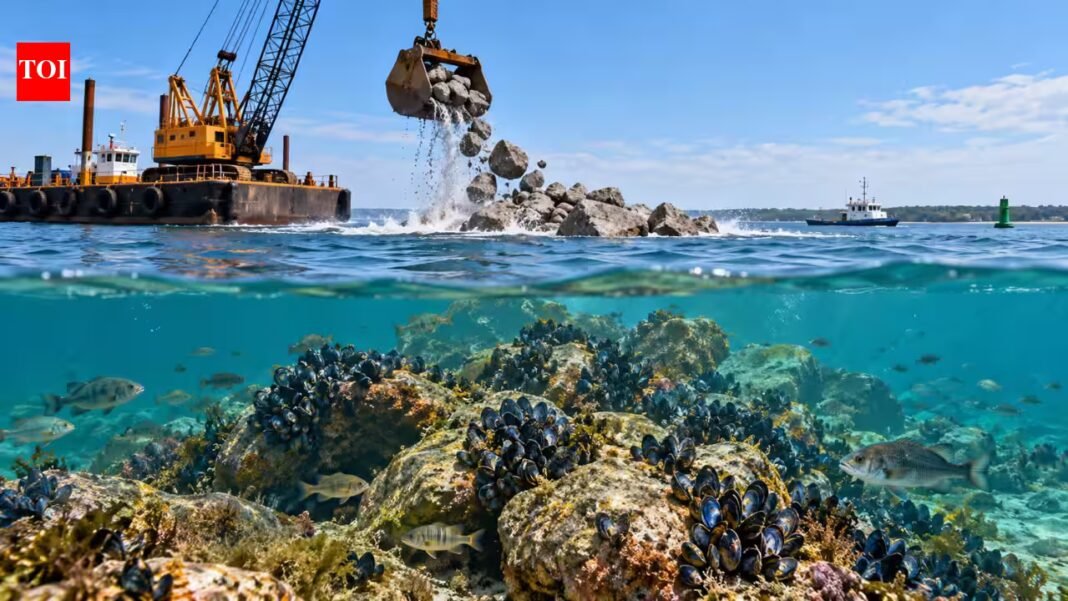
In 2018, Delaware turned nearly one million tons of rock excavated from a shipping channel into underwater habitats for marine life, rather than disposing of the material elsewhere. The US Army Corps of Engineers partnered with Delaware’s Department of Natural Resources and Environmental Control (DNREC) to transport the rock to two artificial reef sites in the lower Delaware Bay. The project supplied approximately 355,000 tons of bedrock to Delaware Reef Site No. 4 and more than 635,000 tons of glacial rock to Brown Shoal Reef Site No. 6. According to DNREC, natural rock supports a diverse invertebrate community dominated by blue mussels, providing fish with shelter and food.
How did Delaware expand two artificial reefs in 2018
One part of the project involved removing approximately 355,000 tons of bedrock from sections of the river where almost five feet of rock had to be excavated to achieve the required navigation depth. Great Lakes Dredging Co., a contractor working for the Army Corps of Engineers, transported the material to Delaware Reef Site No. 4, located south of Bowers Beach and north of Mispillion Inlet. According to DNREC, the additional rock expanded the reef to 50 per cent of the development planned by the Division of Fish & Wildlife.A second contractor, Norfolk Dredging Co., transported more than 635,000 tons of glacial rock to Brown Shoal Reef Site No. 6 between December and March. The material was arranged in mounds measuring 15 to 20 feet high on a seabed consisting mainly of mud and sand. DNREC reported that the addition of the glacial rock brought the site to full development, expanding opportunities for recreational fishing in Delaware’s artificial reef system.
Why was natural rock valuable for Delaware’s artificial reefs
The rock placed at the two sites provided a substrate for marine organisms in a region where natural rocky habitat is uncommon. DNREC explained that natural rock supports “a very rich, diverse and novel invertebrate community, dominated by blue mussels”. The state agency identified the rock as a valuable addition to its artificial reef system and described it as superior to many other materials used to construct reefs.The new rocky surfaces also benefited fish by providing shelter and increasing the availability of food. According to DNREC, fish benefit both from the protection offered by the habitat and from the invertebrates living on the rocks. The project therefore created underwater structures that supported marine life while making use of material excavated during a major navigation improvement project.
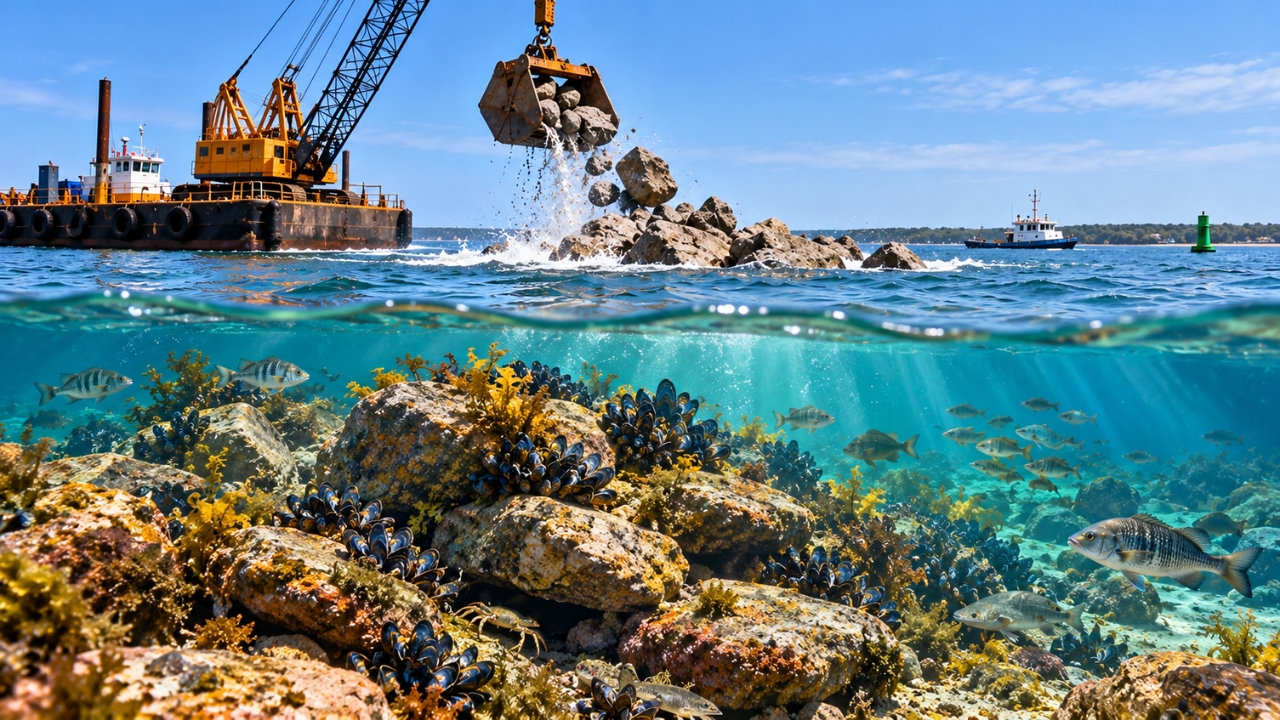
Image AI generated
How did state and federal agencies benefit from reusing excavated rock
The initiative brought together DNREC’s Division of Fish & Wildlife and the US Army Corps of Engineers to reuse excavated material for environmental and recreational purposes. DNREC Secretary Shawn M. Garvin described the partnership as an example of cooperation between state and federal agencies, citing benefits that included improved navigation for commercial shipping, better fisheries habitat and increased opportunities for anglers in Delaware waters.Lieutenant Colonel Kristen Dahle, commander of the Army Corps of Engineers’ Philadelphia District, also highlighted the value of the arrangement. She said that using rock from the navigation channel to create enhanced habitat “aligns engineering with natural processes, and maximises scarce resources”. The Corps described the project as an approach that combined social, environmental and economic benefits. Through the partnership, material removed to deepen the river channel was put to a second use, helping complete an artificial reef site and expand another while supporting marine habitat in the lower Delaware Bay.