



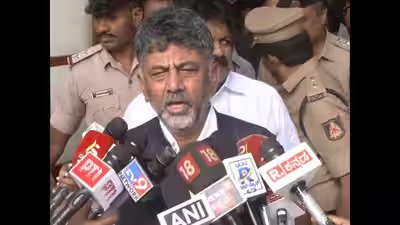
Karnataka Chief Minister DK Shivakumar has urged private school managements across the state to adopt government schools in rural areas and contribute towards improving their infrastructure and quality of education. Under the state’s ‘Namma Shaale Namma Javabdari’ (Our School, Our Responsibility) programme, the government plans to connect 1,000 government schools with private institutions in the initial phase, with an eventual target of 2,000 schools.The initiative seeks to bring private institutions and corporate organisations on board through Corporate Social Responsibility (CSR) partnerships to strengthen government schools, particularly in rural areas.Addressing representatives of private school managements and CSR organisations in Bengaluru, Shivakumar said the programme would create opportunities for private institutions to support government schools through financial assistance, teaching resources, and infrastructure development.According to PTI, the Chief Minister said the government had categorised approximately 6,000 gram panchayats into three groups to facilitate the implementation of the programme. He expressed confidence that the initiative would deliver measurable results over the next four to five years.
Karnataka signs MoUs worth Rs 206 crore for government school development
As part of the programme, 15 Memoranda of Understanding (MoUs) worth Rs 206.10 crore were signed for the development of 56 government schools.Earlier in 2026, the state government had signed another 18 MoUs worth Rs 85 crore to upgrade 33 schools. Additionally, 12 agreements worth Rs 64 crore, covering 23 schools, are in the final stages of signing.The agreements are aimed at mobilising private-sector resources to improve facilities in government schools and strengthen the quality of education available to students.
Private schools can contribute teachers, computers and laboratory equipment
Shivakumar said private school managements could identify government schools for adoption based on their convenience and financial capacity. He clarified that participation in the programme would not necessarily require large financial investments or the construction of new buildings.Instead, private institutions could contribute experienced teachers, laboratory equipment, computers, and school buses to support government schools.“If you are unable to spend Rs 5-10 crore to construct buildings, that is fine. Send 10 teachers each with expertise from your schools to government schools and pay their salaries,” he said, as quoted by PTI.The Chief Minister also pointed to Karnataka’s annual CSR pool of approximately Rs 8,800 crore, urging companies operating in the state to direct a greater share of their contributions towards rural primary education.He cited ongoing CSR-supported development work in Bengaluru South district, where projects have commenced in 30 government schools. He also referred to Toyota’s contribution towards constructing 23 schools in Ramanagara district, with investments ranging from Rs 10 crore to Rs 15 crore per school.As an incentive for private organisations supporting government schools, the state will also allow them to add their names to the institutions. Citing an example, Shivakumar referred to Hegganur Government School near the Tamil Nadu border, which has been permitted to be renamed Hegganur Government Toyota School.
Karnataka government targets rural education infrastructure
Explaining the broader objective behind the initiative, Shivakumar said improving educational facilities in rural areas could help reduce migration to cities, particularly Bengaluru. Families often relocate to urban centres in search of better schooling opportunities for their children, adding to the pressure on urban infrastructure.He said strengthening government schools in rural areas would help children access better educational facilities closer to their homes.The Chief Minister also referred to the Karnataka government’s Rs 2,000 crore loan from the World Bank for infrastructure development in Karnataka Public Schools.However, he acknowledged that improving infrastructure alone would not be sufficient to address the challenges facing government education institutions. He pointed out that government school teachers receive salaries ranging from Rs 70,000 to Rs 1.5 lakh, but improvements in the overall quality of education remain necessary.Shivakumar urged private school managements and corporate organisations to treat the development of government schools as a shared responsibility and contribute their expertise and resources.The ‘Namma Shaale Namma Javabdari’ programme is intended to build partnerships between the government and private institutions, with the larger objective of improving learning conditions and educational opportunities for children in rural Karnataka.(With inputs from PTI)