



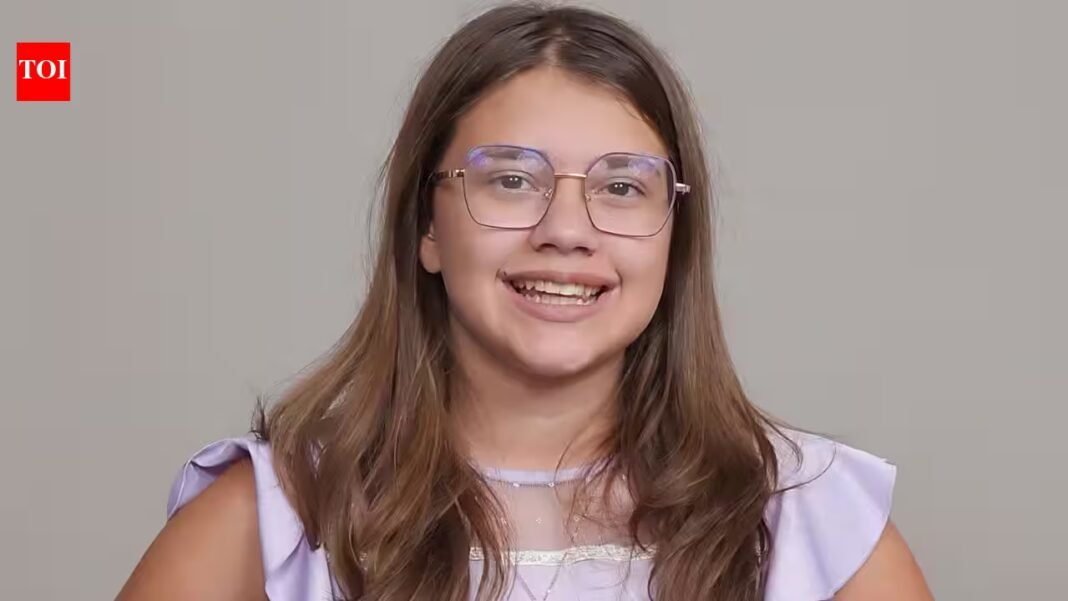

A seventh grader in Montana compared banana and plantain starch to develop a stronger bioplastic. Rye Lynn Rost, a student at Baker Junior High School in Baker, MT, wanted to create plastics from natural materials that could break down without losing their durability too quickly.For her project, she studied bioplastics made from plantains (Musa paradisiaca) and bananas (Musa acuminata). She examined amyloplasts (plant cells that make and store starch) and measured the starch content of both fruits.According to the Society for Science, Rye found that plantains had more amyloplasts and starch. Their bioplastic also had higher tensile strength and breaking distance than the banana version.
Rye compares bananas and plantains to make stronger bioplastics
Rye said, “While there are many issues in the world that we can use STEM to solve, plastic pollution is the one that concerns me the most”. She explained that bioplastics are made from natural materials and can break down over time. However, she did not want them to break down too quickly.Rye said, “Bioplastics must withstand water, sunlight, and other environmental conditions without breaking down or losing durability”. She decided to compare bioplastics made from plantains (Musa Paradisiaca) and bananas (Musa acuminata). The two fruits are closely related, but plantains have thicker skin and more starch.
What did Rye’s tests reveal about banana and plantain bioplastics
Rye began by comparing the amyloplasts found in bananas and plantains. She extracted individual cells from both fruits and counted the amyloplasts in 100 cells from each. She then extracted the starch from each fruit and measured the amount present per gram.After examining the cells and starch, she made bioplastic from both bananas and plantains and compared the results with plastic parafilm. The tests showed that plantains had the highest number of amyloplasts and the most starch.Rye then tested both bioplastics for strength and stretch. The plantain bioplastic had higher tensile strength and breaking distance than the banana bioplastic, which makes it stronger.
Plantain bioplastic shows greater strength than banana version
The plantain bioplastic performed better than the banana bioplastic in the strength tests. Rye found that the plantain bioplastic had higher tensile strength and breaking distance. This made the plantain version a stronger plastic than the banana bioplastic.Her results followed her earlier findings that plantains had the highest number of amyloplasts and the most starch. Rye also compared the bioplastics with plastic parafilm as part of her testing. The project aimed to develop a bioplastic that could break down while remaining durable under environmental conditions.
Rye Lynn Rost’s journey from 4H to materials science
Rye is a member of 4H and has presented a cow, goat, cat, pig, and poultry at the fair. She takes care of 14 goats and has also helped train cows and pigs. Rye has high-frequency hearing loss and wears hearing aids.She said, “Everyone was worried that I would do badly in school, but I have gotten straight As my whole life”.She wants to become a materials scientist and wants to develop better bioplastics. Her long-term goal is to create the right recipe for different types of single-use plastics.