



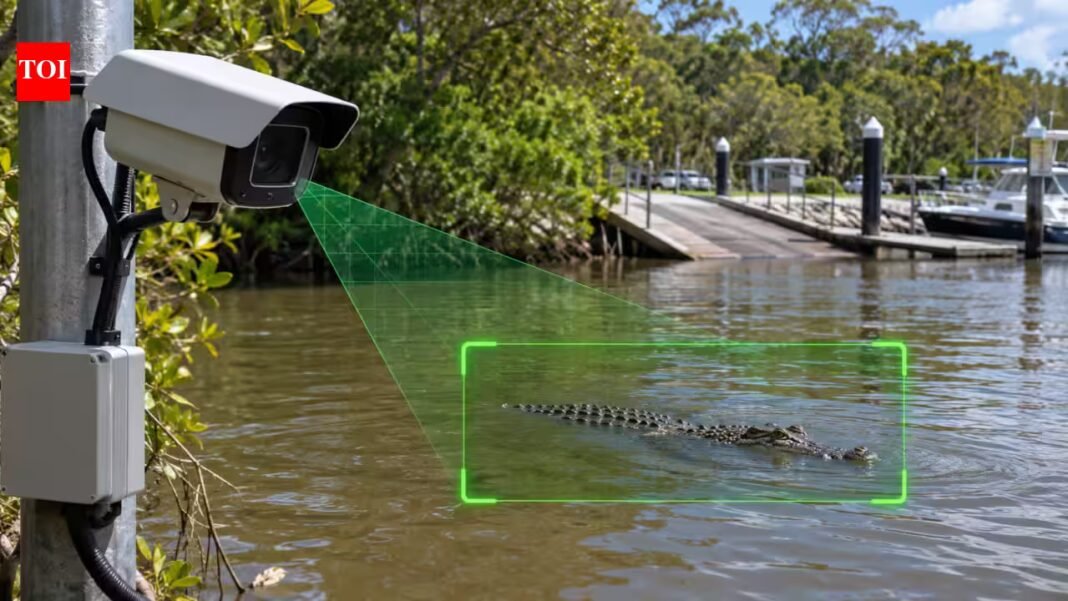
Queensland is testing a camera system that uses artificial intelligence to identify crocodiles. In a media release on 24 March 2026, the Department of the Environment, Tourism, Science and Innovation (DETSI) said the project had been given the green light to proceed with its first deployment in northern Queensland. DETSI is working with James Cook University (JCU) on the device, which links cameras with AI trained to identify crocodiles. It is mounted on a trailer so it can be moved between locations as the trial rolls out. The aim is to test whether the technology is feasible and can help keep Queenslanders safe from crocodiles.
How can Queensland’s AI cameras detect crocodiles in murky waterways
According to DETSI’s media release, the device links state-of-the-art cameras with AI technology trained to identify crocodiles. In theory, it can spot crocodiles swimming in the water. The release says the system is mounted on a mobile camera platform configured as a trailer, so it can be moved to different locations as the trial phase rolls out.DETSI’s research page says JCU researchers developed the system’s detection algorithm using more than 800 hours of footage to train it to recognise crocodiles. The page says the system is designed to identify crocodiles swimming on the water’s surface in both day and night-time conditions. The media release adds that the AI was trained to differentiate between crocodiles and other floating objects in the water.
How could AI technology improve crocodile monitoring in Queensland
According to DETSI Senior Conservation Officer Daniel Guymer, the aim is to create “a reliable detection system that could be deployed on fixed or mobile infrastructure” in high recreation-use areas. The media release says that, if successful, the technology could change how crocodiles are monitored by providing real-time data to help manage them.The release names Dr Tao (Kevin) Huang, a Senior Lecturer and Co-Deputy Head of JCU’s Centre for AI and Data Science Innovation, as the project lead. He said baseline tests have demonstrated that the AI technology can detect crocodiles. The next step, he said, is to check that it can detect them in the water in real time. The release says the technology could be used at public locations such as boat ramps or marinas if the program succeeds.
What other technologies is Queensland testing to detect crocodiles
According to the media release, Dr Huang said the team is also considering future extensions of the AI technology to estimate crocodile size, which could assist wildlife rangers in investigating sightings. The release says the partnership will assess the feasibility of the detection system, and that researchers are optimistic about its potential to deliver practical solutions for crocodile management.DETSI’s research page lists other detection work under the same program. It says the department is exploring multi-beam sonar technology together with image recognition software to detect crocodiles in an area and alert authorities. This is being trialled using “a clever buoy system”, which also records temperature, wind and humidity data. The page says this is intended to determine when and why crocodiles move into areas frequented by people. It also says wildlife rangers are examining how crocodiles communicate through sounds.
How will Queensland’s AI crocodile monitoring cameras protect people’s privacy
DETSI’s research page includes a privacy collection notice for the trial. It says specialised crocodile monitoring cameras on mobile trailers are being used in public areas. A separate CCTV security camera is installed on each trailer to protect it from theft, damage or other unauthorised interference. The notice says both types of camera may capture images or footage of people in the vicinity. Any personal information collected is handled under the Environmental Protection Act 1994 and the Information Privacy Act 2009.The notice says personal information will only be used for purposes directly related to the program, and will only be accessed by authorised staff of the department and JCU. The third-party CCTV provider, Mobile Camera Security, may also access it where necessary to investigate suspicious or unlawful activity near the trailer. The notice says information may be disclosed to the Queensland Police Service or other law enforcement agencies where required or authorised by law. It adds that the department does not intend to disclose the information to overseas recipients. The media release states that the new Queensland Crocodile Management Plan prioritises public safety while also seeking to conserve crocodiles in their natural habitat.