



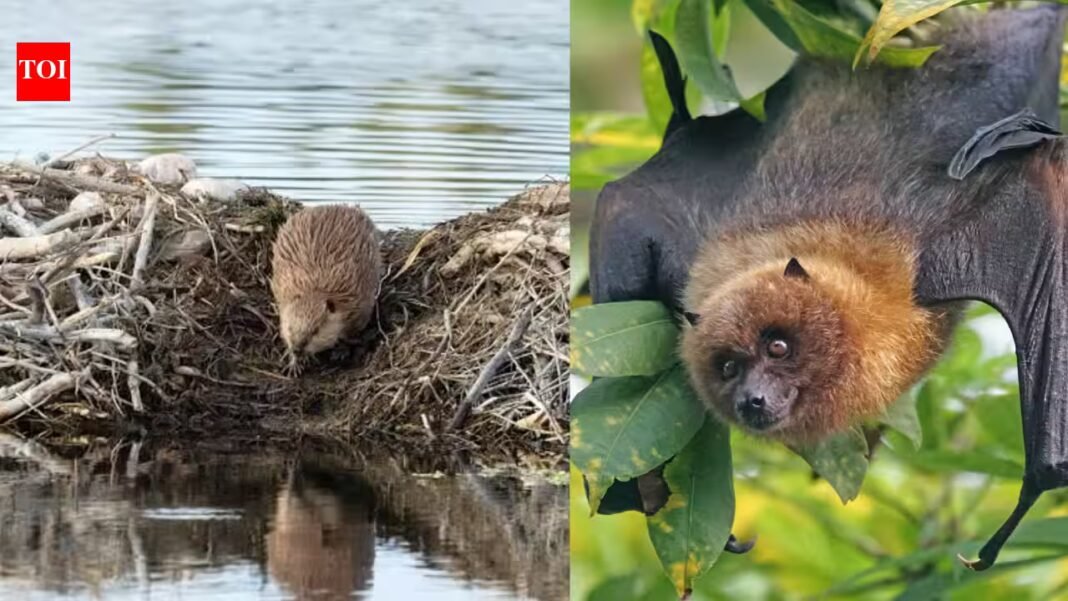
Beavers can reshape streams simply by building dams, slowing flowing water and creating ponds that become useful habitat for wildlife. Scientists have now found that structures designed to mimic those effects can also change how animals use degraded streams. A 2026 study published in Restoration Ecology examined beaver dam analogues (BDAs), human-built structures intended to imitate some of the habitat-forming effects of natural beaver dams. The team found that bat activity was 3.9 times higher at BDA sites than at paired undammed control sites. Amphibians also began breeding at some of the restored locations, even though no amphibians bred at any of the control sites. The findings suggest that slowing streams and creating still-water habitat can benefit wildlife beyond the fish that BDA projects are often designed to support.
Artificial beaver dams changed stream habitat for wildlife
The study titled ‘Beaver dam analogues increase amphibian breeding occupancy and bat activity’ was conducted in the Okanogan-Wenatchee region of Washington’s Cascade Mountains, where researchers compared streams containing BDAs with nearby undammed control sites. They also surveyed natural beaver-dammed sites to see how the artificial structures compared with established beaver habitat. The BDAs were constructed using posts driven into streambeds with wicker woven between them. Many sites also included post-assisted log structures and vegetation planting.Researchers surveyed 25 BDA sites and their paired control sites for amphibian breeding and habitat conditions. They also used acoustic recording units at 18 pairs of BDA and control sites to measure bat activity. Most of the artificial structures had been installed only one to two years before the surveys, giving the researchers a chance to examine relatively early ecological responses. The structures changed the physical conditions of the streams. Average water flow at BDA sites was about half that of control sites, while ponds were present at eight of the 25 BDA sites. None of the 25 control sites contained ponds under the study’s definition.
Bat activity increased after streams were slowed
The acoustic surveys recorded a clear difference in bat use between the restored and control streams. Bat activity, measured as bat passes per night per site, was 3.9 times higher at BDA sites than at their paired controls.The response was particularly strong among high-frequency bats, whose activity increased 5.8-fold at BDA sites, compared with a 2.6-fold increase for low-frequency bats. The researchers linked the broader increase in bat activity to changes in water flow and the creation of wider areas of slower-moving or still water.The study also included natural beaver-dammed sites. There, bat activity was 4.7 times higher than at paired control sites. This distinction matters because the 4.7-fold figure refers to natural beaver dams rather than the artificial BDA structures.
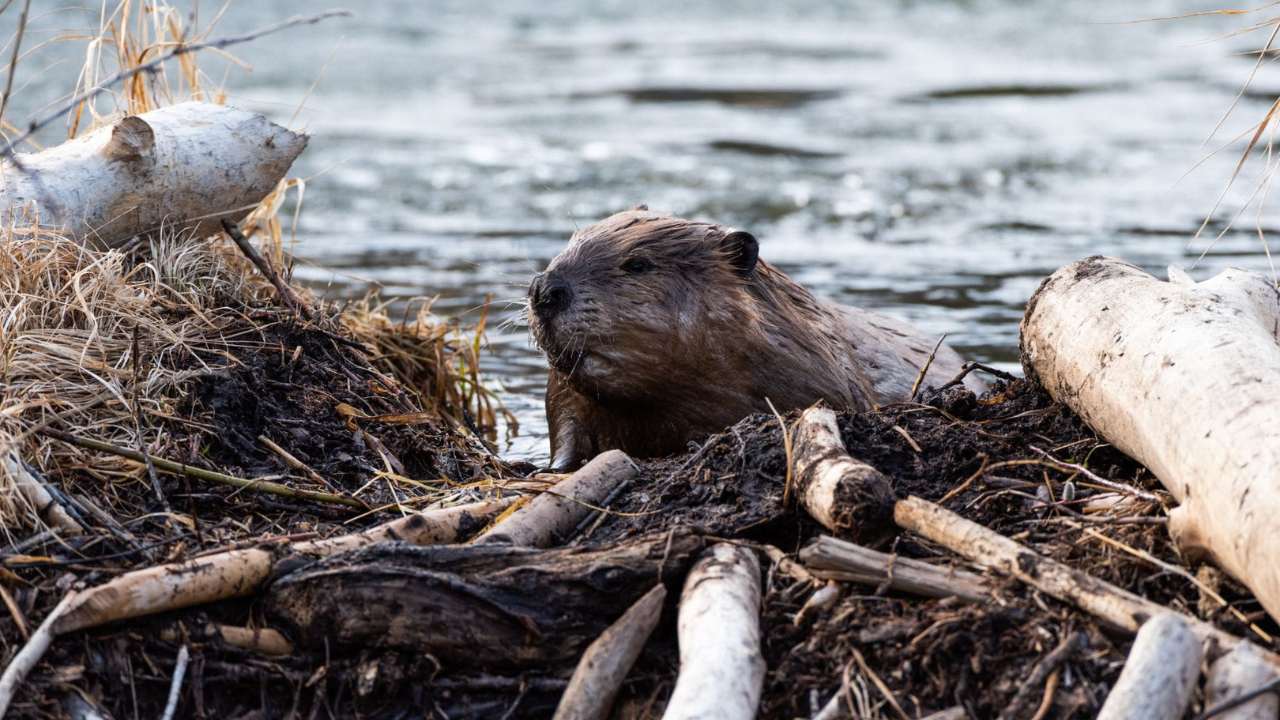
The researchers linked the broader increase in bat activity to changes in water flow and the creation of wider areas of slower-moving or still water (Image: Wedgetail)
Amphibians began breeding where none were found before
The response from amphibians was different. Researchers found breeding evidence at six of the 25 BDA sites, or 24%, while no amphibians bred at any of the 25 control sites. Pacific chorus frogs were found breeding at six BDA sites, while long-toed salamanders bred at four of those six locations. No other amphibian species recorded in the study bred at the BDA sites.The presence of a pond appeared to be especially important. Amphibians bred at BDA sites only when construction had produced still-water ponds, suggesting that simply slowing the stream was not enough for these pond-breeding species. Natural beaver sites showed a much stronger response: amphibians bred at 15 of 17 sites, or 88%, and six amphibian species bred at at least one natural beaver site.
The structures did not fully reproduce natural beaver habitat
The researchers found that BDAs produced benefits within just one to two years, but they did not recreate all the ecological effects of established beaver dams. Natural beaver sites generally had slower water and more ponds than BDA sites. Amphibian breeding was consequently much more widespread at natural beaver sites. The authors also noted that beavers continue to modify their surroundings through activities beyond dam construction, meaning artificial structures alone are unlikely to reproduce the full range of habitat changes created by living beavers.Still, the appearance of breeding amphibians at BDA sites where none were recorded at control sites, alongside the increase in bat activity, showed that these restoration structures can affect wildlife communities beyond their original targets.