



A rare bony ridge found on the lower jaw of a 2-million-year-old human ancestor is offering a new perspective on an anatomical feature that dentists still encounter today. The discovery was made in a fossil of Australopithecus africanus recovered from Sterkfontein in South Africa. What makes the finding particularly unique is that the individual was still young when it died, challenging explanations that associate the development of such bone growths with years of heavy chewing and other stresses placed on the jaw.
What makes the 2-million-year-old jaw ridge discovery unusual
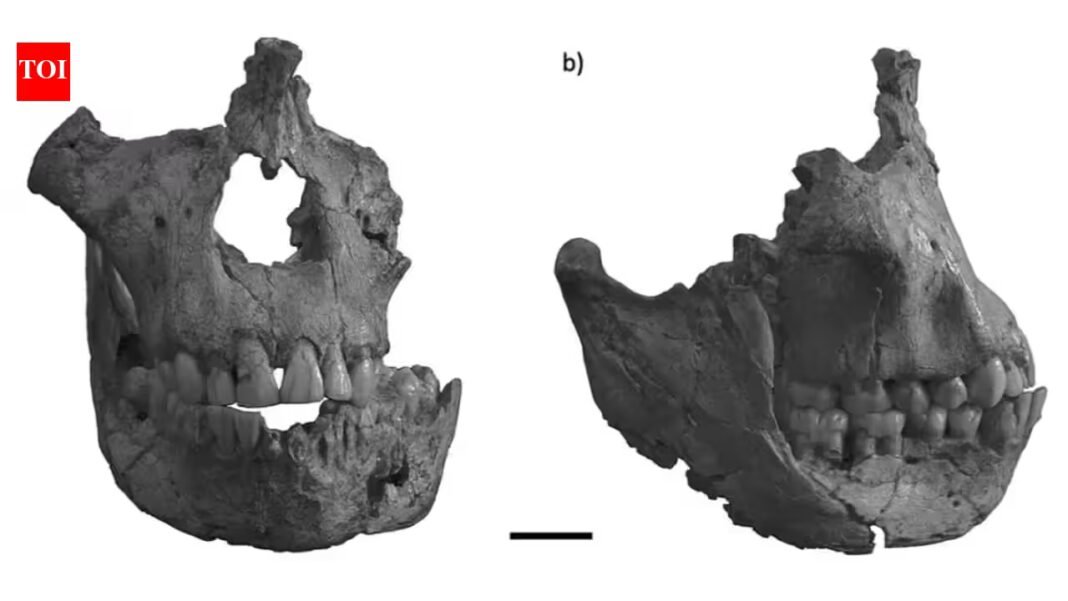
The discovery centres on a fossil identified as Sts 52b, belonging to Australopithecus africanus, an early human relative. Researchers identified a pronounced mandibular torus, a harmless bony growth that develops along the inner surface of the lower jaw.According to the research published in the journal Evolutionary Human Sciences by Cambridge University Press, the fossil comes from Member 4 deposits at Sterkfontein, South Africa. The deposits have been dated to between 2.8 million and 2.1 million years ago, placing the discovery firmly within the period when this early human relative lived.The La Trobe University research team explained that the ridge is particularly significant because it is among the earliest and most clearly developed examples of this anatomical feature identified in the hominin fossil record.Unlike a minor irregularity in the jawbone, the growth in Sts 52b is substantial and appears on both sides of the lower jaw. Its size and shape closely resemble the condition found in some people today.
A fossil belonging to a young individual
One of the most interesting aspects of the discovery is the age of the individual. The researchers classified Sts 52 as a sub-adult based on the development of its teeth. Its second molars had emerged and showed slight signs of wear, while its third molars had not yet fully erupted.The Cambridge study explains that the lower jaw, Sts 52b, fits directly with another fossil, Sts 52a, preserving much of the individual’s middle and lower face.The specimen was recovered in 1949 by palaeontologists Robert Broom and John Robinson during excavations at Sterkfontein. It was originally attributed to Australopithecus africanus.The presence of such a developed bony ridge in an individual that had not reached full adulthood was unexpected. Mandibular tori are frequently associated with the accumulated effects of chewing and other mechanical stresses over many years. They are therefore more commonly discussed in connection with adults.La Trobe University researcher and lead author Luca Morris-Obst described the discovery as particularly surprising because other juvenile fossils of comparable early human relatives do not show the same feature.
How does the jaw ridge compare with modern humans
The condition identified in the fossil is known medically as torus mandibularis, or mandibular torus. It refers to a harmless projection of bone that develops on the tongue-facing side of the lower jaw, usually around the area beneath the canine and premolar teeth.In modern people, these growths can range from small, barely noticeable bumps to prominent ridges. They may occur on one side of the jaw or both, and vary extremely in size from one individual to another.The study, conducted at Cambridge, showed that the growth of Sts 52b was bilateral, i.e. on both sides. It extended backward from the canine and premolar region toward the molars as a prominent raised area of bone.They said its structure was compact and relatively solid, showing no sign of a spongy internal structure. Its overall appearance was also comparable to commonly observed cases in modern dental patients.According to La Trobe University, mandibular tori are familiar to dentists but remain rarely documented in ancient human fossils. Their discovery in such an old specimen demonstrates that this anatomical variation existed among early human relatives millions of years before modern humans appeared.
Scientists are questioning the role of chewing forces
The discovery also raises questions about the factors responsible for the development of these bony growths. Although heavy chewing, teeth grinding and other activities that place pressure on the jaw have been proposed as possible causes, researchers have not established a definitive explanation.The Cambridge study examined this question by comparing the fossil with other early human relatives, particularly Paranthropus robustus.This species had exceptionally strong jaws and large teeth adapted to withstand substantial chewing forces. Its anatomy suggests that its jaw experienced considerable mechanical pressure while processing food.However, researchers have not identified mandibular tori in the known Paranthropus robustus fossil specimens, including individuals that were young as well as older ones.La Trobe University explained that heavy chewing alone cannot account for the presence of the unusual ridge.The absence of the feature in an early human relative with such powerful chewing adaptations suggests that other influences must also be considered.
Genetics and environmental factors may hold the answer
The researchers think that the development of mandibular tori may be due to a combination of genetic, environmental and functional factors. However, the exact relationship between these factors is not known.Some explanations have to do with inherited characteristics, others suggest changes in chewing behavior, dental health and pressure on the jawbone could contribute to their development.The researchers also looked into whether poor oral health may be tied to the growth. We’ve discussed gum disease, tooth decay and inflammation as potential factors contributing to abnormal bone development in the mouth.However, the Sts 52 specimen did not show evidence of tooth decay, infection-related bone changes or unusually advanced tooth wear. This makes it difficult to explain the pronounced ridge through these factors alone.
A modern dental feature with ancient origins
The discovery adds an important piece of evidence to the study of human anatomical variation. Mandibular tori are relatively familiar in modern dental settings, but their presence in ancient fossils is uncommon. The researchers noted that some possible examples have previously been discussed in Australopithecus afarensis fossils from Hadar, Ethiopia, although those features are considerably less pronounced.Sts 52b provides one of the earliest and strongest examples of this condition in the hominin fossil record.As La Trobe University researchers pointed out, the finding also makes early human relatives more relatable by showing that some anatomical variations seen in people today were already present millions of years ago.