



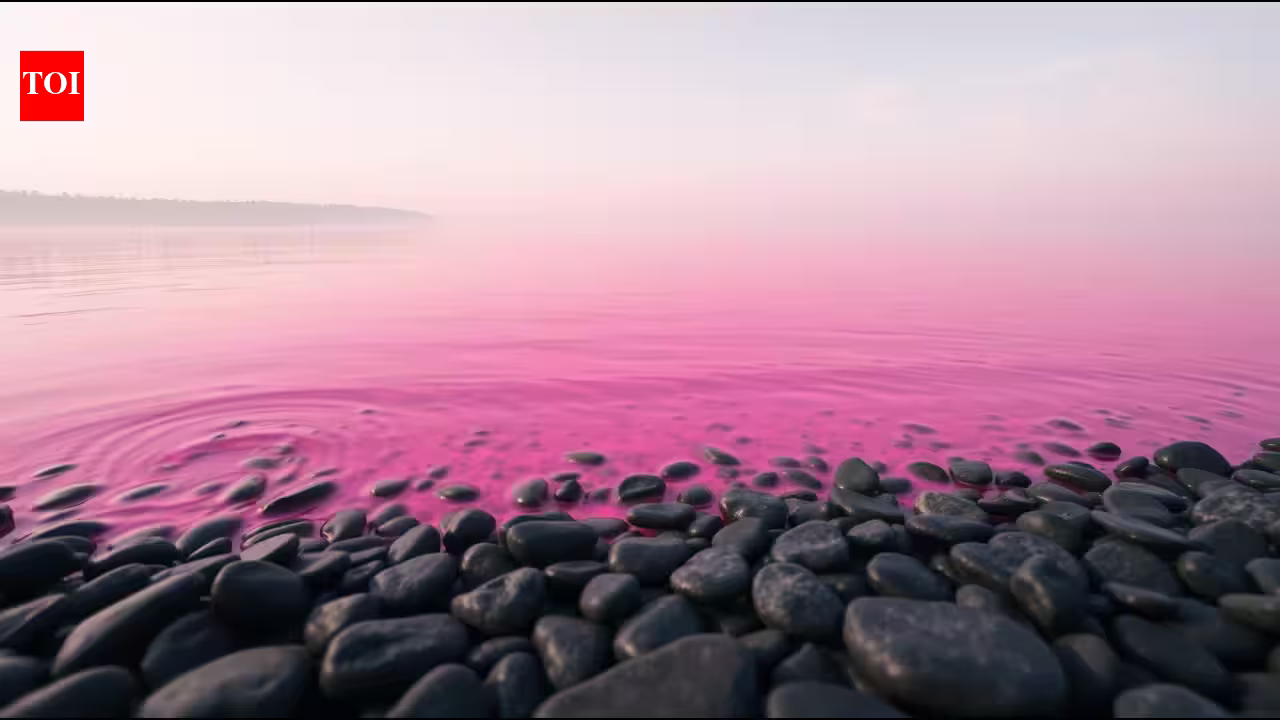
In January and February 2023, waves along a stretch of San Diego coastline briefly turned a striking shade of fuchsia, the result of a deliberate scientific experiment rather than any natural phenomenon. Researchers from UC San Diego’s Scripps Institution of Oceanography and the University of Washington released a bright pink, non-toxic dye into Los Peñasquitos Lagoon, a small tidal estuary within Torrey Pines State Beach and Natural Reserve, to study something surprisingly understudied in ocean science: how small-scale freshwater plumes behave once they reach the breaking surf zone along the coast.
Why researchers focused on small, rather than large, freshwater plumes
According to a press release from Scripps Institution of Oceanography, the project, formally titled Plumes in Nearshore Conditions, or PiNC, was funded by the National Science Foundation and specifically designed to examine small to moderate freshwater outflows, a category of coastal plume that had received comparatively little scientific attention. Sarah Giddings, the Scripps coastal oceanographer leading the study, noted that most previous oceanographic research had instead focused on large-scale freshwater plumes carrying high volumes of outflow into the ocean, leaving a meaningful gap in understanding how smaller river and estuary outflows interact with breaking waves along the shore.Los Peñasquitos Lagoon was chosen specifically because it offered what researchers described as a prime example of this dynamic, a small river plume discharging directly into the surf zone along a relatively uniform, unobstructed stretch of coastline. According to the PiNC project’s own website, the lagoon is fed by three separate creeks, Carroll Creek, Carmel Creek and Los Peñasquitos Creek, before draining into the Pacific Ocean, making it a compact, well-defined system ideal for closely tracking how freshwater and saltwater interact.
How the dye releases were actually carried out
The team conducted three separate dye releases, the first on January 20, 2023, followed by additional releases in late January and early February that year. According to Scripps, researchers deliberately timed each release to coincide with an ebb tide, when water levels were falling, and outflow from the lagoon into the ocean was strongest, maximising the chances of observing how the resulting plume behaved once it reached the surf zone.Each release used a relatively modest quantity of dye, roughly 15 gallons, chosen specifically because its fluorescent pink colour occupies a distinct range of the visible light spectrum compared to ordinary seawater, making the plume simple to detect and track using both direct visual observation and specialised optical instruments. According to the PiNC project’s own science page, the dye releases were paired with an extensive network of monitoring equipment, including bottom-mounted sensor frames positioned at multiple depths along the coastline, fitted with instruments capable of measuring water currents, temperature, salinity, dye concentration and oxygen levels simultaneously.
What researchers were actually trying to learn
Beyond the visually striking pink waves, the underlying scientific goal was considerably more technical. According to Scripps, rivers and estuaries play a significant role in delivering freshwater, sediment and various land-derived materials, including contaminants, into the coastal ocean, yet relatively little was understood about precisely how these smaller plumes of lighter, more buoyant freshwater mix and interact with the denser, saltier water found within an active surf zone.Researchers said the resulting data would help quantify how sediment, pollutants, larvae and other materials carried by these smaller plumes actually spread once they reach nearshore waters where waves are breaking, information directly relevant to coastal water quality and ecosystem management, particularly given how many people live, swim and surf along exactly this kind of coastline.
How this experiment built on earlier dye studies
This was not the first time Scripps researchers had used dye to study nearshore ocean dynamics. According to the PiNC project’s frequently asked questions page, Scripps scientists had previously carried out similar nearshore dye experiments using the same type of dye at Huntington State Beach in 2006, and at Imperial Beach in both 2009 and 2015, along with a separate study at New River in North Carolina in 2013. The City of San Diego had also conducted a comparable dye release of its own in Mission Bay in 2021, tracking dye released from Rose Creek.What distinguished the 2023 Los Peñasquitos study was its specific focus on small-scale plumes interacting directly with an active surf zone, a combination the research team described as a genuinely novel experimental setup rather than simply a repeat of earlier nearshore dye studies conducted elsewhere along the California coast.
What the findings could mean for coastal water quality going forward
Because an experiment of this scale generates a substantial volume of data, from optical dye tracking to current and salinity measurements collected across multiple sensor stations, full analysis of the PiNC results was expected to take considerable time following the initial 2023 field campaign. Researchers said the resulting insights would help build a clearer, more general understanding of how small to moderate freshwater outflows behave once they reach breaking waves, applicable not just to Los Peñasquitos Lagoon but to similar small estuary systems found along coastlines around the world.For a stretch of California coastline that draws surfers, swimmers and beachgoers year round, understanding exactly how quickly and how far pollutants, sediment and other materials disperse once they leave an estuary and enter the surf carries direct practical relevance, offering researchers and coastal managers alike a clearer picture of coastal water quality dynamics in precisely the kind of nearshore environment where people spend the most time in the water.