


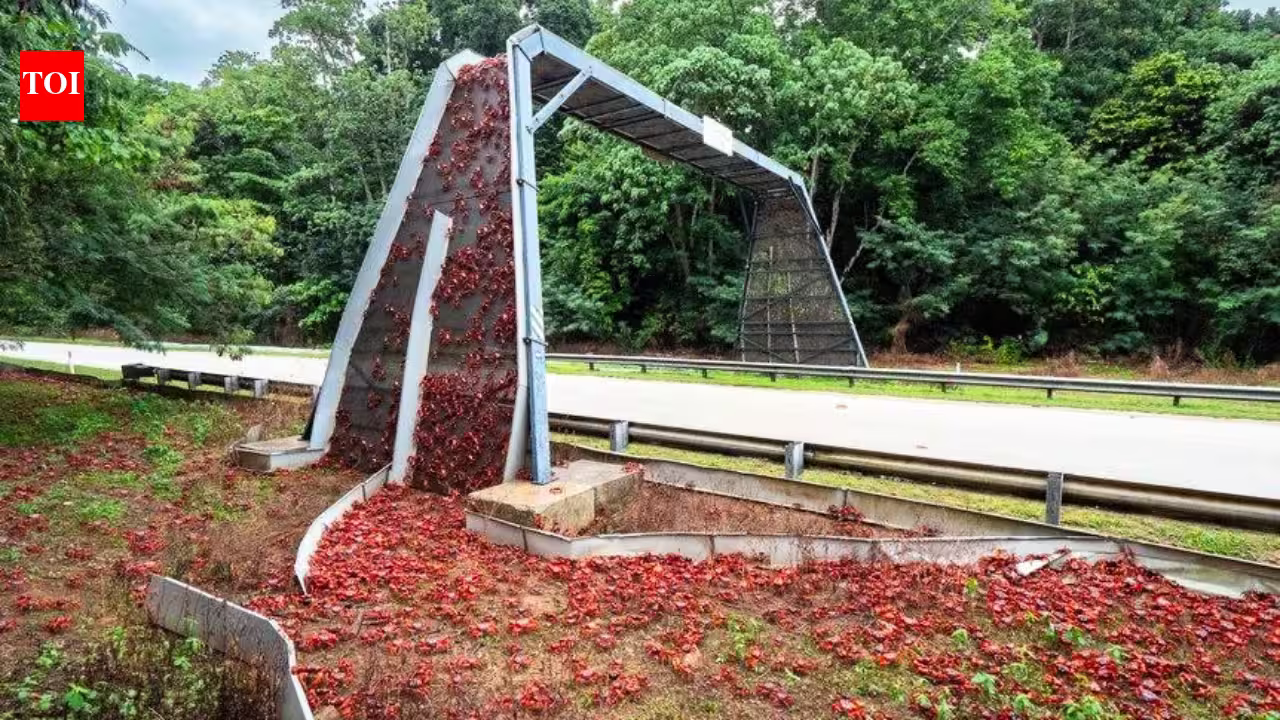
Every year, one of the world’s most remarkable wildlife migrations takes place on Australia’s remote Christmas Island, where millions of bright red crabs leave the rainforest and journey towards the Indian Ocean to breed. As the crabs cross roads, forests and beaches, they create a spectacular natural phenomenon that attracts visitors from around the globe. To protect the animals from traffic, Australia has constructed dedicated crab bridges, underground tunnels and roadside barriers while temporarily closing key roads during the migration. These unusual structures have become an internationally recognised example of wildlife-friendly infrastructure, allowing millions of crabs to complete their annual migration safely without disrupting one of nature’s most extraordinary events.
Why Australia built bridges just for crabs on Christmas Island
Christmas Island is home to more than 100 million red crabs, one of the largest populations of land crabs anywhere in the world. Every year, the crabs migrate from the island’s rainforest to the coastline to reproduce. Their migration routes intersect several roads, and before conservation measures were introduced, thousands of crabs were killed by passing vehicles each breeding season.To reduce these deaths, Christmas Island National Park and local authorities introduced an innovative conservation programme. The island now features specially designed crab bridges, underground tunnels and temporary roadside fencing that safely guide the crabs across busy roads. During the busiest days of the migration, some roads are also closed entirely to give the crabs uninterrupted passage.
Why do millions of red crabs migrate every year?
The annual migration begins after the first substantial rainfall of the wet season, usually between October and November, although the exact timing varies depending on weather conditions. Rain softens the forest floor and provides the humid conditions that help prevent the crabs from drying out during their journey.Male crabs typically reach the coast first and dig burrows where mating takes place. Females then remain in the burrows while carrying fertilised eggs beneath their abdomen for about two weeks. They eventually release the eggs into the ocean during the last quarter of the moon, just before dawn and at a receding high tide. This carefully timed release maximises the larvae’s chances of survival.
How do the crab bridges and tunnels work?
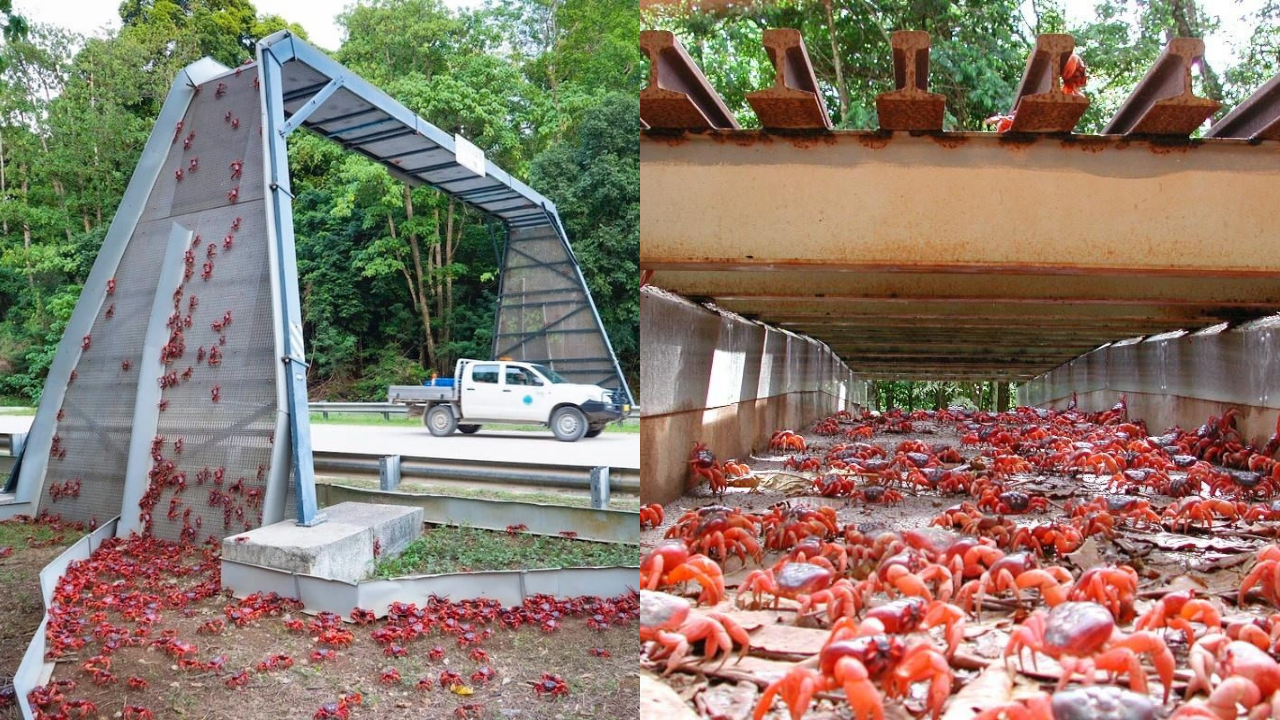
The crab bridges are only one part of a much larger conservation system. Before the migration begins each year, park rangers install kilometres of temporary plastic barriers along roadsides. When the crabs encounter these fences, they naturally follow them until they reach a designated crossing point.Some crossings consist of elevated bridges spanning the road, while others use specially constructed tunnels beneath the road surface. The system allows millions of crabs to continue their migration with minimal interaction with traffic, dramatically reducing road fatalities compared with previous decades.
Why are roads closed during the migration?
Even with bridges and tunnels in place, the sheer number of migrating crabs makes additional protection necessary. During peak migration periods, authorities temporarily close several roads across Christmas Island. Roads that remain open have reduced speed limits, and motorists are urged to drive carefully while remaining alert for wildlife.These seasonal closures have become a routine part of life on the island. Residents, tourists and businesses plan around the migration, recognising its ecological importance and its value as one of Australia’s most extraordinary natural attractions.
Why are red crabs so important to Christmas Island?
The red crab is considered a keystone species because it plays a crucial role in maintaining the island’s rainforest ecosystem. The crabs consume fallen leaves, fruits, flowers and seedlings, helping recycle nutrients and keeping the forest floor healthy.Their feeding habits also control excessive plant growth, influence the distribution of tree species and improve soil quality through constant digging. Scientists believe the rainforest would function very differently without these crabs, making their conservation essential for preserving Christmas Island’s biodiversity.
What other threats do the crabs face?
Although traffic once posed one of the biggest dangers, invasive yellow crazy ants have become another major threat to the red crab population. These ants form massive supercolonies and spray formic acid that can kill large numbers of crabs. Over the years, millions of red crabs have been lost in affected areas.To combat this threat, conservation authorities have implemented long-term control programmes targeting the invasive ants. Continued monitoring and management have helped stabilise the red crab population while protecting the island’s broader ecosystem.
One of the world’s greatest wildlife spectacles
The annual red crab migration has become one of Australia’s most celebrated natural events, drawing scientists, photographers and wildlife enthusiasts from around the world. For several weeks, roads, beaches and forests appear covered in a moving carpet of bright red as millions of crabs make their way to the sea.Australia’s crab bridges have become an international symbol of successful conservation, demonstrating how thoughtful engineering can help wildlife and modern infrastructure coexist. By building crossings specifically for crabs, Christmas Island has shown that protecting biodiversity sometimes requires creative solutions, ensuring one of the planet’s most extraordinary animal migrations continues for generations to come.