



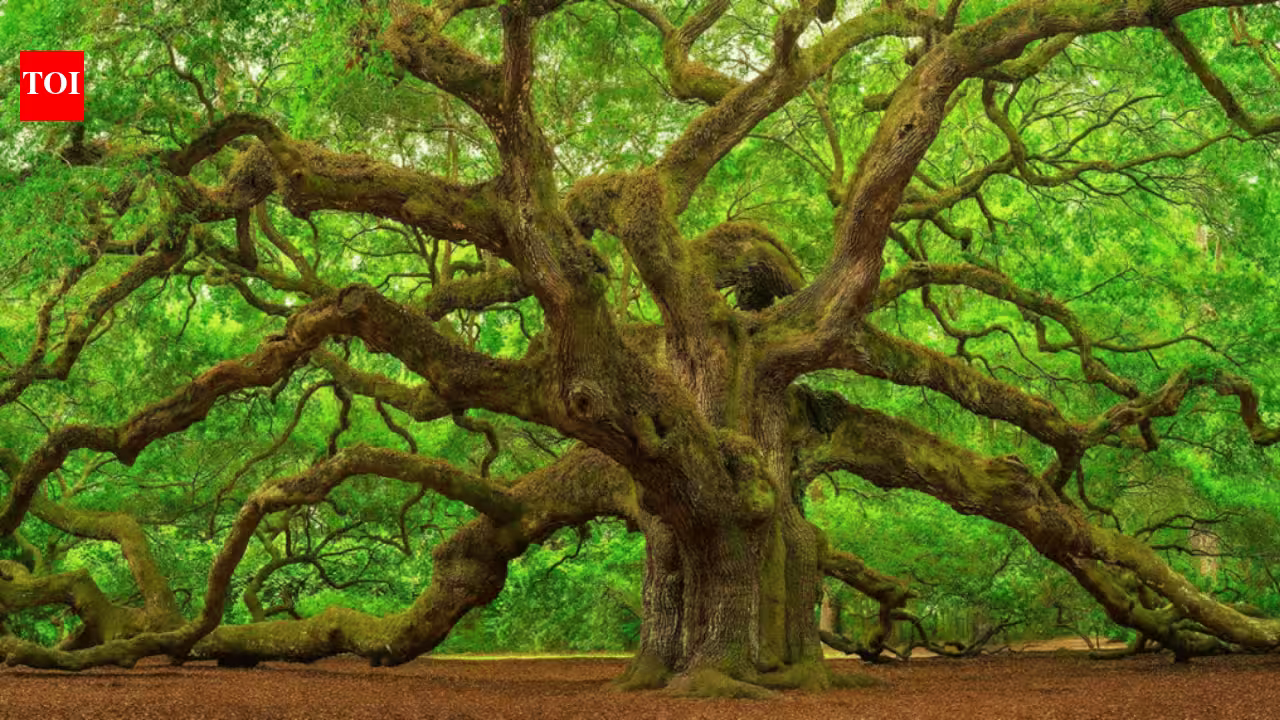
A detailed study of 54 Asian oak species has found that 40 have no living backup in any botanical garden around the world. This means that nearly three-quarters of the trees could disappear completely if their wild populations are lost.One of the species studied has not been seen for almost 90 years and may already be extinct in the wild.The findings come from a new report, Conservation Gap Analysis of Select Native Asian Oaks, published by scientists at The Morton Arboretum along with regional conservation partners.The study looked at threatened oak species across East and Southeast Asia, the region with the highest number of endangered oak species in the world.Researchers studied species listed as Threatened or Data Deficient on the International Union for Conservation of Nature (IUCN) Red List across 14 regions: Vietnam, Laos, Thailand, Cambodia, Myanmar, Brunei, Malaysia, Singapore, Indonesia, the Philippines, Timor-Leste, South Korea, Japan, and Taiwan.
Sharp contrast with oak conservation in the Americas
The lack of botanical garden backups for 74 per cent of the Asian oak species is very different from the situation in other parts of the world.An earlier study by The Morton Arboretum found that only one of 91 native American oak species (1.1 per cent) had no backup in a botanical collection.In Mesoamerica, 22 of 59 studied oak species (37 per cent) were missing from managed collections.“Southeast Asia is a biodiversity hotspot for oaks,” said lead author Kate Good, global tree conservation research manager at The Morton Arboretum. “There are more threatened oak species in Asia than anywhere else in the world, but many are not well protected in nature or represented in botanical gardens.”Good said that conserving species outside their natural habitats is important for their long-term survival.“There is an urgent need to increase the number of threatened Southeast and East Asian oaks in managed botanical collections within their native countries,” Good said. “Protecting species in the wild is the best option, but botanical collections provide an important backup by preserving genetic diversity for research and future reintroduction.”
Agriculture is the biggest threat to oak habitats
Oaks are key species in forest ecosystems. They help hold soil in place, shape forest canopies, and provide food and shelter for wildlife as well as local communities.However, more than half of their natural habitat is under increasing pressure from human activities.The report found that agriculture is the biggest threat, affecting about two-thirds of the species studied. Other major threats include commercial logging, wood pulp plantations, land development, climate change, and very small remaining populations.Some species now exist in extremely low numbers.The critically endangered Quercus trungkhanhensis has only two known living trees, both inside a single protected area. Another species, Quercus dilacerata, is known from just one recorded tree, which grows outside any protected area.The situation is even worse for Quercus dankiaensis. It was last recorded in a protected area in 1934, and researchers believe it may already be extinct in the wild.
Field projects aim to save remaining species
To stop more oak species from disappearing, conservation teams will use the report to guide urgent fieldwork across Southeast Asia.Priority species will be targeted for seed collection, propagation, and monitoring in the wild.Local conservation partners, with support from experts at The Morton Arboretum, will take part in training on growing and planting these trees. The first field projects will focus on collecting and planting threatened oak species in Vietnam, while expanding field surveys in Laos.“With so many species at risk of extinction, this report will help us identify which oak species need the most urgent conservation action in Southeast and East Asia,” said co-author Silvia Alvarez-Clare, director of the Arboretum’s Global Tree Conservation Program. “By identifying species with little protection, no botanical collections, and high human pressure, we can focus our efforts where they will have the greatest impact.“The Morton Arboretum, based in Illinois, manages a 1,700-acre site with 106,714 plant specimens representing 4,067 species. Through its Center for Tree Science, Global Tree Conservation Program, Chicago Region Trees Initiative, and Center for Species Survival: Trees, the organisation supports forest conservation efforts around the world.
Fungal pathogens and niche microhabitats add hidden pressures
Beyond habitat clearing for agricultural plantations, regional oak populations face acute environmental pressures from localized fungal outbreaks and severe genetic bottlenecks.In Japan, large mature species such as Quercus hondae are under increasing threat from Japanese Oak Wilt, a destructive fungal infection transmitted by ambrosia beetles.Recent genetic sampling revealed that surviving stands of Q. hondae suffer from a 27 per cent reduction in genetic diversity compared to more common regional relatives, leaving isolated populations surviving primarily in sacred grove sanctuaries surrounding ancient shrines.In tropical habitats across Southeast Asia, heavy timber extraction equipment routinely disrupts specialized mycorrhizal soil networks necessary for acorn germination.When ancient canopy trees are felled, forest floor microclimates dry out rapidly, preventing sensitive saplings from taking root. Without targeted seed harvesting, nursery cultivation, and living backups in botanical gardens, natural regeneration across fragmented forest patches remains almost impossible.