



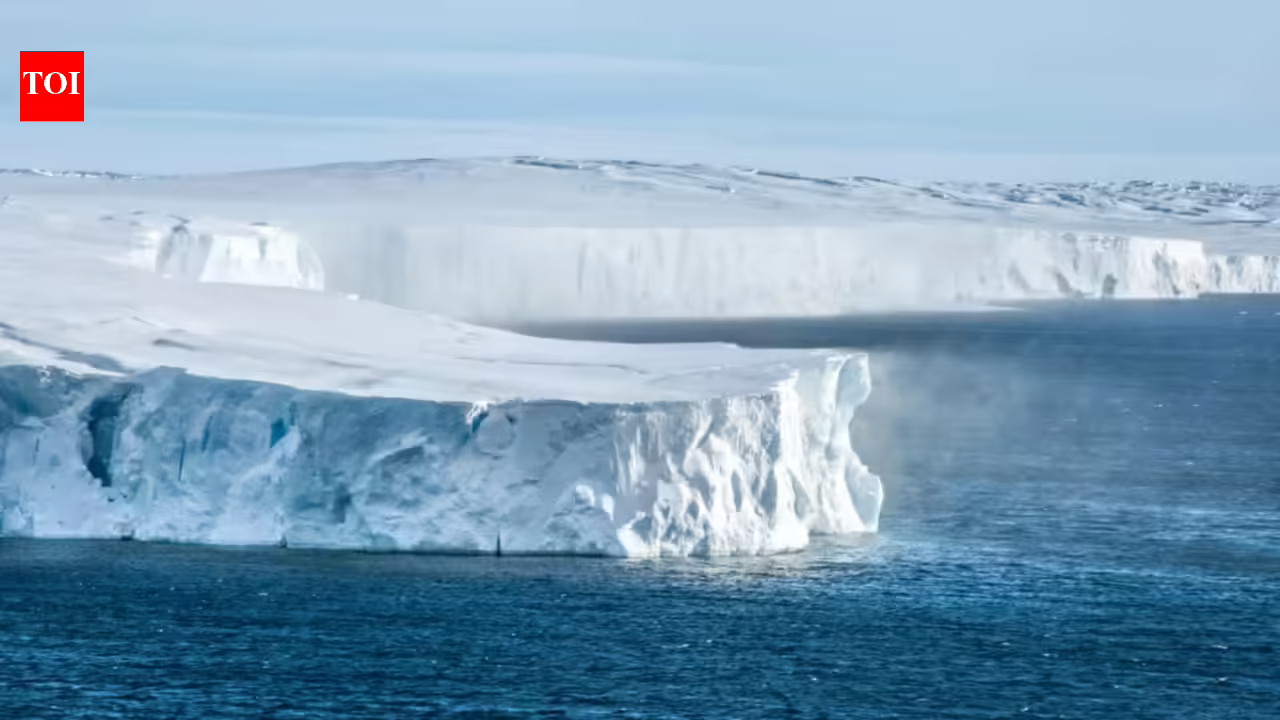
Governments have a crucial 30 to 50 year window to plan for rising sea levels using dependable computer models, before Antarctic ice melt becomes far harder to predict.Scientists say current Antarctic ice loss can guide sea-level planning until mid-century, but forecasts become far less certain later as retreat may accelerate. According to a study published on 23 July in the journal Nature, computer models can reliably track melting ice over the next few decades. Led by Dr Felicity McCormack of Monash University and Securing Antarctica’s Environmental Future (SAEF), the research team evaluated various ice sheet models to test how far ahead ice loss can be accurately projected.The study shows that while near-term projections remain stable, predictions weaken significantly towards the end of the century. Once ice resting on bedrock below sea level starts sliding, the process becomes very hard to stop or reverse, creating rapid changes that current long-term climate models struggle to pin down.
Coastal risks and high-emission scenarios
According to reports from the Intergovernmental Panel on Climate Change (IPCC), global sea levels could rise by more than two metres by 2100 under high emission scenarios if large parts of the Antarctic Ice Sheet collapse.In a worst-case scenario, IPCC estimates show that the rate of sea level rise caused by Antarctic ice loss alone could almost double over the next 30 years. Rising seas on that scale would put a quarter of Australian homes at risk of flooding, destroy sovereign lands across the Pacific, and force hundreds of millions of people worldwide from their coastal homes.Dr McCormack explained that models matching today’s measured ice loss can give policymakers solid numbers for near-term coastal defense plans.“If ice sheet models accurately reproduce the rates of ice loss we observe today, we can have confidence in using those same models to reliably predict Antarctica’s contribution to sea level rise over the next 30 to 50 years. Accurately predicting how much and how fast global sea levels will rise offers vital information for future coastal planning and government policy,” said Dr McCormack.“The research findings provide a roadmap for future climate planning. By improving how ice sheet models represent critical physical processes that lead to rapid ice sheet retreat, we can narrow the deep uncertainty that hampers reliability of long-term sea level rise projections,” Dr McCormack added.
Planning for Pacific island communities
Professor Steven Chown, Director of SAEF, a Monash-led research initiative under the Australian Antarctic Program, said countries should take advantage of this predictable period to upgrade tracking systems and build stronger defenses.“The predictability identified in this research does not reduce long-term risk; instead, it provides a defined period in which to act with greater confidence. Improvements in observational systems and ice sheet model developments will directly translate into more reliable sea level projections for short-term planning horizons,” Professor Chown said.Professor Chown noted that Australia holds a regional duty to share these scientific findings with neighboring Indo-Pacific nations that face immediate displacement risks.“Pacific Island governments require reliable near-term projections to make decisions about infrastructure, community relocation, and long-term land use. Engagement on sea level science and adaptation planning represents a foreign policy opportunity and a regional responsibility,” Professor Chown said.
Dividing forecasts into two stages
To help governments make practical choices, the Monash University research team recommends presenting Antarctic ice forecasts in two clear timeframes: short-term estimates grounded in solid measurements, and long-term projections that account for unstable physical feedback loops.“When models replicate present-day observations of Antarctic ice mass loss, their projected ice mass loss rates over the coming several decades provide a reliable foundation for planning and adaptation, while longer-term sea level rise uncertainties highlight the need for ongoing development,” Dr McCormack said.