



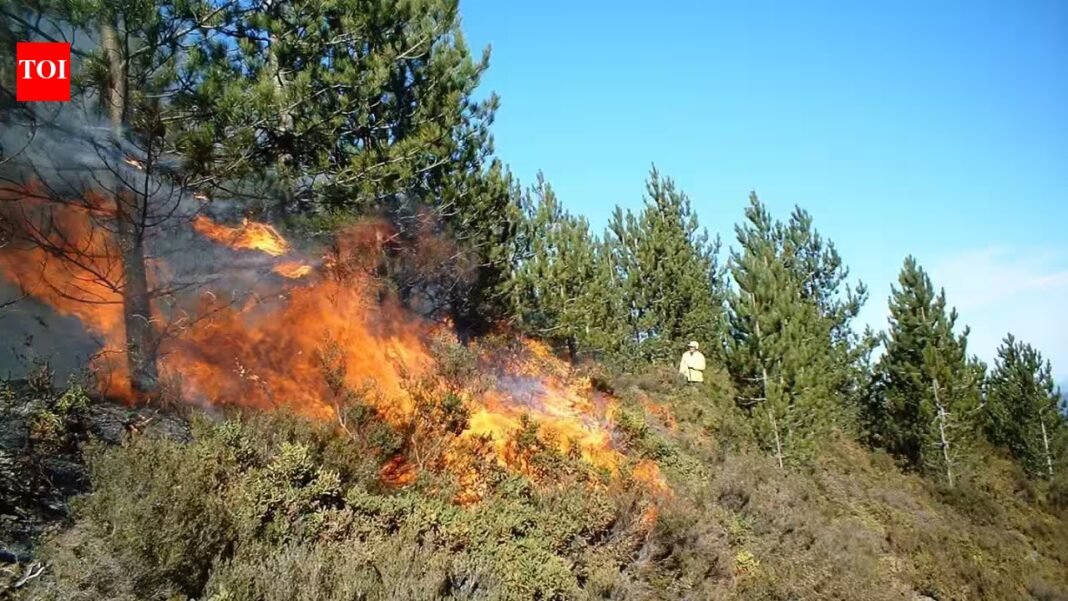
Fire was reintroduced to a subtropical grassy woodland in southeast Queensland after the area had gone without a recorded fire for at least a decade, giving scientists an opportunity to see how its hidden plant life responded. A low-intensity prescribed burn was carried out in 2022, and months later researchers collected soil from the burned area and nearby unburnt woodland. When those samples were placed in a glasshouse, 20,369 seedlings emerged, revealing a remarkably diverse seedbank beneath the woodland floor that had remained resilient after the fire.
Burning the Australian woodland after years of no recorded fire
The study published in Journal of Applied Ecology, took place at a 3,091-hectare Nature Refuge within Hidden Vale Research Station in southeast Queensland. The woodland contains narrow-leaved and silver-leaved ironbarks alongside yellow box and Moreton Bay ash, with grasses, herbs and sedges forming much of the vegetation beneath the trees. The site is managed for pastoral production and land restoration.In 2022, a prescribed burning programme began with a 40-hectare pilot burn. The aim was to reduce accumulated fuel and promote native biodiversity. The researchers focused on this first burn because it offered a chance to examine what happened when fire was brought back into a woodland where there had been no recorded fire for at least 10 years.The burn was carried out during winter, when conditions allowed a low-intensity fire. The researchers intended for the flames to move through the grass without seriously affecting the trees. Because the long-term monitoring programme had not started before the pilot burn, the scientists could not compare the same plots before and after fire. Instead, they compared burned areas with nearby unburnt areas in similar vegetation.
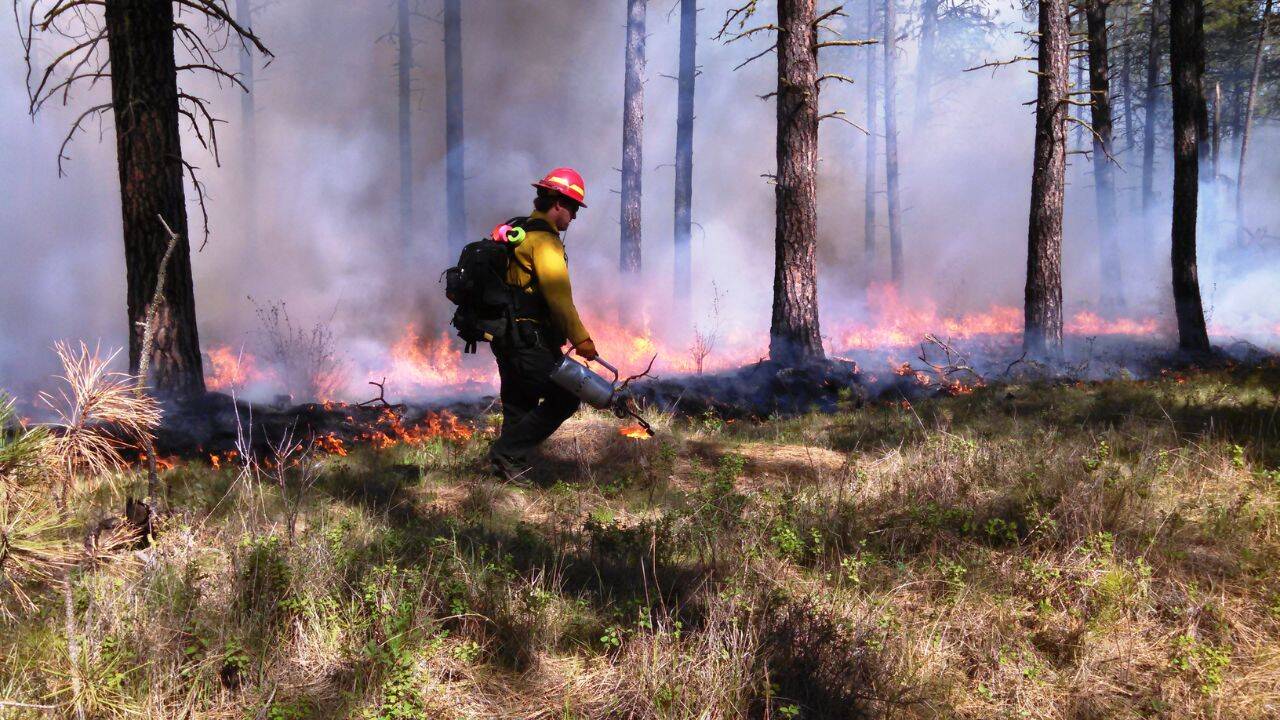
Controlled Burning in a forest: Image Credit: Wikipedia
What did the 20,000+ seedlings reveal underground
9 months after the burn, researchers collected soil from 30 one-square-metre sampling areas, taking multiple small cores from each area to account for the uneven distribution of seeds. The soil was then placed in a 5-month glasshouse emergence trial, where conditions were kept moist so that seeds capable of germinating could emerge.The result was 20,369 individual seedlings. Of these, 16,373 or 80.9% belonged to identified species. The researchers identified 73 species emerging from the soil, while 121 additional morphospecies remained unidentified during the study. Some of those unidentified forms were likely duplicates, meaning the researchers considered the actual number of distinct species to be lower than 121 but potentially higher than the confirmed total.Across the whole study, 117 plant species were identified. The researchers found 78 species in the vegetation above ground and 73 in the soil seedbank, with only 35 occurring in both. This showed that the soil contained a different collection of plants from those visible on the woodland floor.
The seedbank held more plant diversity than the surface
One of the clearest findings was the amount of diversity hidden below ground. On unburnt sites, the researchers found an average of 27 species per square metre in the soil seedbank compared with 11 species per square metre in the above-ground vegetation. The seedbank therefore contained more than twice as many species within the same area.That difference remained after the low-intensity fire. The analysis found no significant effect of the burn on species richness in any of the plant groups examined. Native species, exotic species, annuals, perennials, grasses, forbs and legumes all showed no significant reduction in species richness linked to the fire treatment.The study also found that the underground community was not simply a smaller version of what was growing above it. Of the 78 above-ground species, 43 did not occur in the soil samples. At the same time, 38 of the 73 seedbank species were found only below ground. The researchers therefore described the seedbank as a substantial reservoir of plant diversity rather than simply a store of the species already visible.
The fire left the hidden plant reservoir largely intact
The researchers also examined how different the plant communities were from one sampling area to another. Above-ground vegetation showed greater uniqueness, largely because different areas contained different species. By comparison, the soil seedbanks were more similar from one location to another.Most importantly, fire did not produce a notable change in this pattern. The burned and unburnt seedbanks remained similar in their overall composition, while the main difference was between what existed above ground and what was stored below it. The researchers found that the soil seedbanks were resilient to the reintroduction of low-intensity fire.The finding also applied across different plant traits. The study had expected some groups, including native plants and annual species, to show greater resilience than others, but those predictions were not supported. Leguminous and non-leguminous plants also responded similarly, with neither showing a significant fire-related change in seedbank richness.
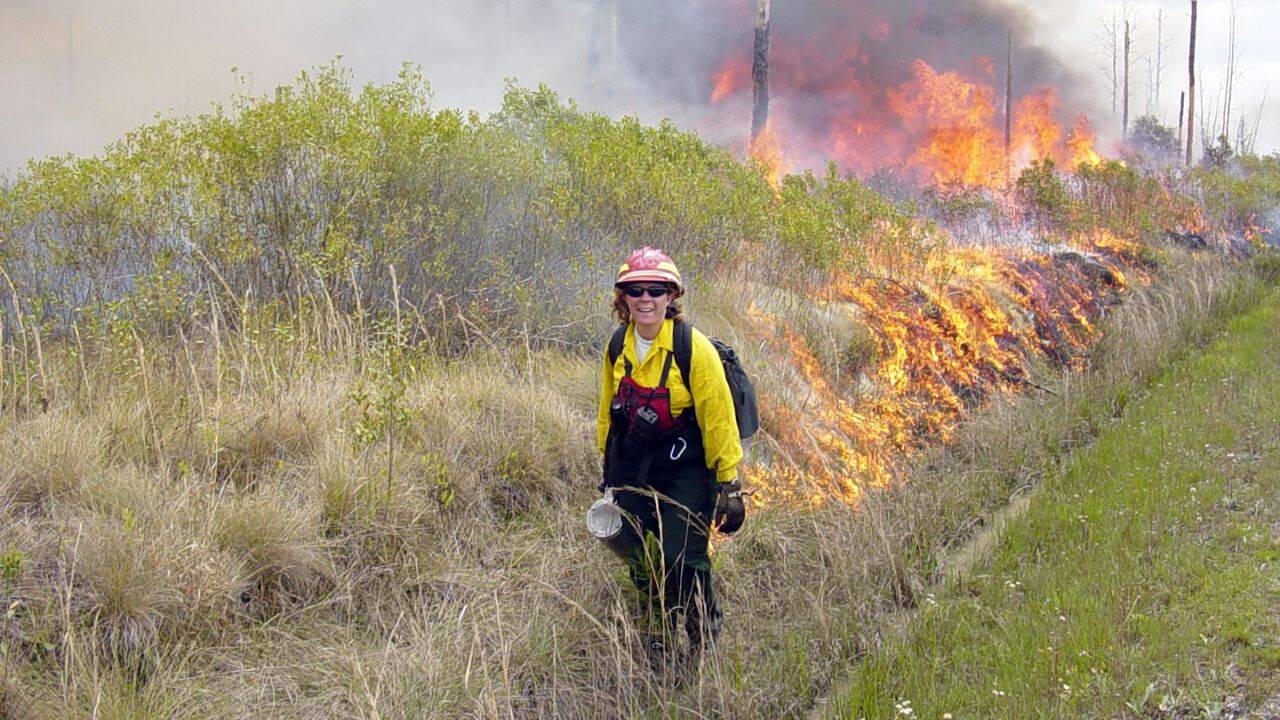
Using a drip torch to start a controlled burn. Image Credit: Wikipedia
A seedbank that could support woodland recovery after fire
The researchers said the findings show why the soil seedbank matters when fire is being restored to a landscape. The seeds beneath the ground can preserve plant diversity even when fewer species are visible above the surface, giving the woodland a source of plants that can contribute to recovery after disturbance.The study does not mean that every fire will have the same result. The researchers specifically examined a single low-intensity prescribed burn, and they noted that fire effects can vary with factors such as intensity, frequency and the characteristics of the seeds. They also noted that their glasshouse trial measured readily germinable seeds, so some seeds present in the soil may not have germinated under the conditions used.