



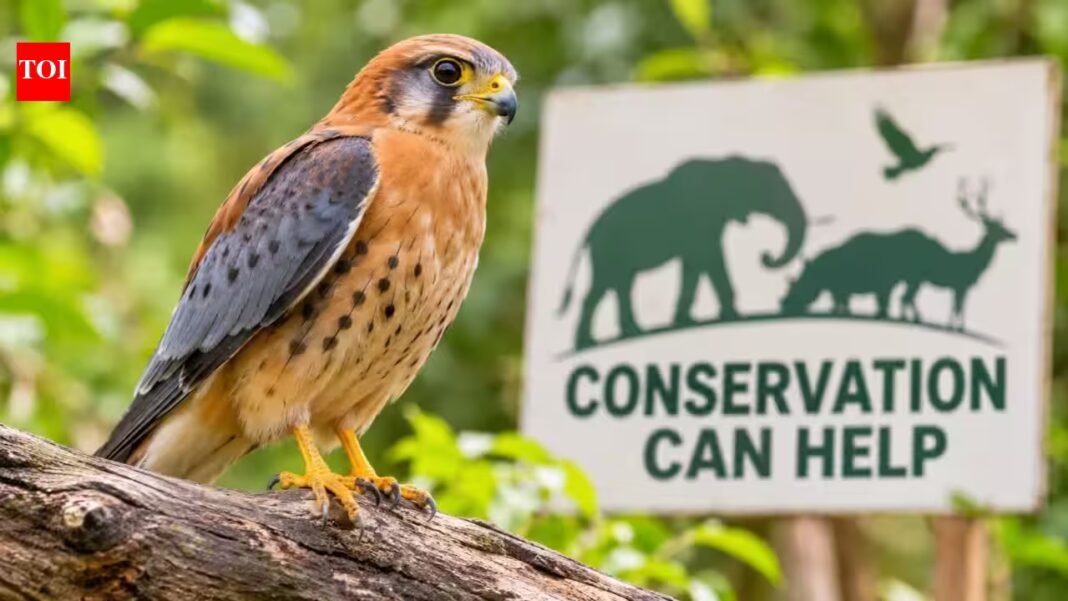
Species facing the threat of extinction can still recover even when their wild populations fall below 50 animals, but new research suggests their chances improve significantly when conservationists intervene directly. A study in the Proceedings of the Royal Society B looked at 141 species of birds and mammals that had dropped to critically low population levels since 1950. The findings highlight the difference between allowing threatened species to recover naturally and actively addressing the factors that threaten their survival, and offer new perspectives on how conservation efforts can prevent extinction.
Species with fewer than 50 animals can recover with conservation help
The research looked at what happened to species with wild populations of fewer than 50 individuals. Researchers examined 141 species of birds and mammals to determine if their populations eventually recovered or declined toward extinction.Mongabay reported that “there was a striking difference between species that received direct conservation assistance and those that did not.” Of the 51 species that received direct intervention, 31(61%) recovered to populations of at least 100 individuals. Only six of these species went extinct.The results suggest that reaching such a small population does not automatically mean a species has no chance of survival. However, recovery becomes considerably more difficult when the threats responsible for the decline remain unaddressed.
What happens when endangered species receive no direct help
The situation was very different for species that received no direct conservation intervention. Among the 90 species that received no direct assistance, only 2% managed to reach a population of at least 100 animals. Meanwhile, 33 species, representing 37%, went extinct.The study differentiated between direct action and indirect conservation measures. Direct action included efforts to eliminate factors threatening a species, and interventions to increase the numbers of a species. This could include managing invasive predators, restoring damaged habitat, captive breeding and moving animals to safer sites.Indirect measures, including legal protection and the establishment of protected areas, did not show a clear association with population recovery when used without direct intervention.The researchers also found that the highest probability of recovery was linked to combining different forms of direct help. Tackling the threats that are causing population decline, and increasing the number of animals with a better chance of reversing the trend than one single approach.
The Mauritius kestrel demonstrates the possibility of recovery
One of the clearest examples of how conservation efforts can change a species’ future is the Mauritius kestrel. In 1974, the bird had dwindled to just 4 individuals in the wild, placing it among the most endangered birds in the world.According to Mongabay, environmentalist Norman Myers argued in 1979 that conservation resources might be better directed towards species with stronger survival prospects. However, conservationists continued their efforts to save the bird through captive breeding, predator control and the release of captive-bred individuals into the wild.These measures eventually allowed the Mauritius kestrel population to grow into the hundreds. Since then its numbers have fallen again, but its survival shows that even a population reduced to single digits can respond positively to sustained conservation work.The study also noted the successful recovery of the Lord Howe woodhen in Australia. By the late 1970s there were only 23 birds left. Conservationists responded by removing feral pigs and cats, breeding the birds in captivity and releasing them back into their natural habitat.The population remained around 200 for several decades. However, the eradication of rats from Lord Howe Island in 2019 brought another important change. With this additional threat removed, the woodhen population increased to 1,638 by 2024, according to the study and Mongabay’s report.
How long does it take for a small population to recover
Recovery is rarely immediate, even when conservation measures begin to work. The study found that species which recovered after receiving direct intervention took a median of 18 years to reach a population of 100 individuals. The time varied considerably, with some species recovering within a year while others took several decades.This long recovery period highlights the need for conservation programs to continue beyond the initial signs of recovery. The researchers also warned against using 100 individuals as a benchmark for a species’ safety from extinction.Some recovered species remain critically endangered, while others continue to depend on human assistance to maintain their populations.
Recovery does not remove the need for long-term protection
In addition, the study, led by Donal Smith of Monash University in Australia, also acknowledged that its findings do not prove a direct cause-and-effect relationship between conservation intervention and recovery. This wasn’t a controlled experiment, but more of a retrospective investigation of population trends and conservation measures.It is possible that some species received assistance because their survival problems were easier to address than those of other threatened animals. The researchers described their findings as an association between direct conservation action and improved population outcomes rather than proof that intervention alone caused every recovery.