



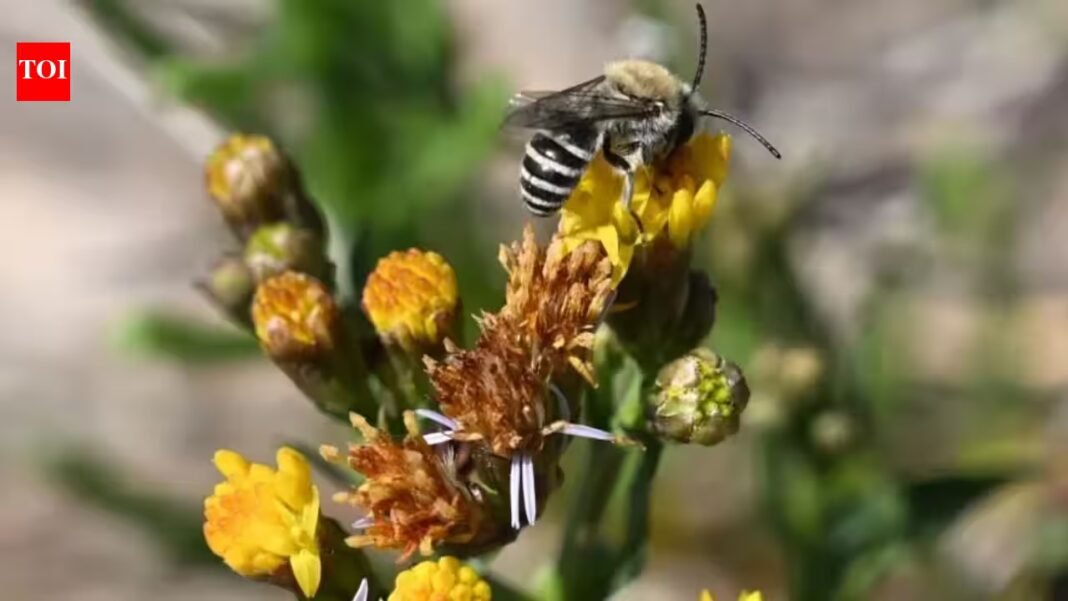
A tiny bee with distinctive zebra-like stripes has been recorded for the first time in Somerset, surprising a local naturalist who discovered several of the insects on a restored saltmarsh. The rare sea aster mining bee is usually found along the south and east coasts of the UK. The discovery was made at WWT Steart Marshes by local naturalist and WWT life member Nigel Phillips.According to the Wildfowl & Wetlands Trust (WWT), the species had never previously been recorded in Somerset or its surrounding counties. The finding highlights the importance of saltmarsh restoration for wildlife that depends on these coastal habitats. The reserve was completed in 2014 after a project redirected salt water onto formerly intensively farmed fields, creating conditions that support coastal plants and the insects that rely on them.
Tiny zebra-striped bee found in Somerset for the first time
The sea aster mining bee is a small solitary bee that depends on the sea aster plant for food. The plant produces pink and yellow flowers that grow only on coastal saltmarshes. It blooms late in the season and continues flowering into autumn. In some parts of the UK, sea aster is known as ‘Summer’s Farewell’.The bee is usually found along the south and east coasts of the country. Its presence at WWT Steart Marshes marks the first recorded sighting in Somerset and surrounding counties.Nigel Phillips said, “I live only eight miles from WWT Steart Marshes so know from my many previous visits that the drier parts of the saltmarsh here are extremely rich in insect life, including spider hunting wasps and leaf cutter bees, but suddenly seeing the sea aster mining bees was a huge surprise. There were lots of them and several colonial nest areas in the dry sandy ground. At the time I thought they were only found in salt marsh areas around the Thames estuary!”
How coastal flowers attracted the rare zebra-striped bee to Somerset
The sea aster mining bee is barely the size of a thumbnail and has distinctive zebra-like stripes. Its numbers have suffered over the decades as saltmarshes have been drained and developed for human use. The species depends on these coastal habitats and the sea aster flowers growing there.WWT Steart Marshes demonstrates how creating and restoring saltmarshes can benefit rare species. The reserve was completed in 2014 through a carefully managed restoration project. Saltwater was channelled onto fields that had previously been intensively farmed and faced a high risk of flooding because their existing defences were failing. The abundance of coastal flowers at the site is likely what attracted the bees to establish a colony on the Steart peninsula.
Why Somerset’s saltmarsh is important for wildlife beyond rare bees
The restored saltmarsh is home to a wide range of wildlife beyond the newly recorded bee. Of the 290 invertebrate species found on UK saltmarshes, 148 are found exclusively in these habitats. The reserve also supports hundreds of other species, including birds, bats, mammals and amphibians. It has many plant species that are not found in any other habitat.Alys Laver, site manager at WWT Steart Marshes and Bridgwater Bay, said, “I was so happy to hear that we have been found by our first sea aster mining bees. Spotting such a rare species here is a testament to the brilliant work our staff do in maintaining the reserve in concert with local graziers. People usually associate saltmarshes with huge flocks of wading birds, geese and ducks, but there is so much life here that goes unnoticed. Whether it’s fish in the creeks, crabs in the mud or bats and curlew in the sky, these wetlands burst with life all year round.”
How local staff and volunteers help maintain the restored wetland
The reserve continues to be managed through grazing, with its produce sold as high-quality saltmarsh beef. Samphire is also harvested at the site for sale across the country. Local staff and volunteers take part in this work.The discovery of the sea aster mining bee adds to the wildlife recorded at the reserve since its completion in 2014. Its coastal flowers and restored saltmarsh provide habitat for species that depend on these environments.